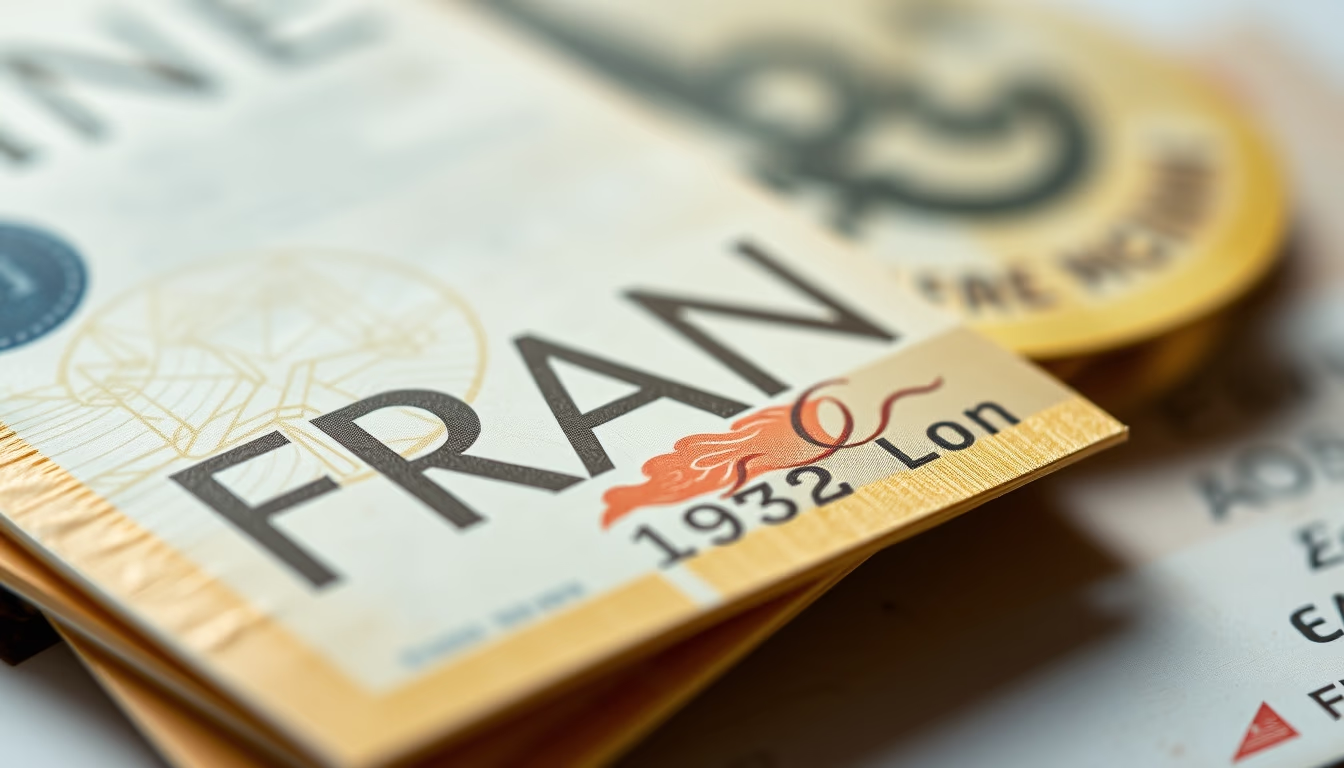
Spanish doubloon gold
1344×768 · AVIF · CC BY 4.0

The Spanish gold doubloon was a historical coin minted during the colonial period, widely used in transatlantic trade and associated with pirate treasures.
About this subject
The Spanish gold doubloon, also known simply as a doubloon, was the highest-value gold coin of the Spanish Empire. Each doubloon was equivalent to two gold escudos, or 32 Spanish reales, and weighed approximately 6.77 grams of 22-karat gold (about 91.7% purity). It was minted primarily in Spain (Seville, Madrid) and in the American colonies: Mexico, Lima (Peru), Potosí (now Bolivia), Bogotá (Colombia), and Santiago (Chile), from the 16th to the 19th centuries.
These coins played a central role in financing the Spanish Empire, being used in trade for spices, Asian silks, slaves, and silver extraction. They were transported aboard the legendary Silver Fleets, which sailed from ports like Cartagena and Veracruz to Spain. Many of these fleets sank, such as the Nuestra Señora de Atocha (1622), whose discovery in the 20th century yielded thousands of gold doubloons, becoming one of the most famous numismatic finds.
The design of the doubloon changed across reigns: the obverse typically featured the Spanish coat of arms with the lion of Castile and the Pillars of Hercules, while the reverse displayed the Jerusalem cross or a crowned shield. Examples from reigns such as Charles I, Philip II, Philip V, and Ferdinand VII are particularly sought after. Modern numismatics considers doubloons key pieces for understanding colonial economy and navigation history.
Culturally, the Spanish doubloon has become a symbol of wealth and adventure, appearing in films like "Pirates of the Caribbean" and in literature by Robert Louis Stevenson. Collectors value not only the gold content but also the history of each coin, especially those recovered from shipwrecks or featuring rare mint marks.
Frequently Asked Questions
What was the value of the Spanish gold doubloon?
The doubloon was equivalent to 2 gold escudos, or 32 Spanish reales, weighing approximately 6.77 grams of 22-karat gold.
Where and when were Spanish doubloons minted?
They were minted in Spain (Seville, Madrid) and in colonial mints such as Mexico City, Lima, Potosí, and Bogotá, from the 16th to the 19th centuries.
Why are doubloons associated with pirates and treasures?
They were the most valuable gold coins of the era, transported on Spanish ships that frequently sank or were attacked by pirates. Coins recovered from historical shipwrecks are highly sought after.
Direct URL
https://pub-c7d6a6ea828543ac903a74a341ccb2e1.r2.dev/imagens/spanish-doubloon-gold-studio-editorial-portrait-fresh1.avifHow to credit
Include a visible link back to UtilizAí. Copy one of the snippets below:
<a href="https://xn--utiliza-eza.com/en/midia/imagens/spanish-doubloon-gold-studio-editorial-portrait-fresh1">Spanish doubloon gold</a> by <a href="https://xn--utiliza-eza.com">UtilizAí</a>, licensed under <a href="https://creativecommons.org/licenses/by/4.0/">CC BY 4.0</a>.
[Spanish doubloon gold](https://xn--utiliza-eza.com/en/midia/imagens/spanish-doubloon-gold-studio-editorial-portrait-fresh1) by [UtilizAí](https://xn--utiliza-eza.com), CC BY 4.0
License: CC-BY-4.0