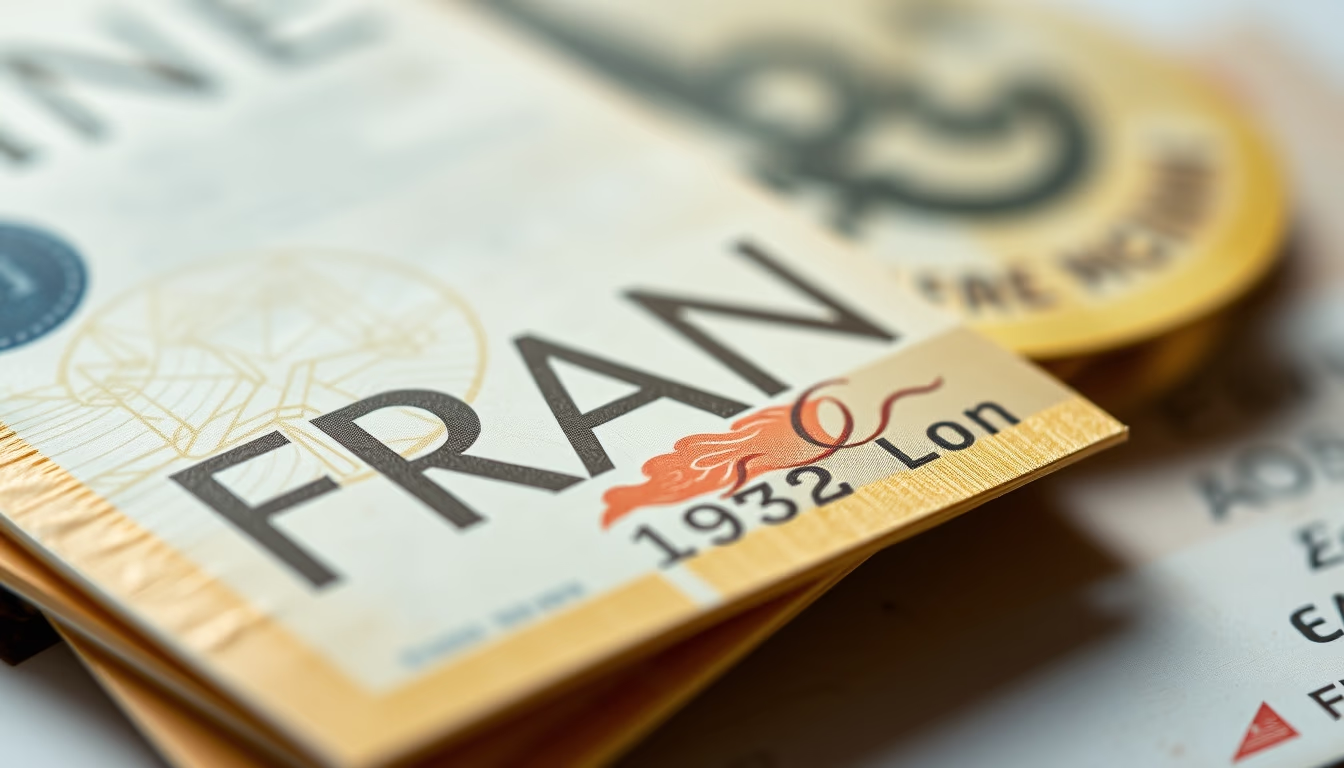
Spanish doubloon gold
1344×768 · AVIF · CC BY 4.0

The Spanish gold doubloon was an iconic coin of the Spanish empire, minted from the 16th to the 19th centuries.
About this subject
The Spanish gold doubloon, also known as the "double escudo", was a high-value coin that circulated widely in Spain's colonial territories. Weighing approximately 6.8 grams of fine gold, it was equivalent to two escudos or 32 reales. Its minting began under Philip II and continued through the 19th century, produced in mints in Spain and the Americas, including Mexico City, Potosí, and Lima.
The doubloon's design varied by period, but often featured the royal coat of arms of Spain on the obverse, with the crowned shield and the Golden Fleece, while the reverse displayed a Jerusalem cross with lions and castles in the quadrants. This iconography symbolized the union of the kingdoms of Castile and León and the influence of the Catholic Church. The edges were frequently milled to prevent clipping.
Historically, the doubloon became famous for its association with Spanish treasure fleets, which transported gold and silver from the Americas to Europe. Many shipwrecks of these galleons have yielded well-preserved doubloons, fueling pirate lore and treasure hunting. Such coins are highly sought after by numismatists today, with pristine specimens fetching thousands of dollars at auction.
The doubloon also appears in popular culture, from pirate movies to expressions like "doubloon" meaning wealth. Its historical value goes beyond the precious metal: it represents the height of the Spanish empire and the complex colonial monetary system.
Frequently Asked Questions
What was the value of the Spanish gold doubloon?
A doubloon was worth two gold escudos, or 32 silver reales. It was a high-value coin used in major trade transactions and colonial tax payments.
How can you identify an authentic doubloon?
Authentic doubloons have a specific weight (about 6.8 g), diameter of roughly 30 mm, and details like the royal coat of arms, Jerusalem cross, and mint marks. The presence of edge milling and natural patina are indicators of originality.
Why is the doubloon associated with pirates and treasure?
Because of the gold transported by Spanish fleets, many galleons sunk, scattering doubloons on the ocean floor. Stories of pirates like William Kidd or Blackbeard often mention these coins, making them symbols of buried wealth.
Direct URL
https://pub-c7d6a6ea828543ac903a74a341ccb2e1.r2.dev/imagens/spanish-doubloon-gold-macro-closeup-fresh3.avifHow to credit
Include a visible link back to UtilizAí. Copy one of the snippets below:
<a href="https://xn--utiliza-eza.com/en/midia/imagens/spanish-doubloon-gold-macro-closeup-fresh3">Spanish doubloon gold</a> by <a href="https://xn--utiliza-eza.com">UtilizAí</a>, licensed under <a href="https://creativecommons.org/licenses/by/4.0/">CC BY 4.0</a>.
[Spanish doubloon gold](https://xn--utiliza-eza.com/en/midia/imagens/spanish-doubloon-gold-macro-closeup-fresh3) by [UtilizAí](https://xn--utiliza-eza.com), CC BY 4.0
License: CC-BY-4.0