Snow capped mountain peak sunrise
1344×768 · AVIF · CC BY 4.0
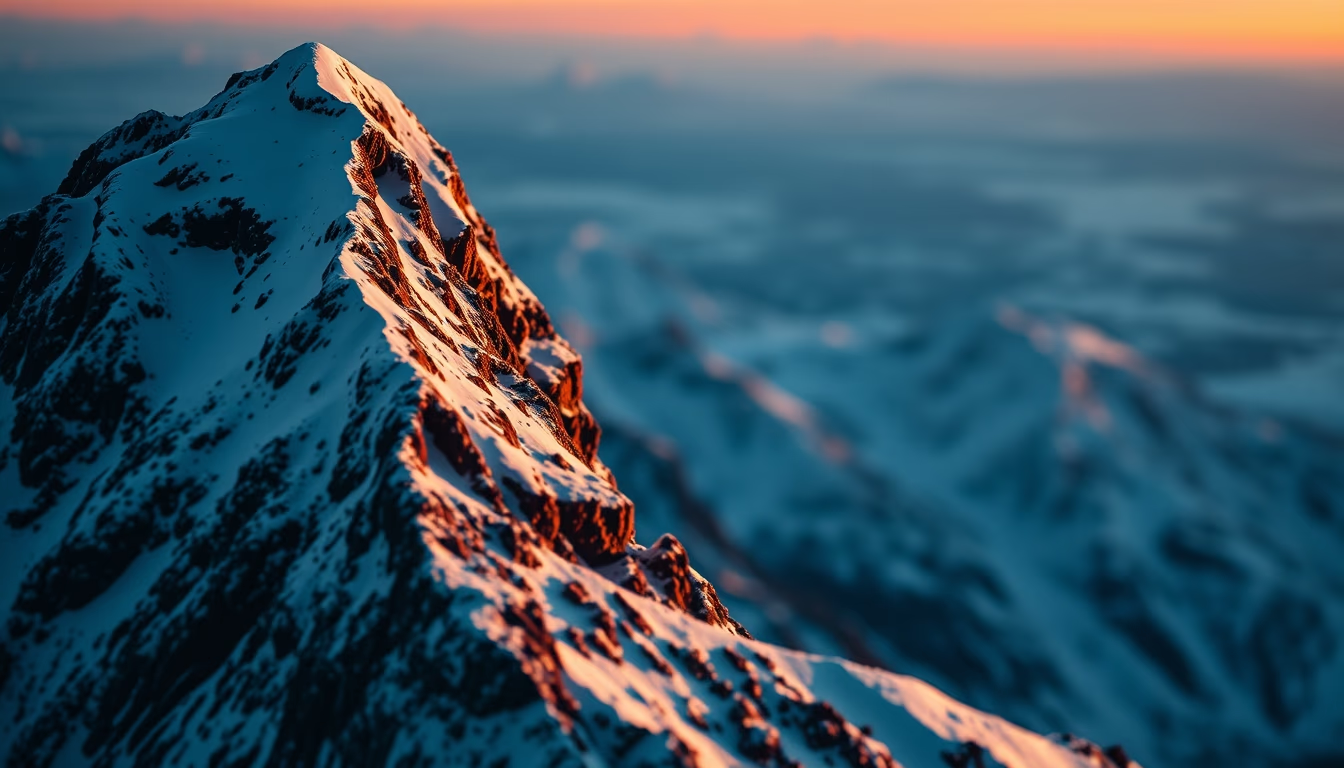
Snow-capped mountain peak at sunrise, a natural spectacle combining geology and extreme climate.
About this subject
Snow-capped mountain peaks are geological formations found in high-altitude or high-latitude regions, where the average annual temperature is low enough to maintain snow year-round. The peak depicted in the image, typical of mountain ranges like the Andes, Himalayas, or Alps, features a permanent snow cover formed by the accumulation of solid precipitation and compaction over decades. This phenomenon is known as a mountain glacier, and its presence depends directly on altitude: the snow line varies with latitude, being around 4,500 meters in the tropics and descending to sea level at the poles.
Sunrise over a snow-capped peak creates a striking visual contrast, with golden or orange light reflecting off the snow and ice. This moment, called the 'golden hour' in photography, lasts only a few minutes and results from the scattering of sunlight in the atmosphere. In mountainous regions, the combination of thin air and low pollution intensifies colors, making the spectacle even more vibrant. Mountains like Mount Everest, Aconcagua, and Mount Kilimanjaro are famous for their snowy peaks and attract climbers and tourists from around the world.
Perennial snow on peaks plays a crucial role in the global hydrological cycle, acting as a freshwater reservoir. During seasonal melting, the water feeds rivers and downstream ecosystems, being vital for agriculture, urban supply, and hydroelectric power generation in countries like Peru, India, and Switzerland. However, climate change is accelerating glacier retreat, threatening this resource. IPCC studies indicate that if greenhouse gas emissions continue at current rates, many mountain glaciers could lose up to 80% of their mass by 2100.
Interestingly, the visual perception of a snowy peak can be deceiving: surface snow may melt and refreeze several times a day, forming ice layers that reflect light differently. Additionally, snow color can range from pure white to bluish, depending on density and the presence of algae or mineral particles. In some regions, like Patagonia, it is common to see snow with pinkish hues due to microorganisms called 'watermelon snow' (Chlamydomonas nivalis).
Frequently Asked Questions
Why does the mountain peak remain snow-covered even in summer?
This happens because the high altitude keeps temperatures below freezing year-round. Snow accumulated over centuries compacts to form glaciers, which only melt if temperatures rise above freezing for extended periods.
What is the ecological importance of snow-capped mountains?
They act as 'water towers', storing snow and ice that melt gradually, supplying rivers and ecosystems. They are essential for local biodiversity and for providing freshwater to millions of people in arid regions.
How do climate changes affect snow-capped peaks?
Global warming accelerates glacier melting, reducing snow mass. This can lead to long-term water scarcity, sea level rise, and alteration of mountain ecosystems.
Direct URL
https://pub-c7d6a6ea828543ac903a74a341ccb2e1.r2.dev/imagens/snow-capped-mountain-peak-sunrise-macro-closeup.avifHow to credit
Include a visible link back to UtilizAí. Copy one of the snippets below:
<a href="https://xn--utiliza-eza.com/en/midia/imagens/snow-capped-mountain-peak-sunrise-macro-closeup">Snow capped mountain peak sunrise</a> by <a href="https://xn--utiliza-eza.com">UtilizAí</a>, licensed under <a href="https://creativecommons.org/licenses/by/4.0/">CC BY 4.0</a>.
[Snow capped mountain peak sunrise](https://xn--utiliza-eza.com/en/midia/imagens/snow-capped-mountain-peak-sunrise-macro-closeup) by [UtilizAí](https://xn--utiliza-eza.com), CC BY 4.0
License: CC-BY-4.0