Smart traffic signal
1344×768 · AVIF · CC BY 4.0

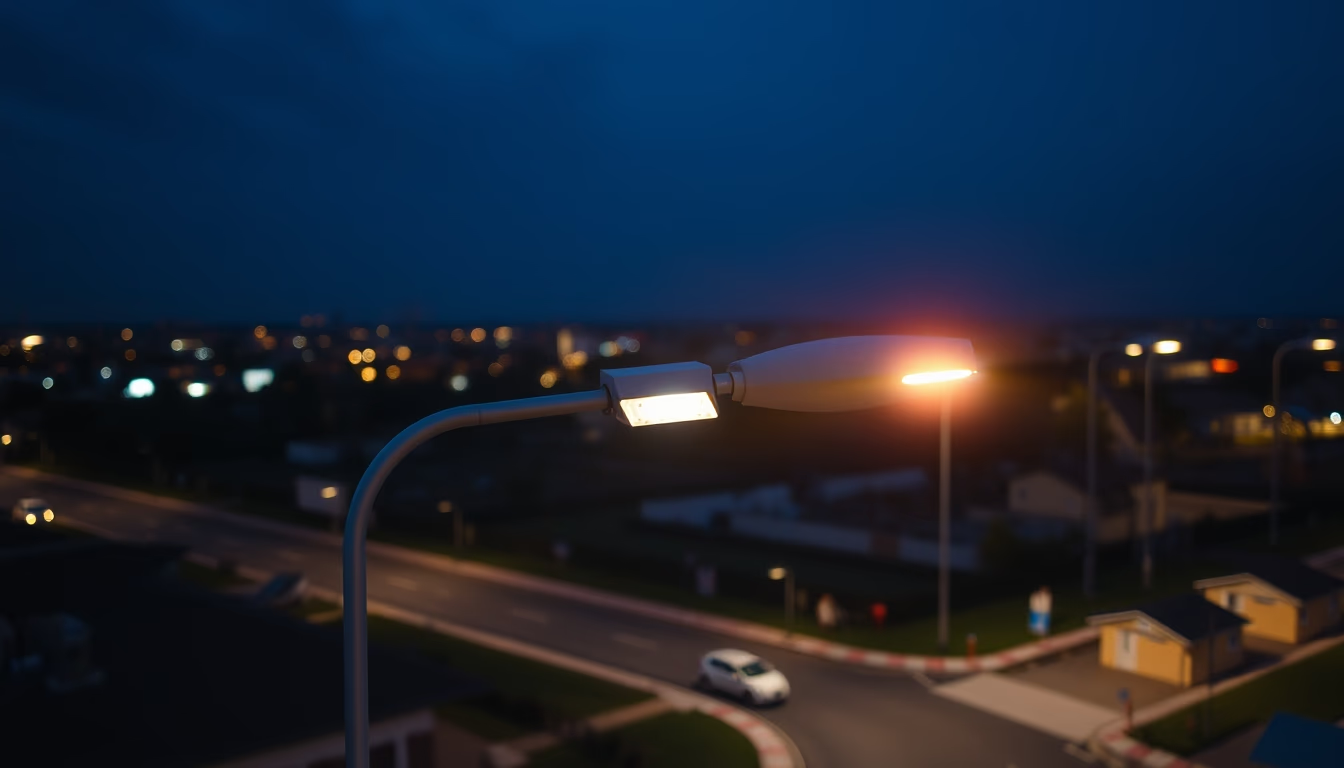
Smart traffic signals use sensors and AI to optimize traffic flow, reducing congestion and emissions in global cities.
About this subject
Smart traffic signals represent an evolution of traditional traffic control systems. Equipped with cameras, radars, and inductive loop sensors, they collect real-time data on vehicle volume, speed, and even weather conditions. Based on this information, artificial intelligence algorithms dynamically adjust red and green signal timings to maximize traffic efficiency. Cities like Pittsburgh in the United States and Belo Horizonte in Brazil have already implemented these systems with impressive results: reductions of up to 25% in travel time and 20% in pollutant emissions.
The technology behind these signals can be divided into two main approaches: centralized, where a control center processes data from a network of signals, and decentralized, where each signal makes local decisions while communicating with its neighbors. The second approach is more resilient and scalable. In the Brazilian urban context, cities like São Paulo face integration challenges due to heterogeneous traffic, including motorcycles and bicycles, which requires more sophisticated sensors.
Beyond traffic management, smart signals contribute to road safety. By synchronizing signals with vehicle speeds, they reduce the need for sudden stops, lowering the risk of rear-end collisions. More advanced systems can prioritize emergency vehicles, such as ambulances, creating a green wave for faster hospital arrival. Global adoption of this infrastructure is estimated to grow 15% annually by 2030, driven by smart city investments and pressure to reduce carbon emissions.
Frequently Asked Questions
How does a smart traffic signal know how many cars are in the lane?
It uses sensors such as inductive loops embedded in the pavement, computer vision cameras, or radars that detect vehicle presence and count in real time.
Do smart signals reduce pedestrian waiting times?
Yes, many systems prioritize pedestrians during peak hours and adjust timings based on actual demand, ensuring safer and more efficient crossings.
Has Brazil widely adopted this technology?
Not yet, but there are pilot projects in cities like Belo Horizonte, Curitiba, and São Paulo. Expansion faces barriers such as implementation costs and integration with legacy systems.
Direct URL
https://pub-c7d6a6ea828543ac903a74a341ccb2e1.r2.dev/imagens/smart-traffic-signal-studio-editorial-portrait-p1.avifHow to credit
Include a visible link back to UtilizAí. Copy one of the snippets below:
<a href="https://xn--utiliza-eza.com/en/midia/imagens/smart-traffic-signal-studio-editorial-portrait-p1">Smart traffic signal</a> by <a href="https://xn--utiliza-eza.com">UtilizAí</a>, licensed under <a href="https://creativecommons.org/licenses/by/4.0/">CC BY 4.0</a>.
[Smart traffic signal](https://xn--utiliza-eza.com/en/midia/imagens/smart-traffic-signal-studio-editorial-portrait-p1) by [UtilizAí](https://xn--utiliza-eza.com), CC BY 4.0
License: CC-BY-4.0