Smart traffic signal
1344×768 · AVIF · CC BY 4.0
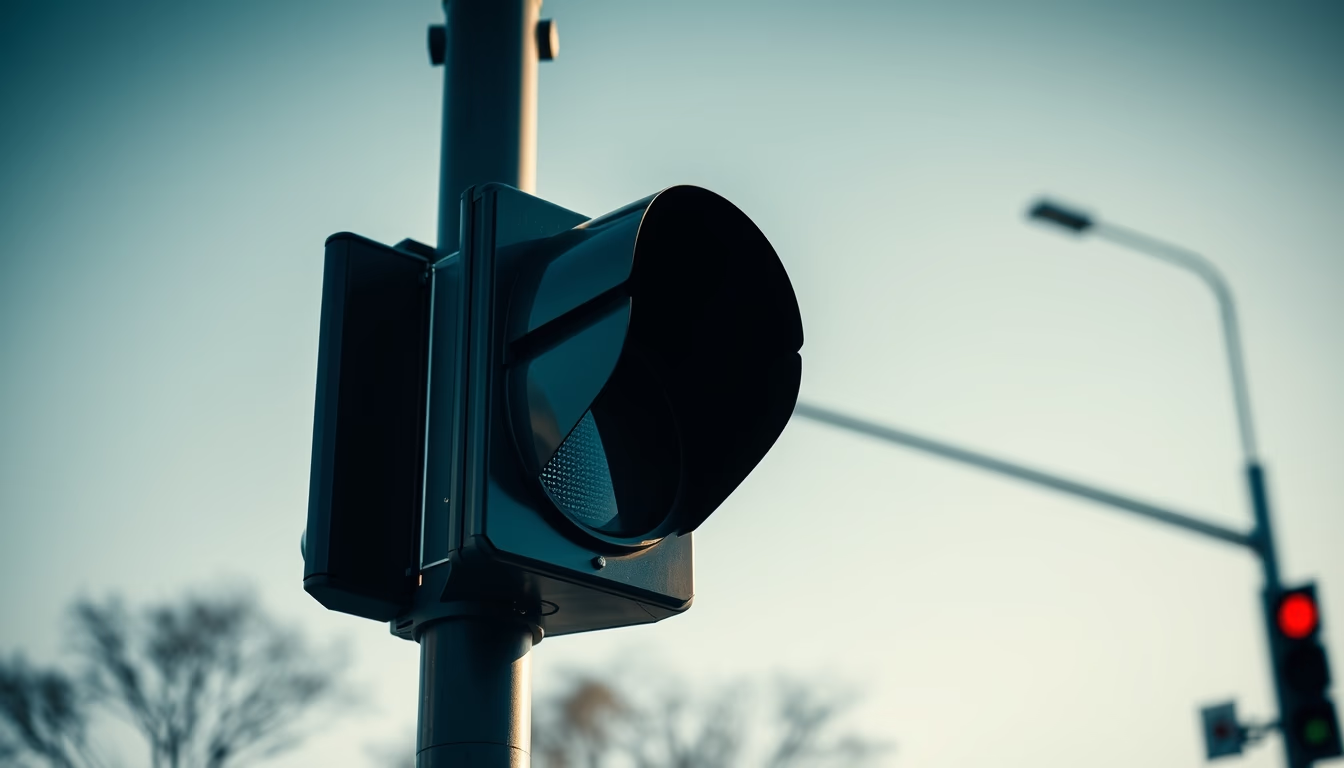
Smart traffic signals use AI and sensors to optimize vehicle flow, reducing congestion and emissions.
About this subject
Smart traffic signals represent an evolution from traditional traffic lights, integrating technologies like artificial intelligence, radar sensors, and cameras to monitor traffic in real time. Unlike fixed-time systems that operate on preset timers, these devices dynamically adjust signal timings based on vehicle volume, pedestrian presence, and even weather conditions. This adaptive capability can reduce wait times by up to 40%, according to studies from the US Department of Transportation, and decrease CO2 emissions by avoiding unnecessary stops.
Cities such as Barcelona, Singapore, and São Paulo are already testing or deploying these systems on key road corridors. In Barcelona, the Sentilo platform collects sensor data to manage 1,500 intersections, prioritizing public transport and emergency vehicles. In Brazil, São Paulo began installing smart signals at 50 intersections in 2023, with plans to expand to 400 by 2026. The technology also connects with autonomous vehicles and navigation systems, allowing cars to receive information about the best moment to cross intersections.
For 2026, the trend is integration with 5G networks and the Internet of Things, creating an interconnected urban mobility ecosystem. Smart signals will be able to communicate with other devices, such as parking sensors and security cameras, to anticipate congestion and suggest alternative routes. Moreover, machine learning algorithms learn daily and seasonal patterns, automatically adjusting for special events or roadworks. This approach not only improves traffic flow but also enhances safety, reducing intersection collisions by up to 30%.
A less known aspect is the minimalist design of these devices, which prioritizes discretion and urban integration. Instead of large metal structures, many models use slim LED panels and sensors embedded in existing poles. This facilitates installation in historic areas or places with aesthetic restrictions, as seen in European city centers. Energy savings are also significant, as LEDs consume up to 80% less electricity than traditional incandescent bulbs.
Frequently Asked Questions
How do smart traffic signals work?
They use sensors (cameras, radar, inductive loops) to detect vehicles and pedestrians in real time. An AI system adjusts signal timings to optimize flow, prioritizing roads with higher demand or emergency vehicles.
What are the main benefits of smart traffic lights?
Reduced congestion (up to 40% less waiting time), lower CO2 emissions, energy savings (LEDs), and improved road safety (up to 30% fewer intersection collisions).
Where are these systems already deployed in Brazil?
Cities like São Paulo launched pilot projects in 2023 with 50 smart intersections, planning to expand to 400 by 2026. Other capitals such as Brasília and Curitiba are also studying implementations.
Direct URL
https://pub-c7d6a6ea828543ac903a74a341ccb2e1.r2.dev/imagens/smart-traffic-signal-minimalist-composition-p4.avifHow to credit
Include a visible link back to UtilizAí. Copy one of the snippets below:
<a href="https://xn--utiliza-eza.com/en/midia/imagens/smart-traffic-signal-minimalist-composition-p4">Smart traffic signal</a> by <a href="https://xn--utiliza-eza.com">UtilizAí</a>, licensed under <a href="https://creativecommons.org/licenses/by/4.0/">CC BY 4.0</a>.
[Smart traffic signal](https://xn--utiliza-eza.com/en/midia/imagens/smart-traffic-signal-minimalist-composition-p4) by [UtilizAí](https://xn--utiliza-eza.com), CC BY 4.0
License: CC-BY-4.0