Sitar indian carved
1344×768 · AVIF · CC BY 4.0

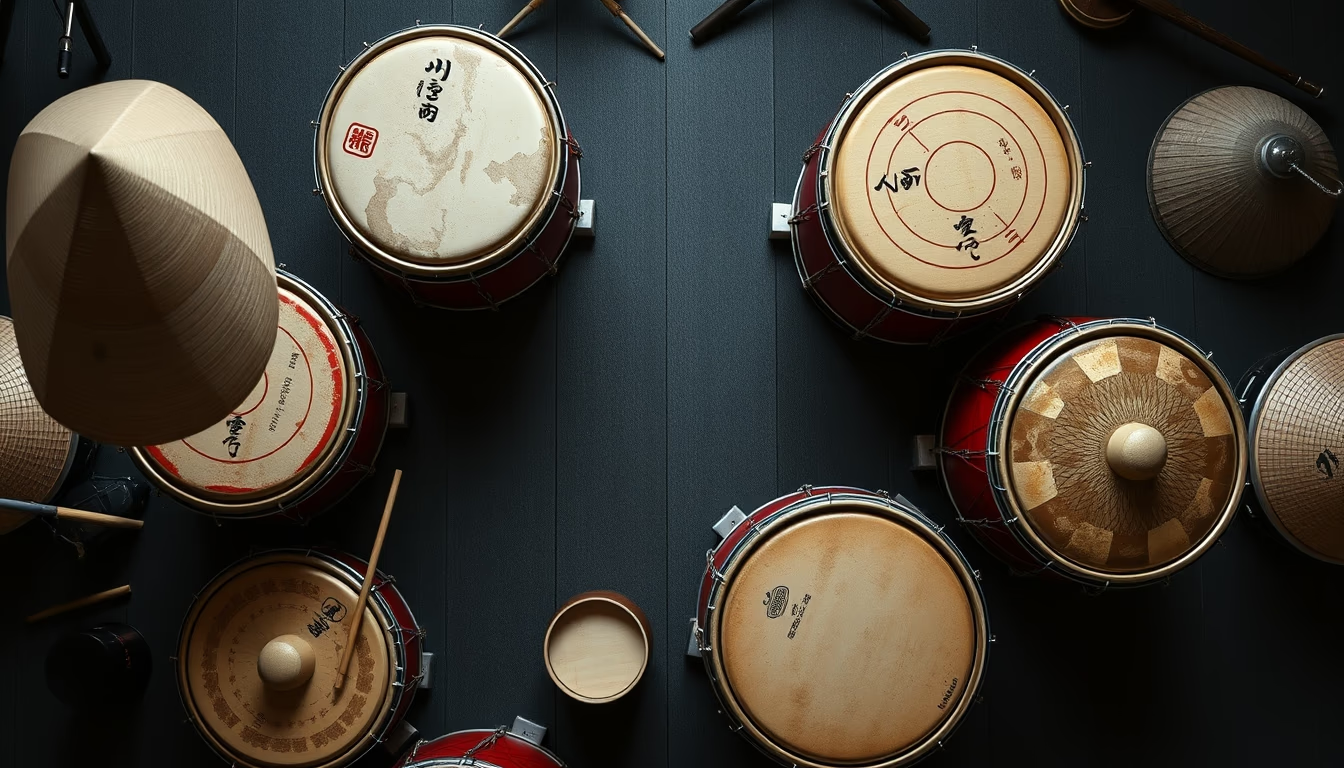
The sitar is a plucked string instrument from India, renowned for its hypnotic timbre and intricate carved decoration, used in Hindustani classical music.
About this subject
The sitar is a plucked string instrument from the Indian subcontinent, central to Hindustani classical music. Its construction features a gourd-shaped resonance chamber (tumba), a long wooden neck with curved metal frets, and main strings of steel and copper, along with sympathetic strings that vibrate in response, producing its distinctive sound. The intricate carving of the sitar, typically in teak or mahogany, showcases India's rich artisanal heritage.
Historically, the modern sitar developed in the 18th century from Persian instruments like the setar. Maestro Ravi Shankar popularized the sitar in the West during the 1950s, influencing artists like The Beatles, George Harrison studied with Shankar and used the sitar on tracks like 'Norwegian Wood'. The sitar's sound is created by plucking strings with a metal plectrum (mizrab) worn on the index finger. Its tuning and microtonal system (shruti) enable the exploration of ragas, melodic frameworks linked to emotions and seasons.
The carved decoration of the sitar is both aesthetic and functional: each piece may take weeks to hand-carve by artisans in cities such as Miraj or Kolkata. Designs often include floral motifs, arabesques, and mythological figures like Hindu deities. The instrument's body is usually lacquered with natural varnish to highlight the carvings. Regional variations exist: the Rampur-style sitar has wider frets and a deeper tone, while the Gayaki style imitates the human voice. Maintenance requires care, as sympathetic strings can detune with temperature changes.
Beyond classical music, the sitar appears in contemporary fusion genres with jazz, rock, and electronic music. Players such as Anoushka Shankar (Ravi's daughter) and Sultan Khan (sarangi) continue the tradition, bringing the instrument to new audiences. The sitar's complexity, with 18 to 20 strings, 13 of which are sympathetic, makes it one of the world's most sophisticated instruments, both technically and artistically.
Frequently Asked Questions
How does the sitar produce its characteristic sound?
The sitar's sound comes from plucked main strings with a metal plectrum (mizrab) and sympathetic strings that vibrate in resonance, creating a rich, hypnotic timbre. The gourd chamber amplifies the sound.
What is the difference between a sitar and a guitar?
The sitar has sympathetic strings, curved movable frets, and is used for Indian classical music (ragas). The guitar has fixed frets, standard strings, and is used in many genres. Plucking technique also differs.
Where are intricately carved sitars made?
The best carved sitars come from artisan centers like Miraj and Kolkata, India. Skilled luthiers hand-carve floral or mythological motifs, and the process can take months.
Direct URL
https://pub-c7d6a6ea828543ac903a74a341ccb2e1.r2.dev/imagens/sitar-indian-carved-studio-editorial-portrait-p0.avifHow to credit
Include a visible link back to UtilizAí. Copy one of the snippets below:
<a href="https://xn--utiliza-eza.com/en/midia/imagens/sitar-indian-carved-studio-editorial-portrait-p0">Sitar indian carved</a> by <a href="https://xn--utiliza-eza.com">UtilizAí</a>, licensed under <a href="https://creativecommons.org/licenses/by/4.0/">CC BY 4.0</a>.
[Sitar indian carved](https://xn--utiliza-eza.com/en/midia/imagens/sitar-indian-carved-studio-editorial-portrait-p0) by [UtilizAí](https://xn--utiliza-eza.com), CC BY 4.0
License: CC-BY-4.0