Sitar indian carved
1344×768 · AVIF · CC BY 4.0
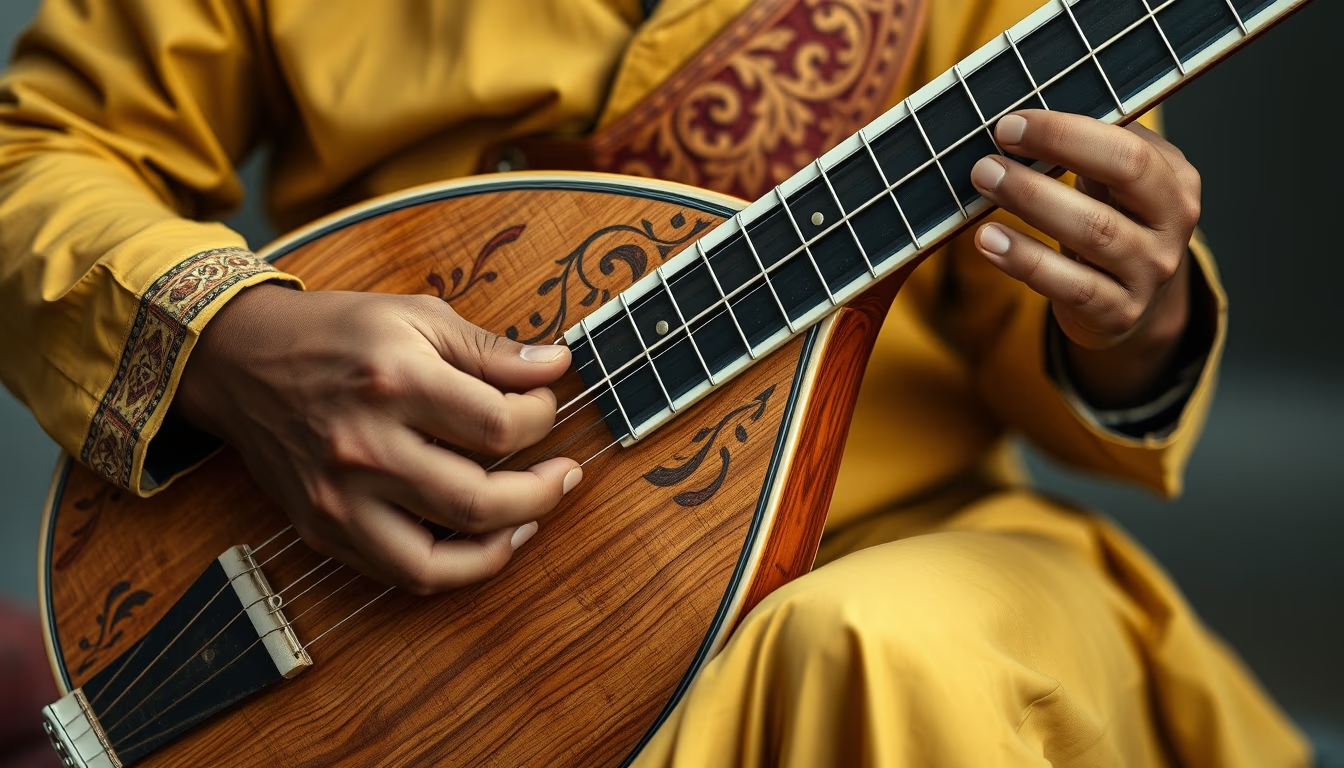
Carved Indian sitar, a classical string instrument from Indian music, known for its hypnotic tone and rich handcrafted decoration.
About this subject
The sitar is a plucked string instrument, widely associated with Hindustani classical music from northern India. Its origins date back to the 13th century, evolving from the tanpura and the Persian setar. The body is carved from teak wood or gourd, featuring a long neck, a resonating chamber, 20 movable frets, and two main bridges. Strings are divided into melodic strings (usually 7) and sympathetic strings (11 to 13) that vibrate sympathetically, creating the characteristic bright, sustained sound.
Carved decoration on the sitar is a traditional craft reflecting Indian culture. Master artisans in regions like Miraj and Kolkata carve floral patterns, geometric motifs, and mythological figures into the bridge, resonator, and neck. The carving is not only aesthetic: the worked wood can subtly influence acoustics. Well-carved instruments are considered art pieces and can take months to complete.
The sitar gained global recognition in the 20th century, mainly through virtuoso Ravi Shankar, who collaborated with musicians like George Harrison of the Beatles. From then on, the instrument became a symbol of Indian culture in the West, influencing genres like psychedelic rock and world music. Sitar players use a technique called "meend" (string sliding) and ornaments like "gamak" to express Indian ragas.
Curiosity: the sitar has a "horse" (bridge) carved from bone or ivory, and the shape of internal cavities is designed to amplify certain frequencies. Each sitar is tuned according to the raga to be performed, requiring fine adjustments to the sympathetic strings.
Frequently Asked Questions
What is the difference between a sitar and a tanpura?
The sitar is a melodic instrument with frets and sympathetic strings, used to play ragas. The tanpura is a drone instrument, fretless, producing a continuous accompaniment sound, usually with four strings.
Why does the sitar have so many strings?
The sitar has melodic strings (for the main melody) and sympathetic strings (which vibrate by resonance, sustaining the sound and adding brightness). The sympathetic strings are tuned to the scale of the raga and create the instrument's characteristic sound.
Is it difficult to learn to play the sitar?
Yes, the sitar requires years of practice. The student must master posture, plucking technique, sliding (meend), and ornaments, as well as understand raga theory. Traditional learning follows the guru-shishya (master-disciple) system.
Direct URL
https://pub-c7d6a6ea828543ac903a74a341ccb2e1.r2.dev/imagens/sitar-indian-carved-national-geographic-style-p8.avifHow to credit
Include a visible link back to UtilizAí. Copy one of the snippets below:
<a href="https://xn--utiliza-eza.com/en/midia/imagens/sitar-indian-carved-national-geographic-style-p8">Sitar indian carved</a> by <a href="https://xn--utiliza-eza.com">UtilizAí</a>, licensed under <a href="https://creativecommons.org/licenses/by/4.0/">CC BY 4.0</a>.
[Sitar indian carved](https://xn--utiliza-eza.com/en/midia/imagens/sitar-indian-carved-national-geographic-style-p8) by [UtilizAí](https://xn--utiliza-eza.com), CC BY 4.0
License: CC-BY-4.0