Sitar indian carved
1344×768 · AVIF · CC BY 4.0
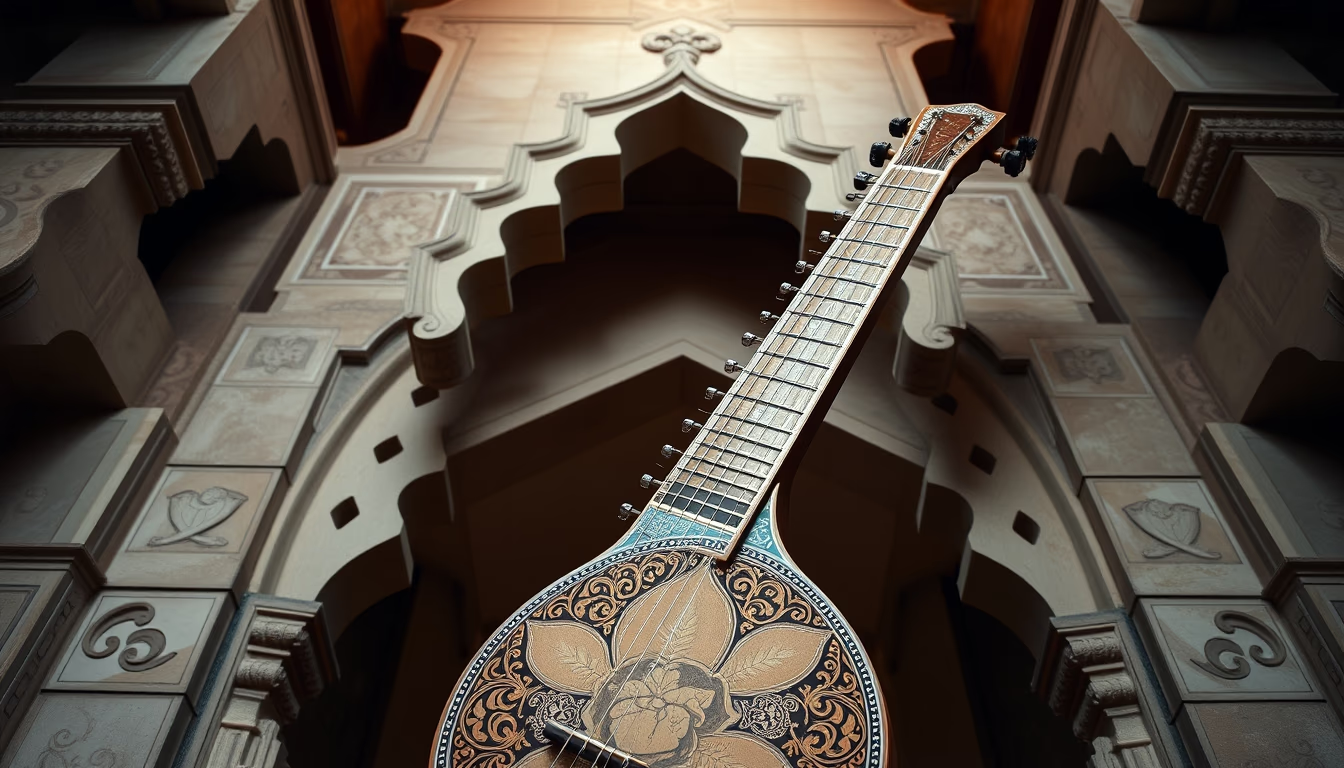
The sitar is a plucked string instrument from India, renowned for its rich sound and intricately carved resonator.
About this subject
The sitar is one of the most iconic instruments of Indian classical music. Its origins date back to the 13th century, evolving from Persian instruments like the setar. It features a resonating chamber made from a gourd (tumba) and a long neck with movable frets. The strings are divided into main playing strings and sympathetic strings (taraf), which vibrate sympathetically, creating a hypnotic sound. The carving on the resonator is often intricately decorated with ivory or bone inlays, depicting floral motifs or mythological figures. Great maestros like Ravi Shankar and Vilayat Khan popularized the sitar in the West, influencing musicians from the Beatles to progressive rock bands. The instrument requires years of practice to master techniques such as meend (sliding between notes) and gamak (rapid ornamentation). Each sitar is handcrafted by specialized luthiers, mainly in Miraj, India. The wood used is typically teak or cedar, and the tuning varies according to the raga (melodic scale) being performed. The sitar also has a thin soundboard (tabli) that amplifies vibrations. Its presence in architectural photography may highlight the connection between musical art and spatial design.
Frequently Asked Questions
How is the sitar tuned?
The sitar tuning varies by raga; main strings are usually tuned to tonic and fifth, while sympathetic strings are tuned to the notes of the raga scale. Movable frets allow microtonal adjustments.
What is the difference between a sitar and a guitar?
The sitar has sympathetic strings and movable frets, absent on a guitar. Its body is made of gourd and wood, and playing technique involves slides and ornamentations typical of Indian music.
What musical styles primarily use the sitar?
The sitar is central to Indian classical (Hindustani) music, but also appears in fusion with jazz, rock, and electronic music. Western artists like the Beatles and John McLaughlin have incorporated it.
Direct URL
https://pub-c7d6a6ea828543ac903a74a341ccb2e1.r2.dev/imagens/sitar-indian-carved-architectural-photography-p10.avifHow to credit
Include a visible link back to UtilizAí. Copy one of the snippets below:
<a href="https://xn--utiliza-eza.com/en/midia/imagens/sitar-indian-carved-architectural-photography-p10">Sitar indian carved</a> by <a href="https://xn--utiliza-eza.com">UtilizAí</a>, licensed under <a href="https://creativecommons.org/licenses/by/4.0/">CC BY 4.0</a>.
[Sitar indian carved](https://xn--utiliza-eza.com/en/midia/imagens/sitar-indian-carved-architectural-photography-p10) by [UtilizAí](https://xn--utiliza-eza.com), CC BY 4.0
License: CC-BY-4.0