Silk road spices arrayed
1344×768 · AVIF · CC BY 4.0
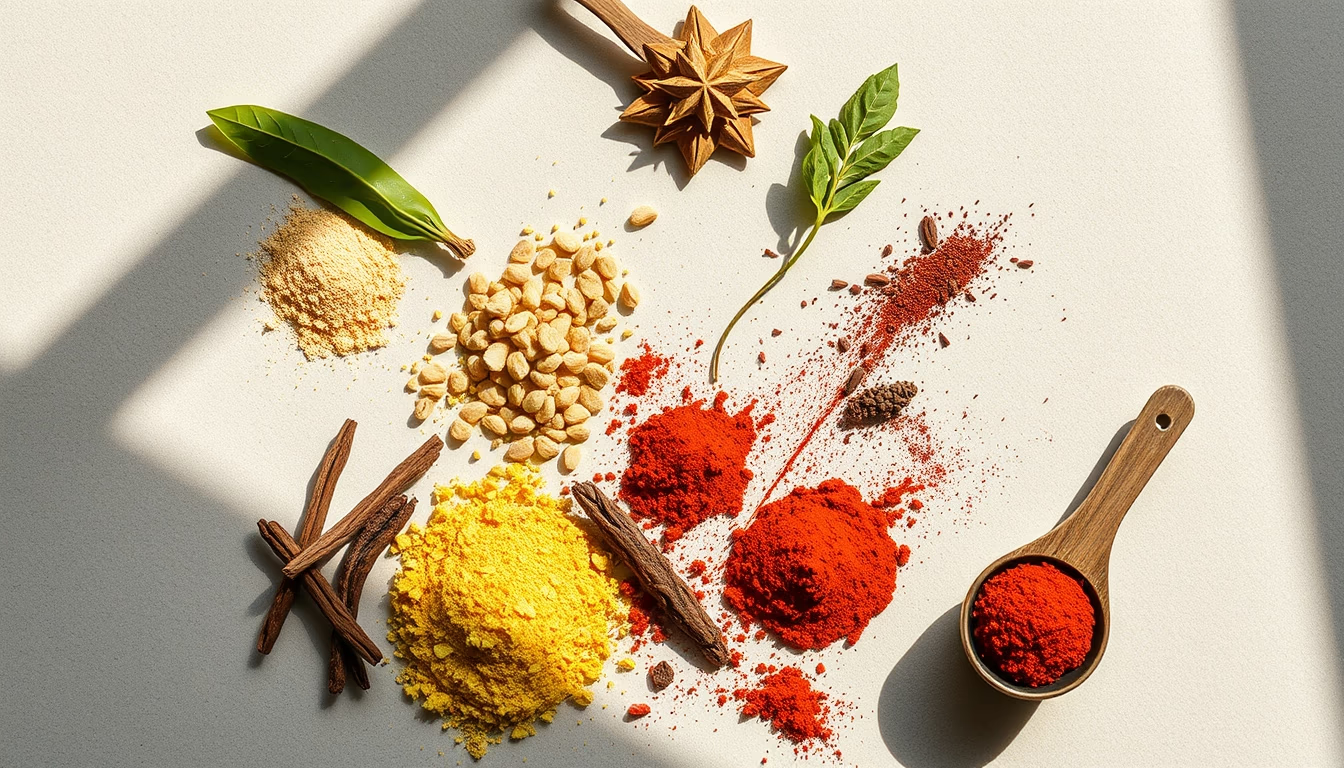
Exotic spices traversed the Silk Road, reshaping economies and cultures over centuries.
About this subject
The Silk Road, a network of trade routes linking East and West from the 2nd century BCE to the 15th century CE, carried far more than silk. Spices such as black pepper, cinnamon, cloves, nutmeg, and cardamom were among the most coveted goods. Originating in India, Southeast Asia, and the Maluku Islands, these spices traveled by caravan across Central Asia to the Mediterranean, where Venetian and Genoese merchants distributed them throughout Europe.
The value of spices was immense: black pepper was once used as currency and dowry. Demand generated vast fortunes, spurred maritime exploration, and led to the colonization of producing regions. Beyond cooking, spices served medicinal, perfumery, and religious purposes. The trade fostered cultural and technological exchanges, influencing art, literature, and science across civilizations.
The difficulty and perils of transport, thousands of miles under arid and insecure conditions, justified high prices. After the fall of Constantinople in 1453, Ottoman control over traditional routes prompted Europeans to seek new sea passages, culminating in the Age of Discovery. Today, the legacy of Silk Road spices endures in global cuisines and the historical memory of the first great international trade system.
Frequently Asked Questions
Which spices were most valuable on the Silk Road?
Black pepper was the most valuable, followed by cinnamon, cloves, nutmeg, and cardamom. Their high worth came from scarcity and the vast distance traveled.
How were spices transported along the Silk Road?
They were carried by camel or horse caravans, in sacks or pots, across deserts and mountains. Journeys lasted months, facing risks of bandits and harsh weather.
What impact did the spice trade have on maritime exploration?
High demand and the monopoly of land routes after the fall of Constantinople prompted Europeans to seek alternative sea routes, leading to discoveries such as the sea route to India.
Direct URL
https://pub-c7d6a6ea828543ac903a74a341ccb2e1.r2.dev/imagens/silk-road-spices-arrayed-magazine-editorial-fresh14.avifHow to credit
Include a visible link back to UtilizAí. Copy one of the snippets below:
<a href="https://xn--utiliza-eza.com/en/midia/imagens/silk-road-spices-arrayed-magazine-editorial-fresh14">Silk road spices arrayed</a> by <a href="https://xn--utiliza-eza.com">UtilizAí</a>, licensed under <a href="https://creativecommons.org/licenses/by/4.0/">CC BY 4.0</a>.
[Silk road spices arrayed](https://xn--utiliza-eza.com/en/midia/imagens/silk-road-spices-arrayed-magazine-editorial-fresh14) by [UtilizAí](https://xn--utiliza-eza.com), CC BY 4.0
License: CC-BY-4.0