Silk road spices arrayed
1344×768 · AVIF · CC BY 4.0
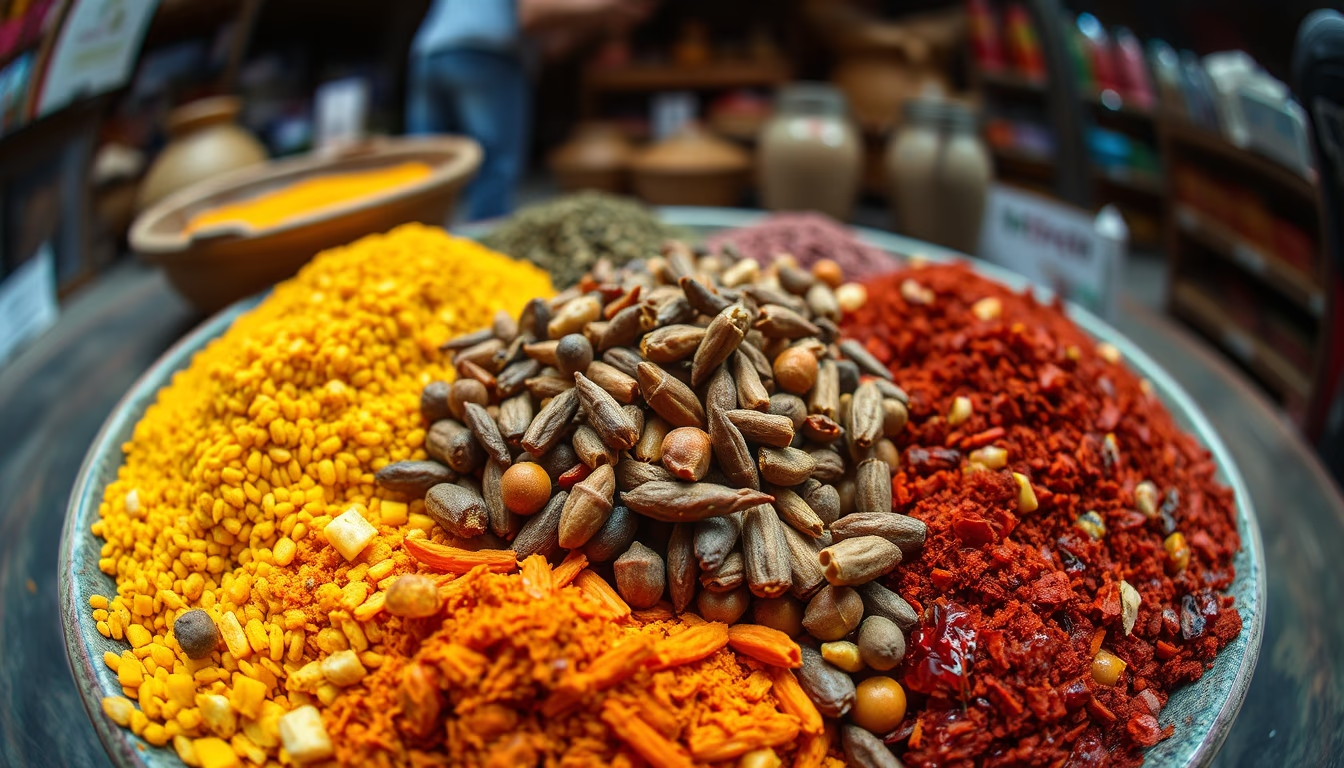
A historical array of Silk Road spices such as cinnamon, cloves, and pepper, which shaped global trade.
About this subject
The Silk Road, which connected East to West for over 1,500 years, was not just a route for silk but also for valuable spices. Cinnamon, cloves, nutmeg, pepper, and ginger were among the most sought-after goods, used in cooking, medicine, and food preservation. The demand for these spices drove maritime exploration, leading to the discovery of new trade routes and later colonization. Pepper, for instance, was so precious it served as currency and was called "black gold." These spices not only transformed European cuisine but also influenced pharmacy and perfumery, with cultural exchanges lasting centuries.
The spice trade was controlled by Arab and Venetian intermediaries, who kept the origins of the plants secret, creating lucrative monopolies that were only broken after the Portuguese reached India in the 15th century. Each spice had its own journey: cinnamon was native to Sri Lanka, cloves to the Maluku Islands, and pepper to southwestern India. Drying and transport methods were sophisticated to preserve aroma and flavor during long overland and sea journeys.
The cultural impact of spices is immense. They appear in religious rituals such as incense and in enduring regional culinary traditions. Cinnamon was used in Egyptian mummification, while cloves served as an anesthetic. The search for new spice sources brought continents into contact and spread plants now cultivated globally. The Silk Road's legacy is still visible in spice markets in Cairo, Istanbul, and Uzbekistan.
Frequently Asked Questions
Which spice was the most valuable on the Silk Road?
Pepper was considered the most valuable, often used as currency and called "black gold." Its high price spurred the exploration of new maritime routes.
How did spices influence maritime exploration?
The quest for direct access to spice sources without intermediaries led to the discovery of sea routes, such as the circumnavigation of Africa and the Portuguese arrival in India.
Where were the main Silk Road spices cultivated?
Cinnamon was native to Sri Lanka, cloves from the Maluku Islands (Indonesia), nutmeg from Indonesia, pepper from southwestern India, and ginger from tropical Asia.
Direct URL
https://pub-c7d6a6ea828543ac903a74a341ccb2e1.r2.dev/imagens/silk-road-spices-arrayed-fish-eye-wide-angle-fresh4.avifHow to credit
Include a visible link back to UtilizAí. Copy one of the snippets below:
<a href="https://xn--utiliza-eza.com/en/midia/imagens/silk-road-spices-arrayed-fish-eye-wide-angle-fresh4">Silk road spices arrayed</a> by <a href="https://xn--utiliza-eza.com">UtilizAí</a>, licensed under <a href="https://creativecommons.org/licenses/by/4.0/">CC BY 4.0</a>.
[Silk road spices arrayed](https://xn--utiliza-eza.com/en/midia/imagens/silk-road-spices-arrayed-fish-eye-wide-angle-fresh4) by [UtilizAí](https://xn--utiliza-eza.com), CC BY 4.0
License: CC-BY-4.0