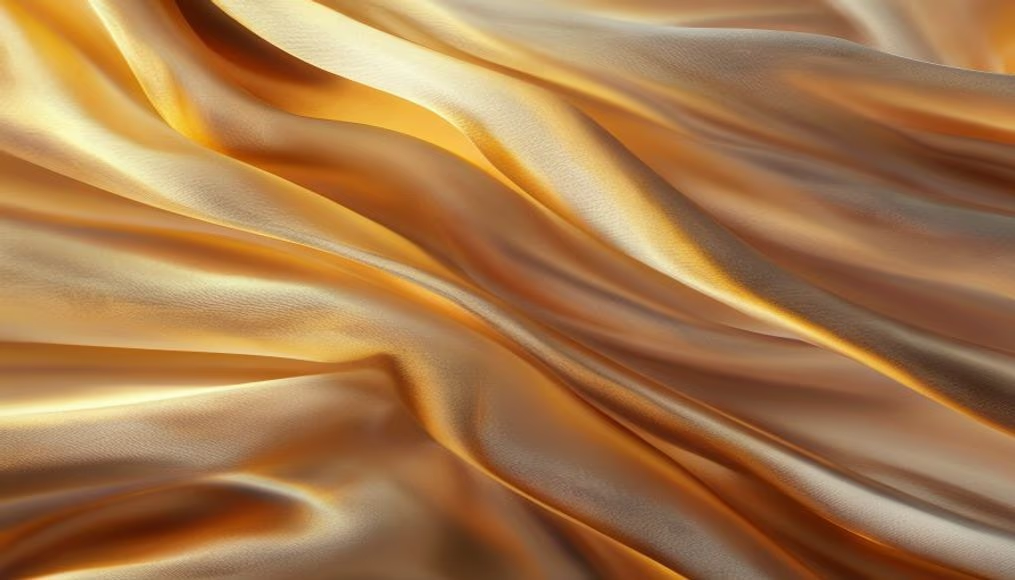
Silk fabric flowing close-up
1344×768 · AVIF · CC BY 4.0

Close-up of flowing silk fabric with rich texture and soft sheen, capturing the timeless elegance of textile luxury.
About this subject
Silk is a natural protein fiber produced by silkworms (Bombyx mori) during cocoon formation. Originating in ancient China, where it was cultivated as early as 3000 BCE, silk was for centuries a closely guarded secret associated with luxury and nobility. The Silk Road, which connected China to the Mediterranean, was named after this precious fabric that fueled trade between East and West. Silk production involves boiling the cocoons to extract continuous filaments that can reach up to 900 meters in length. This artisanal process gives silk its characteristic softness, natural sheen, and fluid drape. In fashion, silk is prized for its lightness, breathability, and luxurious feel, used in evening gowns, scarves, lingerie, and ties. Unlike synthetic fibers, silk regulates temperature, keeping the body cool in summer and warm in winter. The close-up reveals the intricate weave and flowing fall of the fabric, highlighting how light interacts with the fibers to create a subtle, shifting luster. This texture results from the triangular structure of silk fibers, which refract light at different angles. Silk is also hypoallergenic and resistant to dust mites, making it suitable for sensitive skin. Despite its high cost, silk remains a status symbol and a hallmark of good taste, featured in haute couture collections and luxury craftsmanship. Global silk production today is concentrated in China (about 80%), followed by India and Uzbekistan, preserving ancient traditions combined with modern dyeing and finishing techniques.
Frequently Asked Questions
How is silk produced?
Silk is obtained from the cocoons of silkworms (Bombyx mori). The cocoons are boiled to soften the sericin, allowing the continuous filament to be unwound, which can be up to 900 meters long. This filament is twisted and woven into fabric.
What is the difference between natural and synthetic silk?
Natural silk is made from protein fibers of silkworms, offering natural luster, softness, and thermal regulation. Synthetic silk (like polyester or rayon) is derived from petroleum or cellulose, mimicking the look but lacking the same breathable and hypoallergenic properties.
How to care for silk clothing?
Silk should be hand washed in cold water with mild detergent, or dry cleaned. Avoid wringing and dry in the shade. Low-temperature steaming helps remove wrinkles without damaging the fibers.
Direct URL
https://pub-c7d6a6ea828543ac903a74a341ccb2e1.r2.dev/imagens/silk-fabric-flowing-close-up-cinematic-wide-shot-v2.avifHow to credit
Include a visible link back to UtilizAí. Copy one of the snippets below:
<a href="https://xn--utiliza-eza.com/en/midia/imagens/silk-fabric-flowing-close-up-cinematic-wide-shot-v2">Silk fabric flowing close-up</a> by <a href="https://xn--utiliza-eza.com">UtilizAí</a>, licensed under <a href="https://creativecommons.org/licenses/by/4.0/">CC BY 4.0</a>.
[Silk fabric flowing close-up](https://xn--utiliza-eza.com/en/midia/imagens/silk-fabric-flowing-close-up-cinematic-wide-shot-v2) by [UtilizAí](https://xn--utiliza-eza.com), CC BY 4.0
License: CC-BY-4.0