Shinto shrine torii red
1344×768 · AVIF · CC BY 4.0
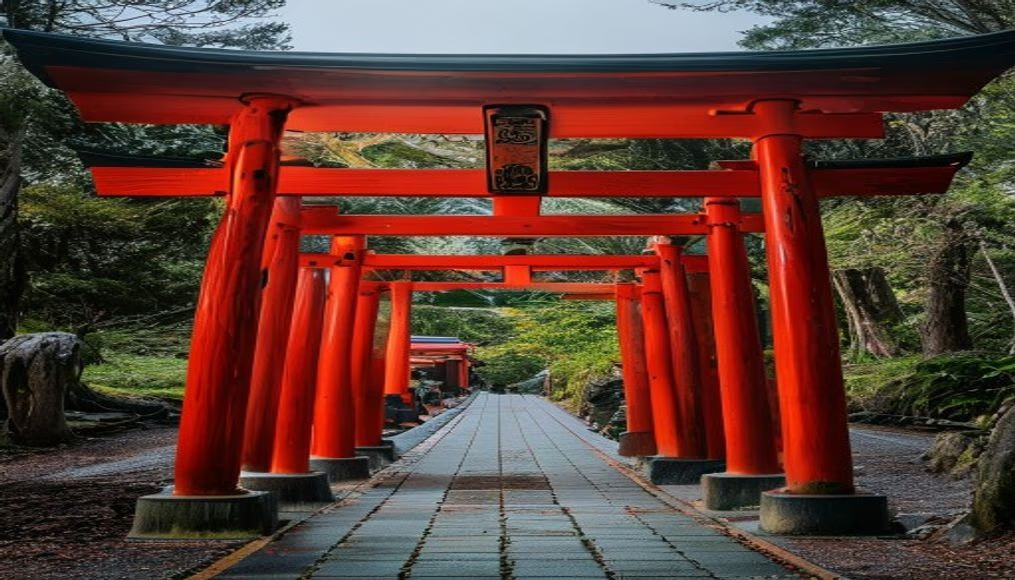
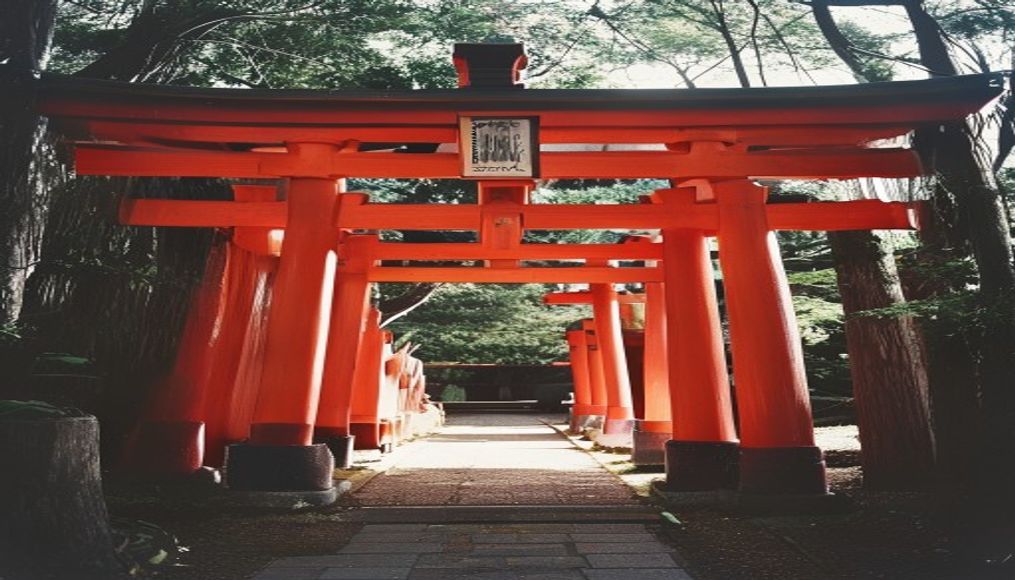
A torii is a sacred Shinto gate, often painted red, marking the transition from the mundane to the divine.
About this subject
The torii is a traditional Japanese architectural feature found at the entrance of Shinto shrines. Its primary function is to mark the boundary between the human world and the realm of the kami, the divine spirits of Shinto. The red color, common on many torii, carries symbolic meaning: it is believed to ward off negative energy and evil spirits, as well as represent life and protection. This specific vermilion shade was historically obtained from cinnabar or mercury-based pigments, but today synthetic weather-resistant paints are used.
Torii vary in style and material, with wood and stone being most common. The basic structure consists of two vertical pillars supporting two horizontal beams, with the upper beam slightly curved at the ends. One iconic example is the floating torii of Itsukushima Shrine on Miyajima Island, which appears to rise from the water at high tide. Another famous sight is the row of thousands of red torii at Fushimi Inari Shrine in Kyoto, forming tunnels along mountain trails.
The construction of a torii follows specific Shinto rituals, including purification ceremonies. Many shrines have multiple torii along the approach path, and passing through them is an act of respect and spiritual preparation. Although the torii is nearly a universal symbol of Japan, its origins remain uncertain: some theories suggest influence from Chinese monumental gates, while others propose an independent local evolution. Today, torii are also used decoratively in gardens and public spaces, both in Japan and abroad.
Frequently Asked Questions
What is the meaning of the red color on a torii?
The red color on a torii is associated with protection against evil spirits and negative energy, and symbolizes life, strength, and vitality. It is believed to attract kami and purify the surroundings.
What is the most famous torii in Japan?
One of the most famous torii is at Itsukushima Shrine in Miyajima, which appears to float on the water at high tide. Another iconic example is the row of thousands of torii at Fushimi Inari Shrine in Kyoto.
What is the difference between a torii and a Buddhist temple gate?
A torii is exclusive to Shinto and marks the entrance of Shinto shrines, while Buddhist temple gates (called mon) come in various styles, such as sanmon, and often feature guardian statues. The torii is generally simpler and has no doors.
Direct URL
https://pub-c7d6a6ea828543ac903a74a341ccb2e1.r2.dev/imagens/shinto-shrine-torii-red-national-geographic-style-p0.avifHow to credit
Include a visible link back to UtilizAí. Copy one of the snippets below:
<a href="https://xn--utiliza-eza.com/en/midia/imagens/shinto-shrine-torii-red-national-geographic-style-p0">Shinto shrine torii red</a> by <a href="https://xn--utiliza-eza.com">UtilizAí</a>, licensed under <a href="https://creativecommons.org/licenses/by/4.0/">CC BY 4.0</a>.
[Shinto shrine torii red](https://xn--utiliza-eza.com/en/midia/imagens/shinto-shrine-torii-red-national-geographic-style-p0) by [UtilizAí](https://xn--utiliza-eza.com), CC BY 4.0
License: CC-BY-4.0