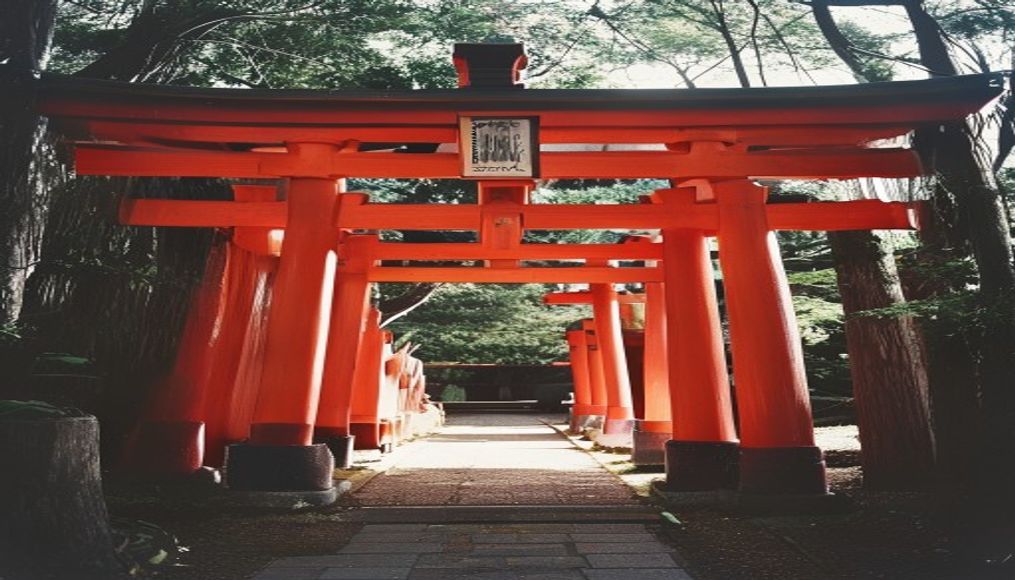
Shinto shrine torii red
1344×768 · AVIF · CC BY 4.0
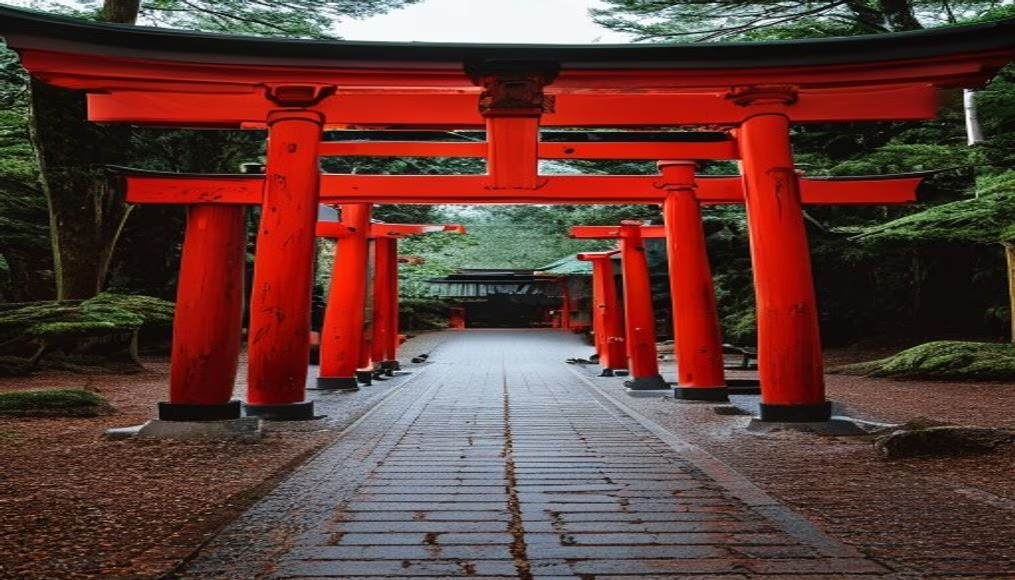
A red torii is a sacred gate of Shinto, marking the transition from the profane to the sacred world.
About this subject
The torii is a traditional gate found at the entrance of Shinto shrines in Japan. Its purpose is to mark the boundary between the sacred space (keidai) and the outside world, serving as a symbolic passage. The red color, predominant in many torii, is not merely aesthetic: in Shinto, red is associated with protection against evil spirits, as well as representing life and solar energy. Historically, the red pigment (shu) was made from cinnabar or iron oxide, materials that also helped preserve the wood.
Torii can be made of wood, stone, or metal, but the most iconic are made of wood lacquered in bright red. The basic form consists of two vertical pillars and two horizontal beams, with the upper one slightly curved. Variations include the shinmei torii (without curvature) and the ryōbu torii (with panels). The torii of Fushimi Inari in Kyoto is one of the most famous examples: thousands of red gates form tunnels along the mountainside.
Culturally, the red torii is also linked to the deity Inari, goddess of rice and prosperity, whose shrines often feature this color. Outside Japan, the torii has become a recognizable architectural icon, frequently used in Japanese gardens and cultural events. The maintenance of torii is an annual ritual, with repainting to preserve color and structural integrity.
Frequently Asked Questions
What does the red color of a torii mean?
In Shinto, red symbolizes protection against evil spirits and represents life, solar energy, and vitality. It is also associated with the deity Inari, goddess of rice and prosperity.
What is the function of a torii?
The torii marks the transition from the profane to the sacred. It delineates the entrance of a Shinto shrine, indicating that from that point one is in a space dedicated to the kami (deities).
Where are the most famous torii in Japan?
The most famous include the floating gate of Itsukushima (Miyajima), the thousands of torii at Fushimi Inari (Kyoto), and the great torii of Hakone Shrine.
Direct URL
https://pub-c7d6a6ea828543ac903a74a341ccb2e1.r2.dev/imagens/shinto-shrine-torii-red-architectural-photography-p2.avifHow to credit
Include a visible link back to UtilizAí. Copy one of the snippets below:
<a href="https://xn--utiliza-eza.com/en/midia/imagens/shinto-shrine-torii-red-architectural-photography-p2">Shinto shrine torii red</a> by <a href="https://xn--utiliza-eza.com">UtilizAí</a>, licensed under <a href="https://creativecommons.org/licenses/by/4.0/">CC BY 4.0</a>.
[Shinto shrine torii red](https://xn--utiliza-eza.com/en/midia/imagens/shinto-shrine-torii-red-architectural-photography-p2) by [UtilizAí](https://xn--utiliza-eza.com), CC BY 4.0
License: CC-BY-4.0