Shamisen japanese
1344×768 · AVIF · CC BY 4.0
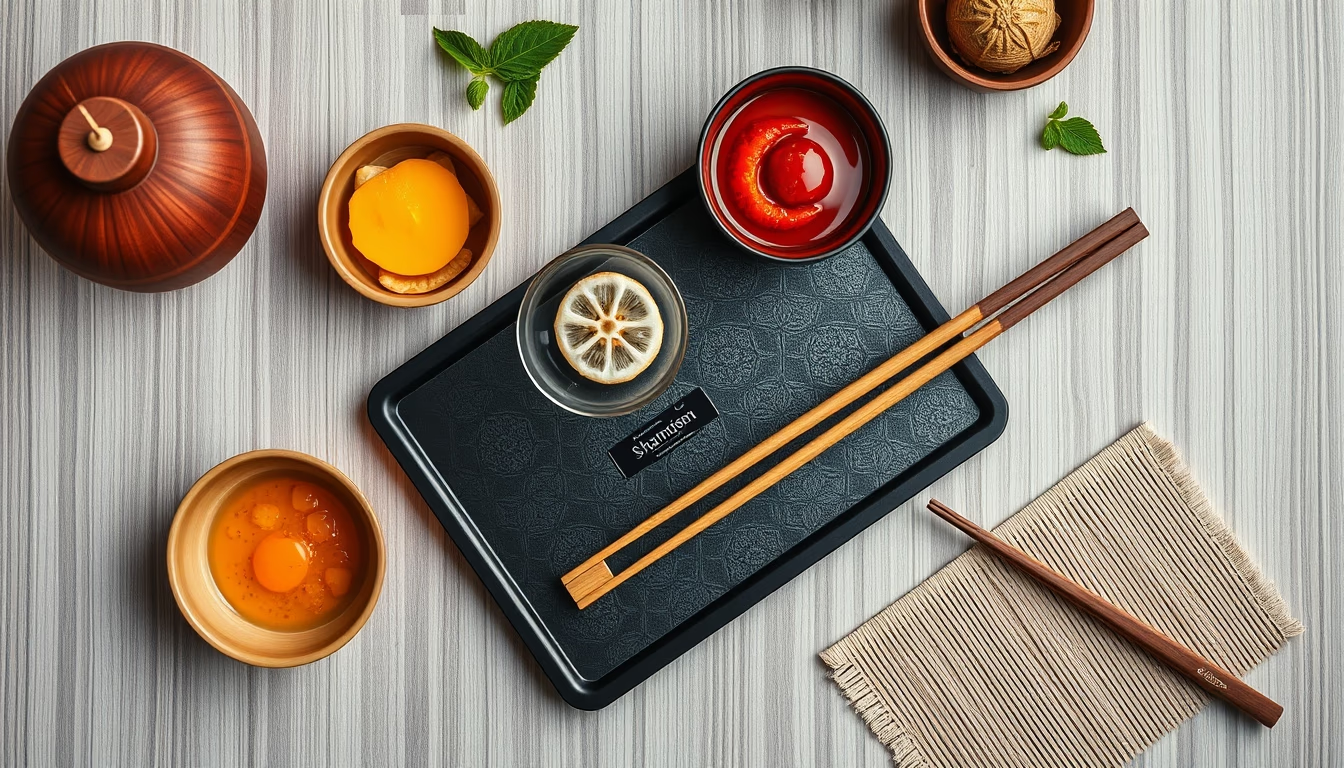
The shamisen is a Japanese three-stringed instrument essential in kabuki, bunraku, and folk music, known for its distinctive sound and handcrafted construction.
About this subject
The shamisen is a three-stringed lute from Japan, introduced via China and the Ryukyu Islands (modern Okinawa) around the 16th century. Unlike Western fretted instruments, it has a long, fretless neck and a rectangular body covered with animal skin (traditionally cat or dog, now often synthetic). The strings are plucked with a large plectrum called bachi, producing a sharp, percussive tone.
Variations in size and neck thickness affect the timbre. The futozao (thick neck) is used in kabuki for deep, dramatic sounds. The chuzao (medium neck) accompanies narrative songs like nagauta. The hosozao (thin neck) is typical of folk music and bunraku. Each style requires specific playing techniques and tunings, with honchoshi, niagari, and sansagari being the most common.
Culturally, the shamisen became emblematic of the Edo period (1603-1868), when it flourished in urban entertainment districts like teahouses and restaurants. Learning the instrument involves not only technical skill but also deep immersion in Japanese aesthetics, such as ma (pauses) and emotional nuance. Today, it is also used in fusion with jazz, rock, and electronic music, keeping its relevance worldwide.
Handcrafting a shamisen is a specialized art. Luthiers carve the neck from mahogany or rosewood, and the body from kiri (paulownia) wood. The skin is stretched over the body to optimize resonance. Each shamisen is unique, reflecting centuries of tradition and the artisan's expertise.
Frequently Asked Questions
How is the shamisen different from a guitar?
The shamisen has no frets, is played with a large plectrum (bachi), and its body is covered with animal skin, giving a percussive sound. Guitars have frets, metal or nylon strings, and are played with fingers or a pick.
What are the main types of shamisen?
The main types are: futozao (thick neck, deep sound) used in kabuki; chuzao (medium neck) for nagauta; and hosozao (thin neck) for folk music and bunraku. Each has associated tunings and performance styles.
How is the shamisen tuned?
Common tunings include: honchoshi (A-E-A), niagari (A-B-E), and sansagari (A-B-F#). Tuning varies by musical genre and piece.
Direct URL
https://pub-c7d6a6ea828543ac903a74a341ccb2e1.r2.dev/imagens/shamisen-japanese-isometric-flat-lay-p9.avifHow to credit
Include a visible link back to UtilizAí. Copy one of the snippets below:
<a href="https://xn--utiliza-eza.com/en/midia/imagens/shamisen-japanese-isometric-flat-lay-p9">Shamisen japanese</a> by <a href="https://xn--utiliza-eza.com">UtilizAí</a>, licensed under <a href="https://creativecommons.org/licenses/by/4.0/">CC BY 4.0</a>.
[Shamisen japanese](https://xn--utiliza-eza.com/en/midia/imagens/shamisen-japanese-isometric-flat-lay-p9) by [UtilizAí](https://xn--utiliza-eza.com), CC BY 4.0
License: CC-BY-4.0