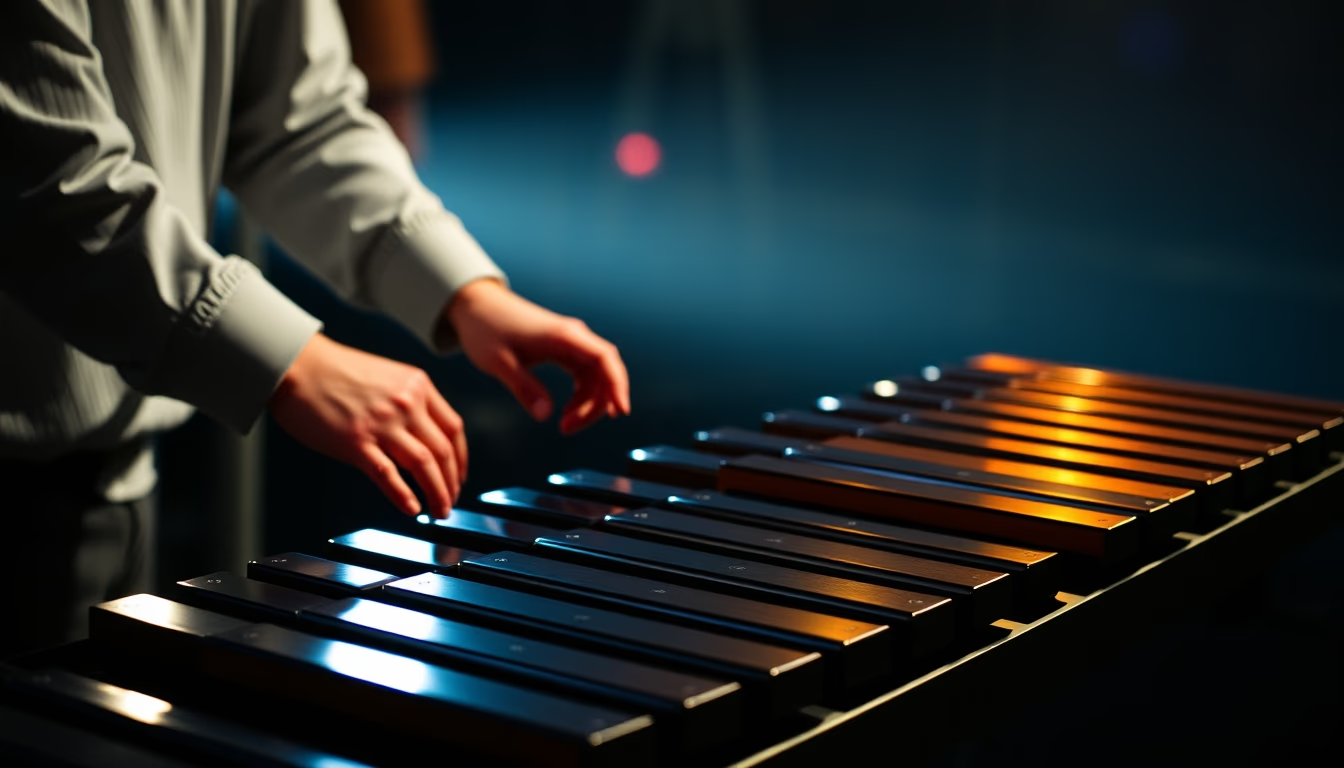
Shamisen japanese
1344×768 · AVIF · CC BY 4.0

The shamisen is a traditional Japanese three-stringed instrument, used in genres like kabuki and min'yō, with a distinctive sound and complex technique.
About this subject
The shamisen is a plucked string instrument that originated in China and was introduced to Japan in the 16th century via the Ryukyu Islands (modern Okinawa). Its construction is artisanal: the rectangular body is covered with animal skin, typically dog or cat, though modern versions use synthetic materials. The long, thin neck has three strings made of silk or nylon, tuned at varied intervals. The plectrum, called bachi, is large and leaf-shaped, used to strike the strings forcefully, producing a percussive, metallic timbre.
The shamisen is central to several Japanese musical traditions. In kabuki theater, it accompanies dramatic scenes and dances. In bunraku (puppet theater), the shamisen player narrates the story alongside the chanter. In folk music min'yō, the shamisen is used in regional festivals, with playing styles varying by region. One of the most famous virtuosos is Tsugaru-jamisen, a fast, intense style from Aomori Prefecture, popularized worldwide by artists like Hiromitsu Agatsuma.
Interesting fact: the shamisen was a status symbol in the Edo period, with samurai learning to play it as a form of cultural refinement. Today, the instrument is also explored in fusions with jazz, rock, and electronic music, attracting new generations. Its tuning can be of three types: honchō (standard), niage (higher), and sansagari (lower), each suited to different styles.
Frequently Asked Questions
What is the difference between the shamisen and the banjo?
The shamisen has a skin-covered body and is played with a bachi (large plectrum), while the banjo has a wooden body with a membrane and is played with fingers or a small pick. The shamisen's sound is more percussive and nasal.
How is the shamisen tuned?
There are three main tunings: honchō (D-A-D), niage (D-A-B), and sansagari (B-A-D). The choice depends on the musical style and piece.
Is the shamisen still popular in modern Japan?
Yes, the shamisen remains popular both in traditional contexts (kabuki, min'yō) and in contemporary fusions with rock, jazz, and pop. Young musicians have revitalized the instrument.
Direct URL
https://pub-c7d6a6ea828543ac903a74a341ccb2e1.r2.dev/imagens/shamisen-japanese-high-fashion-editorial-p3.avifHow to credit
Include a visible link back to UtilizAí. Copy one of the snippets below:
<a href="https://xn--utiliza-eza.com/en/midia/imagens/shamisen-japanese-high-fashion-editorial-p3">Shamisen japanese</a> by <a href="https://xn--utiliza-eza.com">UtilizAí</a>, licensed under <a href="https://creativecommons.org/licenses/by/4.0/">CC BY 4.0</a>.
[Shamisen japanese](https://xn--utiliza-eza.com/en/midia/imagens/shamisen-japanese-high-fashion-editorial-p3) by [UtilizAí](https://xn--utiliza-eza.com), CC BY 4.0
License: CC-BY-4.0