Shamisen japanese
1344×768 · AVIF · CC BY 4.0
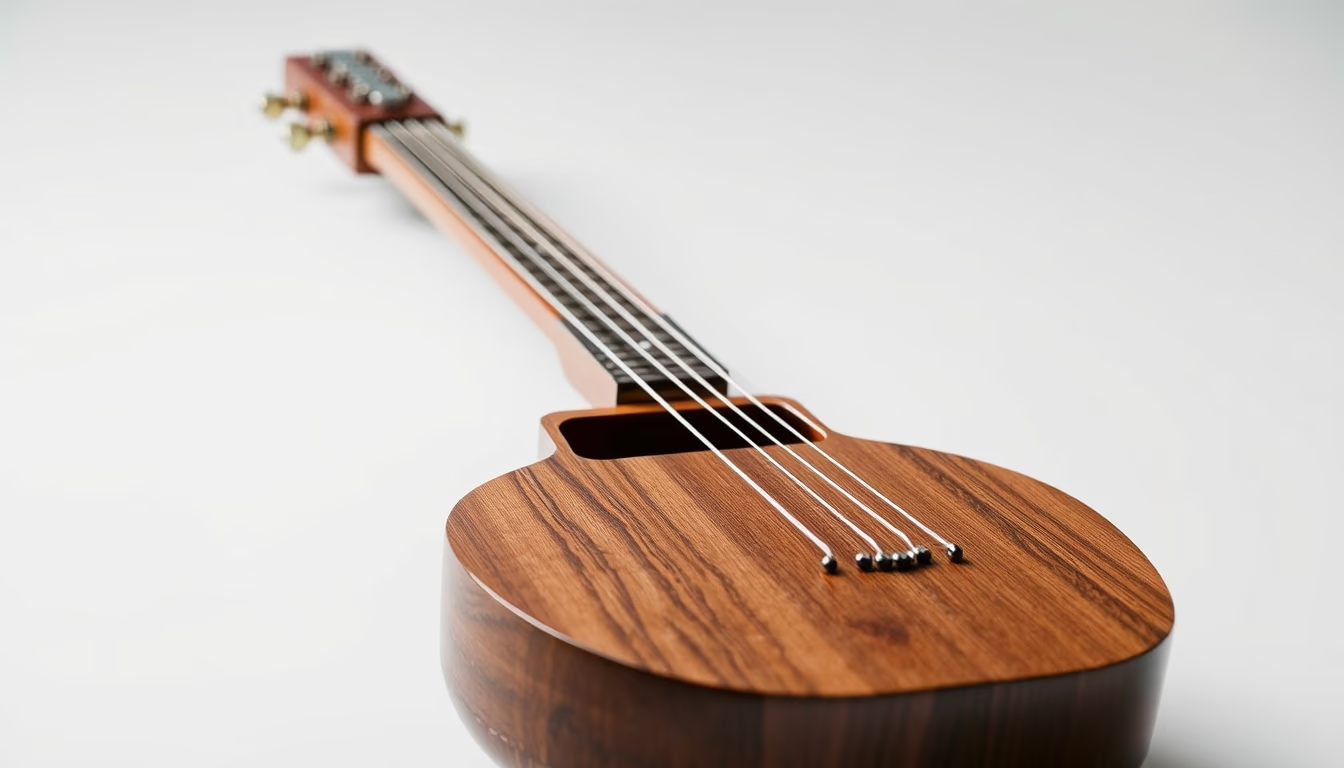
The shamisen is a traditional Japanese three-stringed instrument, used in genres such as min'yō and kabuki, originating from the Okinawan sanshin.
About this subject
The shamisen is a three-stringed lute that arrived in Japan from China via the Ryukyu Kingdom (present-day Okinawa) around the 16th century. Its resonating body is covered with cat or dog skin, and the long neck is fretless. The strings are plucked with a plectrum called bachi, traditionally made of wood or ivory.
Different types of shamisen exist, varying in size and neck thickness, which determine tuning and timbre. The hosozao (thin neck) is used in kabuki theater and nagauta music, while the futozao (thick neck) is typical of min'yō (folk music) and gidayū (narrative accompaniment). The shamisen is also essential in bunraku puppet theater, where it accompanies the narration.
Culturally, the shamisen represents the soul of Japanese music, especially during the Edo period, when it became popular among the merchant class and samurai. Notable players include Yatsuhashi Kengyō, Yoshizawa Kengyō, and more recently the virtuoso Hiromitsu Agatsuma, who incorporates jazz and rock elements.
Craftsmanship of the shamisen is an art form, with specialized luthiers carefully selecting woods such as karin and kiri. The skin is stretched through a wetting and drying process to produce the characteristic sound, which can range from soft to percussive depending on playing technique.
Frequently Asked Questions
What is the difference between shamisen, koto, and shakuhachi?
The shamisen is a three-stringed lute played with a plectrum, while the koto is a 13-string zither played with picks, and the shakuhachi is a bamboo flute. Each belongs to different musical contexts: the shamisen is more associated with theater and folk music.
Is the shamisen difficult to learn?
Yes, it takes years of practice to master the coordination between the right hand (which plucks) and the left hand (which presses the strings), as well as advanced techniques like glissandos and vibrato.
What are the common tunings for the shamisen?
The most common tunings are honchoshi (C-G-C), niagari (C-G-D), and sansagari (C-F-B-flat). The choice depends on the musical genre and piece.
Direct URL
https://pub-c7d6a6ea828543ac903a74a341ccb2e1.r2.dev/imagens/shamisen-japanese-commercial-product-photography-p0.avifHow to credit
Include a visible link back to UtilizAí. Copy one of the snippets below:
<a href="https://xn--utiliza-eza.com/en/midia/imagens/shamisen-japanese-commercial-product-photography-p0">Shamisen japanese</a> by <a href="https://xn--utiliza-eza.com">UtilizAí</a>, licensed under <a href="https://creativecommons.org/licenses/by/4.0/">CC BY 4.0</a>.
[Shamisen japanese](https://xn--utiliza-eza.com/en/midia/imagens/shamisen-japanese-commercial-product-photography-p0) by [UtilizAí](https://xn--utiliza-eza.com), CC BY 4.0
License: CC-BY-4.0