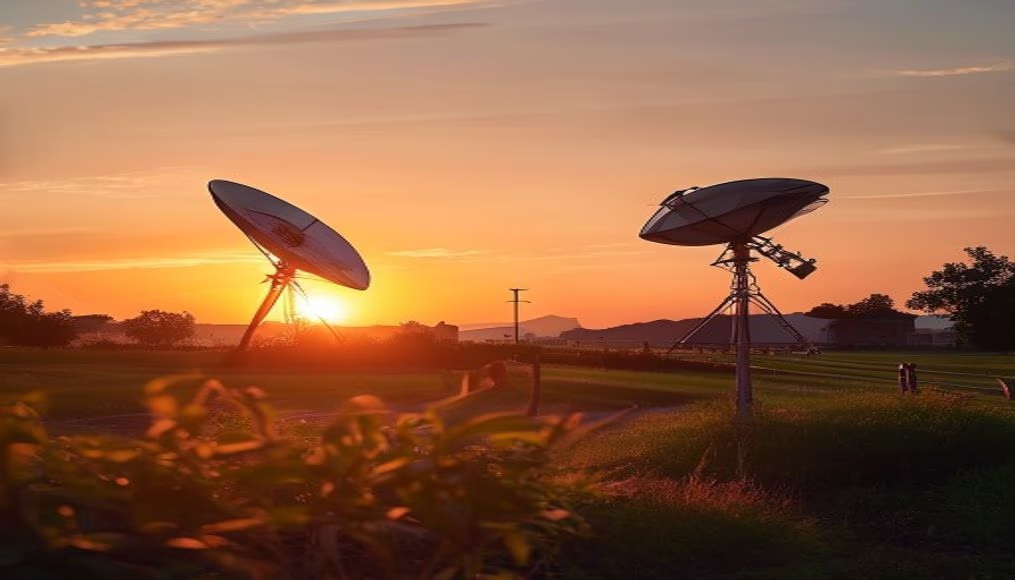
Satellite dish farm at sunset
1344×768 · AVIF · CC BY 4.0
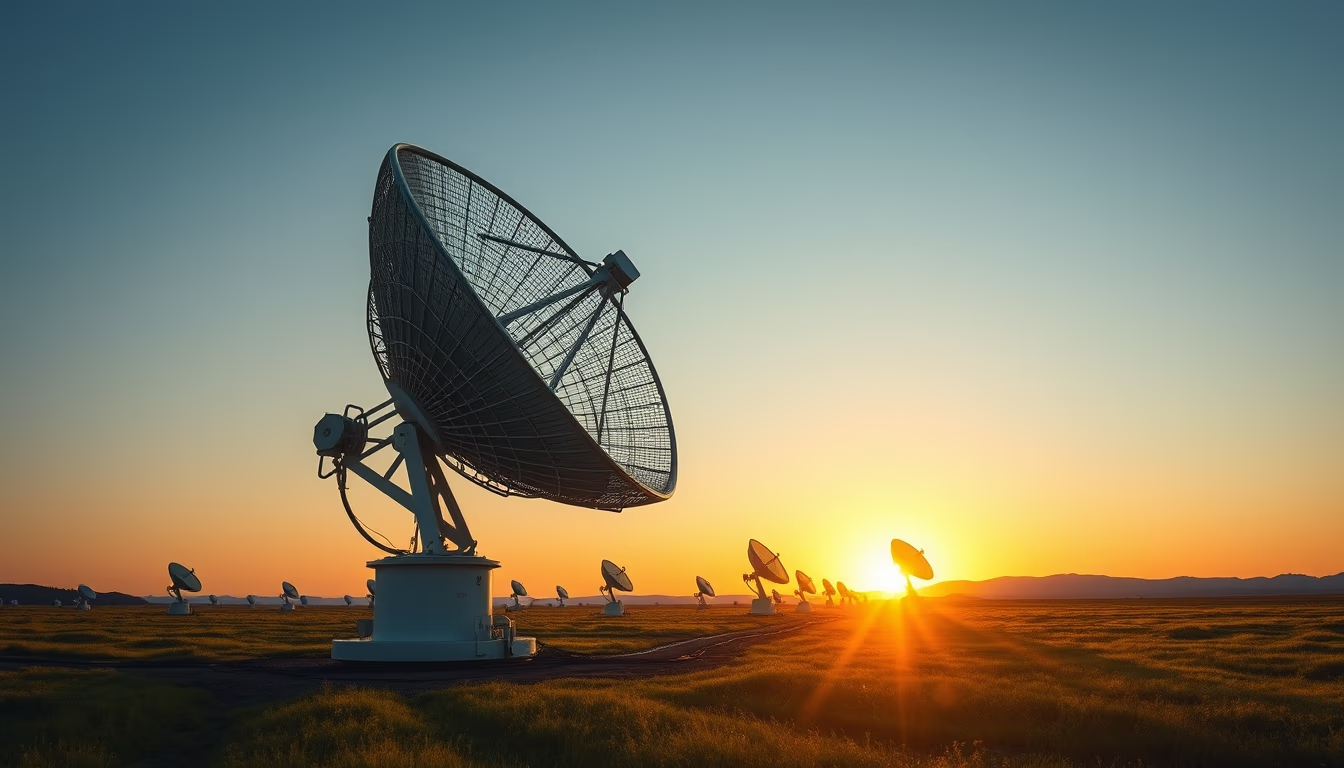
Satellite dish farm at sunset reveals critical infrastructure for global communications
About this subject
Satellite dish farms are networks of parabolic antennas that enable data transmission, TV, internet, and telecommunications. These structures, ranging from 2 to 30 meters in diameter, operate at microwave frequencies (such as C-band, 4-8 GHz, and Ku-band, 12-18 GHz) to send and receive signals between satellites and Earth. Located in areas with minimal electromagnetic interference, they are commonly found in regions like Southern California, where NASA's Deep Space Network communicates with spacecraft millions of kilometers away.
Sunset is a typical visual setting for satellite farms, as low light reduces glare and enhances visibility of continuous operations. The largest antenna ever, the Arecibo Observatory in Puerto Rico (305 meters), operated until 2020 for astronomical and planetary radar research. Today, China's FAST telescope (500 meters) holds this title. Satellite farms also support GPS systems and climate monitoring, like tracking tropical storms in real time.
Historically, the first satellite antenna, the "Horn Antenna", discovered cosmic microwave background radiation in 1964, revolutionizing cosmology. Modern companies like SpaceX's Starlink expand global connectivity through low-orbit satellite constellations, whose communications rely on strategically distributed ground-based antenna farms worldwide.
Frequently Asked Questions
What is the purpose of satellite dish farms?
They act as ground stations for transmitting and receiving satellite signals, supporting telecommunications, internet, cable TV, and space monitoring.
How long does it take to build a satellite antenna?
Large antennas can take up to 3 years to construct, including geotechnical engineering, structural assembly, and alignment testing.
What's the difference between C-band and Ku-band?
C-band (4-8 GHz) is more rain-resistant, while Ku-band (12-18 GHz) offers higher bandwidth for HD transmissions.
Direct URL
https://pub-c7d6a6ea828543ac903a74a341ccb2e1.r2.dev/imagens/satellite-dish-farm-at-sunset-magazine-editorial-v8.avifHow to credit
Include a visible link back to UtilizAí. Copy one of the snippets below:
<a href="https://xn--utiliza-eza.com/en/midia/imagens/satellite-dish-farm-at-sunset-magazine-editorial-v8">Satellite dish farm at sunset</a> by <a href="https://xn--utiliza-eza.com">UtilizAí</a>, licensed under <a href="https://creativecommons.org/licenses/by/4.0/">CC BY 4.0</a>.
[Satellite dish farm at sunset](https://xn--utiliza-eza.com/en/midia/imagens/satellite-dish-farm-at-sunset-magazine-editorial-v8) by [UtilizAí](https://xn--utiliza-eza.com), CC BY 4.0
License: CC-BY-4.0