Santorini white blue houses
1344×768 · AVIF · CC BY 4.0
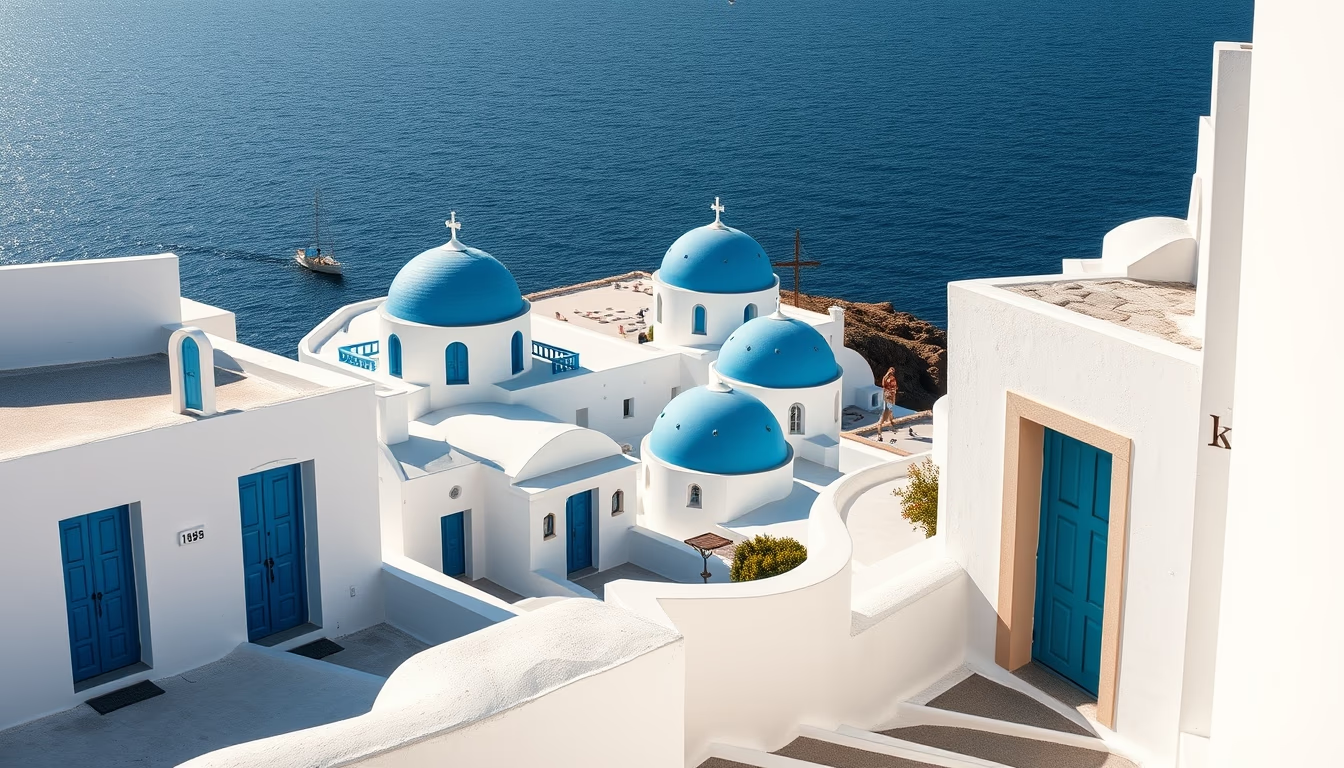
Santorini’s white and blue houses, contrasting with the Aegean Sea, epitomize Cycladic architecture and remain a top travel destination in the Greek islands.
About this subject
Santorini’s white and blue houses are a direct expression of Cycladic architecture, a style emblematic of the Greek islands. Their design dates back to the 19th century, when residents began using white plaster to protect walls from the sun’s heat and vivid blue to combat salt moisture from the sea. This color combination, both functional and aesthetic, has become one of the most photographed symbols of global travel.
The island, formed by extinct volcanoes, features a steep topography that demands architectural adaptations. Houses are built in staircases along volcanic slopes, with flat roofs serving as courtyards to harness light and wind. In villages like Oia and Fira, the layout of buildings aligns with the terrain, creating cinematic scenes captured by photographers worldwide.
Interestingly, the use of white and blue has been regulated by the Greek government since 1988 to preserve the island’s unique visual heritage. The blue, especially on windows and doors, reflects the sky’s brightness, while white counters the heat. This creates a postcard-like landscape with dramatic contrasts between houses and the turquoise sea.
These structures also exemplify historical sustainability. Local volcanic rock, known as "porphyry," has been used in construction for centuries, ensuring resilience against the marine climate. Today, Santorini welcomes millions of tourists annually, drawn not only by the houses’ beauty but by the island’s rich cultural and geological heritage.
Frequently Asked Questions
Why are Santorini’s houses white and blue?
The white reflects sunlight to cool interiors, while blue counters salt moisture from the sea. The Greek government also enforces these colors to protect the island’s visual heritage.
Are these colors unique to Santorini?
No, Cycladic architecture with white and blue hues is common in Dodecanese islands like Mykonos and Paros, but Santorini remains the most iconic example.
How does the topography affect house construction?
Santorini’s volcanic slopes require houses to be built in staircases, with flat roofs acting as courtyards to optimize light and airflow.
Direct URL
https://pub-c7d6a6ea828543ac903a74a341ccb2e1.r2.dev/imagens/santorini-white-blue-houses-magazine-editorial-v8.avifHow to credit
Include a visible link back to UtilizAí. Copy one of the snippets below:
<a href="https://xn--utiliza-eza.com/en/midia/imagens/santorini-white-blue-houses-magazine-editorial-v8">Santorini white blue houses</a> by <a href="https://xn--utiliza-eza.com">UtilizAí</a>, licensed under <a href="https://creativecommons.org/licenses/by/4.0/">CC BY 4.0</a>.
[Santorini white blue houses](https://xn--utiliza-eza.com/en/midia/imagens/santorini-white-blue-houses-magazine-editorial-v8) by [UtilizAí](https://xn--utiliza-eza.com), CC BY 4.0
License: CC-BY-4.0