Santorini blue domes
1344×768 · AVIF · CC BY 4.0
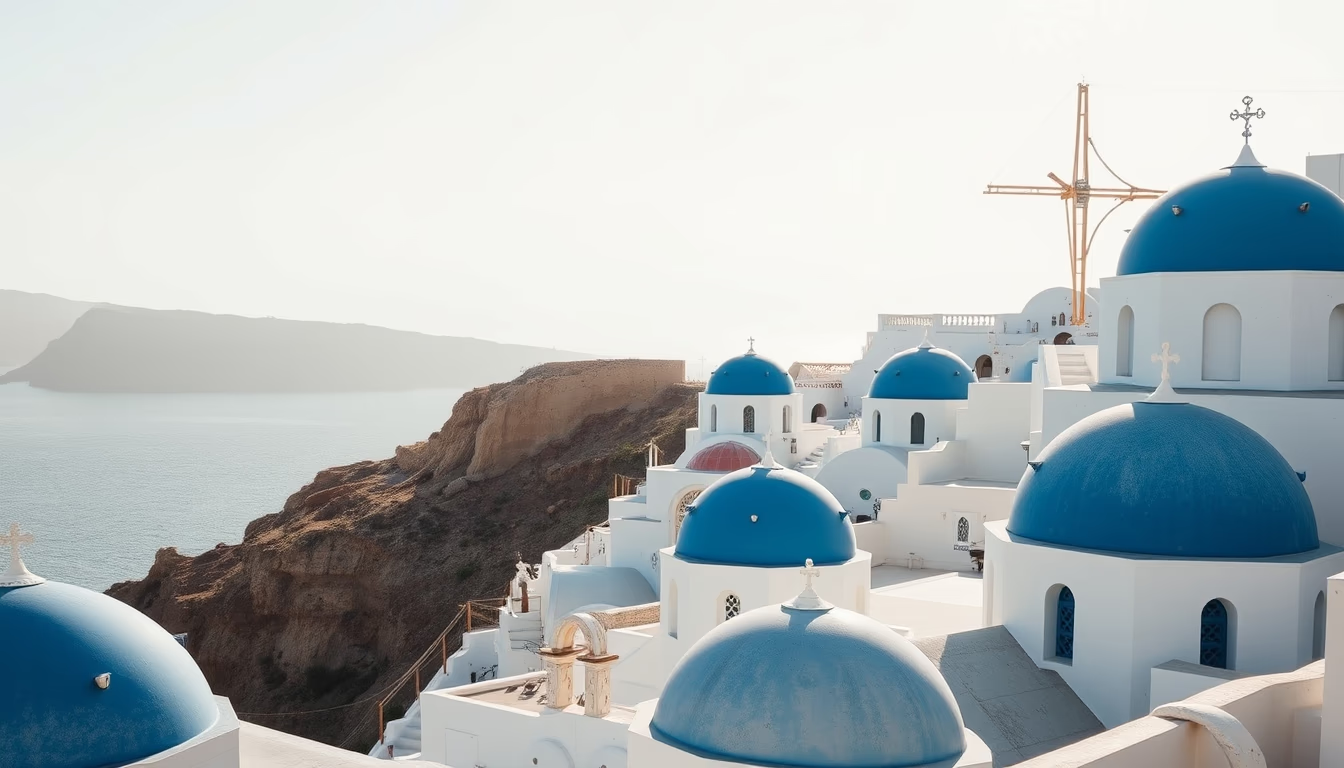
The iconic blue domes of Santorini are among the most recognizable symbols of Cycladic architecture and a landmark of Greek tourism.
About this subject
The blue domes of Santorini, especially those of the Panagia (Theotokos) church in Oia and the Agios Spyridon church in Fira, are emblematic examples of Cycladic religious architecture. Built mainly between the 18th and 19th centuries, these churches were constructed by local communities using materials such as volcanic stone and lime. The intense blue of the domes contrasts with the brilliant white of the walls, a combination that is not only aesthetic but also functional: white reflects the summer Mediterranean heat, while blue evokes the sky and sea, symbolically protecting the faithful.
The tradition of painting domes blue originates from an attempt to imitate the sky and sea, sacred elements in Greek culture. Some sources indicate that the color was obtained from lapis lazuli, a precious pigment brought from Afghanistan, but today synthetic paints maintain the vibrant hue. The island of Santorini, formed by a colossal volcanic eruption around 1600 BC, provides a dramatic setting with its steep cliffs and caldera views. The blue-domed churches are not only places of worship; many host local religious festivals, such as Orthodox Easter, when processions light up the narrow streets.
The visual appeal of these domes has made Santorini one of the most photographed destinations in the world, attracting millions of tourists annually. About 2 million people visit the island each year, many seeking the perfect angle to capture the sunset behind the blue domes in Oia. This tourist flow boosts the local economy but also pressures the conservation of architectural heritage. In 2023, local authorities implemented measures to limit visitor numbers at certain points to protect historic churches.
Interestingly, although blue domes are most associated with Oia, dozens of similar churches are scattered across the island in villages such as Pyrgos, Firostefani, and Imerovigli. Each has its own story, but all share the same aesthetic that has become synonymous with Cycladic beauty. Preservation of these structures is maintained by local communities and the Greek Orthodox Church, which often carries out periodic restorations to ensure the blue remains as vibrant as Santorini's sky.
Frequently Asked Questions
Why are the domes of Santorini's churches blue?
Traditionally, the blue color symbolizes the sky and sea, sacred elements in Greek culture. Historically, lapis lazuli pigment was used, but today synthetic paints maintain the vibrant hue. The blue also contrasts with the white walls, creating the iconic Cycladic aesthetic.
What is the most famous blue-domed church in Santorini?
The most photographed is the Panagia (Theotokos) church in Oia, often called the "Three Bells of Fira". Another famous one is Agios Spyridon church in Fira, both classic examples of Cycladic architecture.
How many blue-domed churches are there in Santorini?
There is no exact number, but it is estimated that there are dozens scattered across the island, especially in Oia, Fira, Pyrgos, Firostefani, and Imerovigli. Many are private chapels or small parish churches.
Direct URL
https://pub-c7d6a6ea828543ac903a74a341ccb2e1.r2.dev/imagens/santorini-blue-domes-documentary-photography-p0.avifHow to credit
Include a visible link back to UtilizAí. Copy one of the snippets below:
<a href="https://xn--utiliza-eza.com/en/midia/imagens/santorini-blue-domes-documentary-photography-p0">Santorini blue domes</a> by <a href="https://xn--utiliza-eza.com">UtilizAí</a>, licensed under <a href="https://creativecommons.org/licenses/by/4.0/">CC BY 4.0</a>.
[Santorini blue domes](https://xn--utiliza-eza.com/en/midia/imagens/santorini-blue-domes-documentary-photography-p0) by [UtilizAí](https://xn--utiliza-eza.com), CC BY 4.0
License: CC-BY-4.0