Salt crystal macro
1344×768 · AVIF · CC BY 4.0
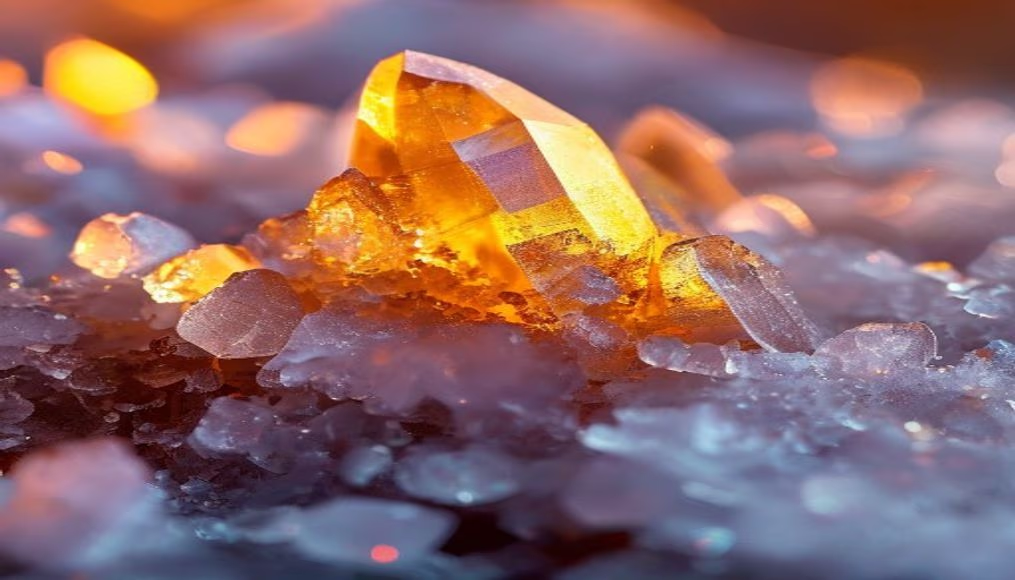
Macrophotography of salt crystals reveals the cubic geometry and purity of sodium chloride, an essential mineral for life and global cuisine.
About this subject
Table salt, or sodium chloride (NaCl), is an ionic compound that crystallizes in the cubic system. When viewed in macro, these crystals display flat faces and characteristic right angles. Natural formation occurs through the evaporation of seawater or salt lakes, leaving behind the crystals. Underground deposits, such as those in rock salt mines, result from the evaporation of ancient seas millions of years ago.
There are various types of edible salt: sea salt, obtained by solar evaporation; rock salt, mined from underground; and specialty varieties like Himalayan pink salt, which gets its color from trace iron oxide. Salt is also iodized to prevent thyroid deficiencies. In cooking, salt not only seasons but enhances flavors and acts as a preservative for millennia.
Beyond culinary use, salt has historical and economic importance. It was used as currency, in Egyptian mummification, and in religious rituals. The Salt Route across the Sahara was a crucial trade path. Today, salt is a raw material for the chemical industry, producing chlorine and caustic soda. Interestingly, salt has a high melting point (801 °C) and is hygroscopic, absorbing moisture from the air.
Macrophotography of these crystals allows appreciation of details invisible to the naked eye: surface irregularities, impurity inclusions, and the geometric perfection of each cube. Each crystal is a fragment of a deposit or evaporite, telling the geological history of its region of origin. This photographic technique is used for both scientific and artistic purposes, revealing the hidden beauty in everyday objects.
Frequently Asked Questions
What is the difference between sea salt and rock salt?
Sea salt is produced by evaporating seawater and contains trace minerals like magnesium and potassium. Rock salt is mined from underground deposits formed by the evaporation of ancient seas, with higher sodium chloride purity.
Why is Himalayan salt pink?
The pink color of Himalayan salt comes from trace iron oxide and other minerals. It is mined from the Khewra Salt Mine in Pakistan and is marketed as a less processed gourmet salt.
Can salt go bad?
Pure salt does not spoil because it is a natural preservative. However, iodized or flavored salt may lose potency or absorb moisture over time, forming clumps. Storing in a dry, airtight container prevents issues.
Direct URL
https://pub-c7d6a6ea828543ac903a74a341ccb2e1.r2.dev/imagens/salt-crystal-macro-travel-photography-v10.avifHow to credit
Include a visible link back to UtilizAí. Copy one of the snippets below:
<a href="https://xn--utiliza-eza.com/en/midia/imagens/salt-crystal-macro-travel-photography-v10">Salt crystal macro</a> by <a href="https://xn--utiliza-eza.com">UtilizAí</a>, licensed under <a href="https://creativecommons.org/licenses/by/4.0/">CC BY 4.0</a>.
[Salt crystal macro](https://xn--utiliza-eza.com/en/midia/imagens/salt-crystal-macro-travel-photography-v10) by [UtilizAí](https://xn--utiliza-eza.com), CC BY 4.0
License: CC-BY-4.0