Sahara desert dunes pattern
1344×768 · AVIF · CC BY 4.0
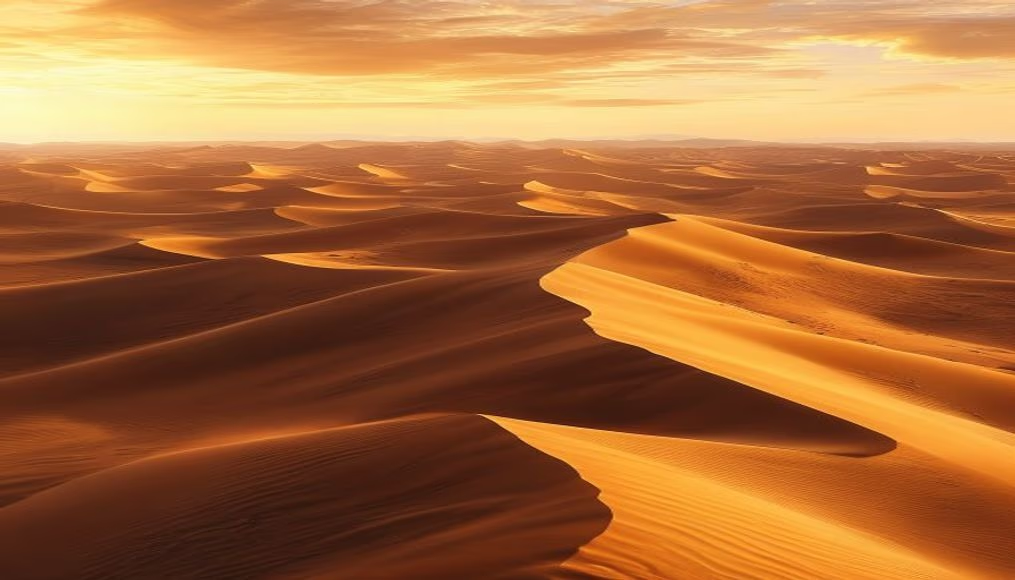
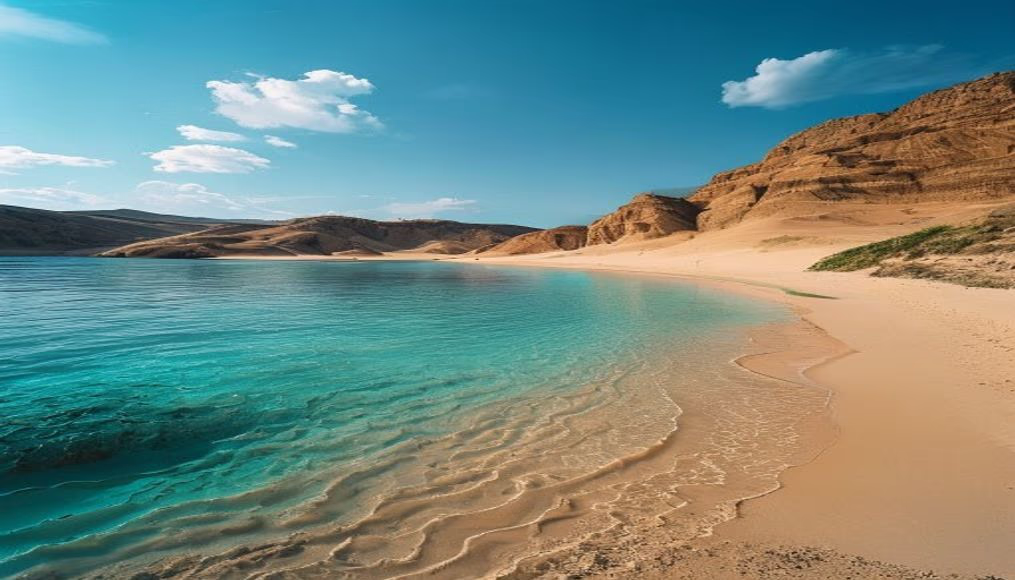
The pattern of the Sahara dunes is one of the most impressive geological phenomena on the planet, with shapes sculpted by wind over millennia.
About this subject
The dunes of the Sahara Desert are sandy formations shaped by the constant action of prevailing winds. Covering about 1.8 million km² of sand, the Sahara features various types of dunes, such as crescent-shaped barchans, linear dunes that stretch for hundreds of kilometers, and star dunes with multiple arms. Star dunes are the tallest, reaching heights of up to 300 meters, such as the Lala Lallia dune in Algeria, which is about 300 meters high and 700 meters wide.
Dune formation depends on wind direction and intensity, sand availability, and vegetation. In the Sahara, trade winds and convection currents create complex patterns that constantly change. Dunes migrate slowly, moving a few meters per year. Regions like Erg Chebbi in Morocco and Erg Chigaga are famous for their tall, symmetrical dunes that attract tourists and photographers, especially at sunrise and sunset when shadows accentuate the relief.
Beyond aesthetic appeal, dunes host biodiversity adapted to extreme conditions, such as scorpions, beetles, and reptiles. They also store groundwater in fossil aquifers, like the Nubian Sandstone Aquifer System, one of the largest freshwater reserves in the world. Culturally, dunes are the backdrop for nomadic traditions, such as the Tuareg, and events like the Desert Festival in Douz, Tunisia. The pattern of Sahara dunes exemplifies ongoing geological dynamics and the raw beauty of nature.
Frequently Asked Questions
How do the Sahara dunes form?
Dunes form when wind carries sand particles and deposits them in areas where wind speed decreases. The shape and size depend on wind direction, sand amount, and obstacles. In the Sahara, constant winds create barchan, linear, and star dunes.
What is the tallest dune in the Sahara?
The tallest dune in the Sahara is the Lala Lallia dune in Algeria, about 300 meters high. Another famous dune is Dune 7 in the Namib Desert, but that is outside the Sahara.
Why do Sahara dunes change shape?
Dunes change shape due to continuous wind action, which transports sand from one side to the other. This process, called dune migration, can move sand at a rate of up to 10 meters per year in some locations.
Direct URL
https://pub-c7d6a6ea828543ac903a74a341ccb2e1.r2.dev/imagens/sahara-desert-dunes-pattern-travel-photography-v10.avifHow to credit
Include a visible link back to UtilizAí. Copy one of the snippets below:
<a href="https://xn--utiliza-eza.com/en/midia/imagens/sahara-desert-dunes-pattern-travel-photography-v10">Sahara desert dunes pattern</a> by <a href="https://xn--utiliza-eza.com">UtilizAí</a>, licensed under <a href="https://creativecommons.org/licenses/by/4.0/">CC BY 4.0</a>.
[Sahara desert dunes pattern](https://xn--utiliza-eza.com/en/midia/imagens/sahara-desert-dunes-pattern-travel-photography-v10) by [UtilizAí](https://xn--utiliza-eza.com), CC BY 4.0
License: CC-BY-4.0