Sahara desert dunes pattern
1344×768 · AVIF · CC BY 4.0
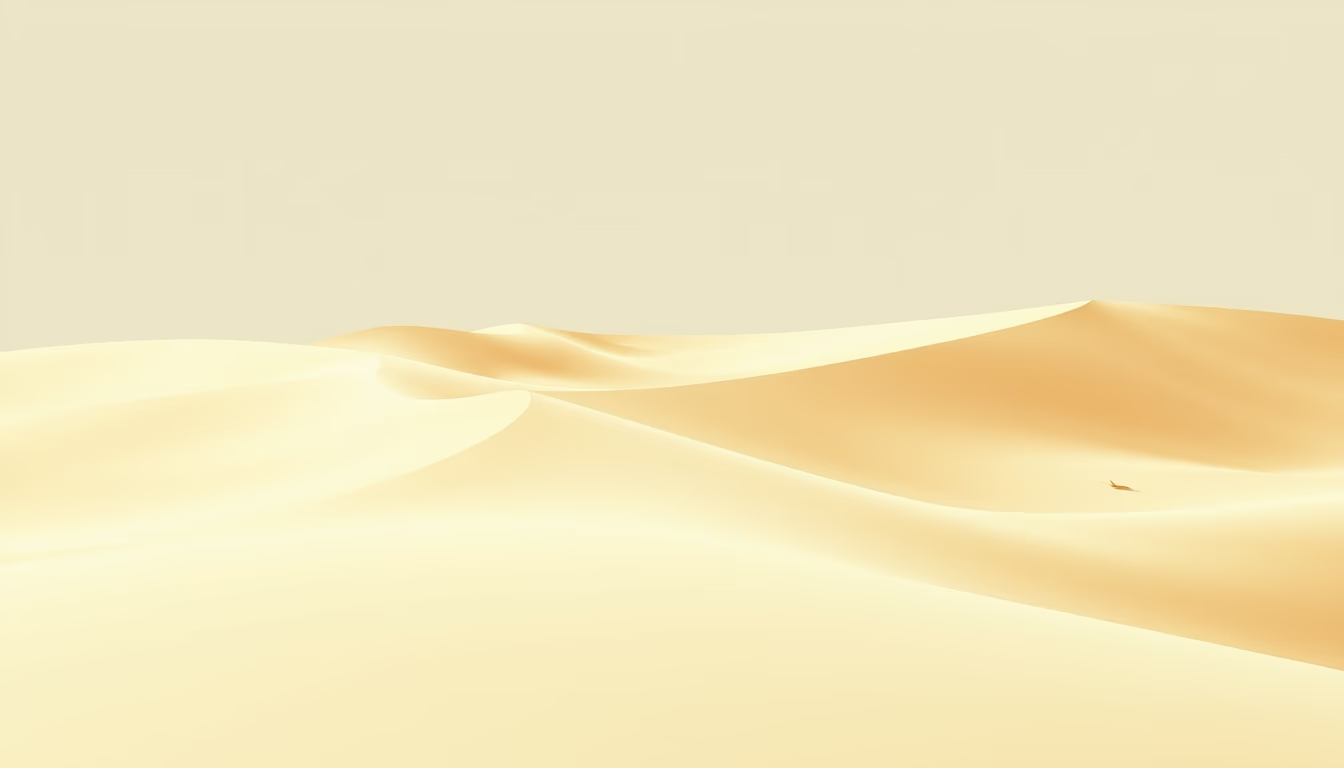
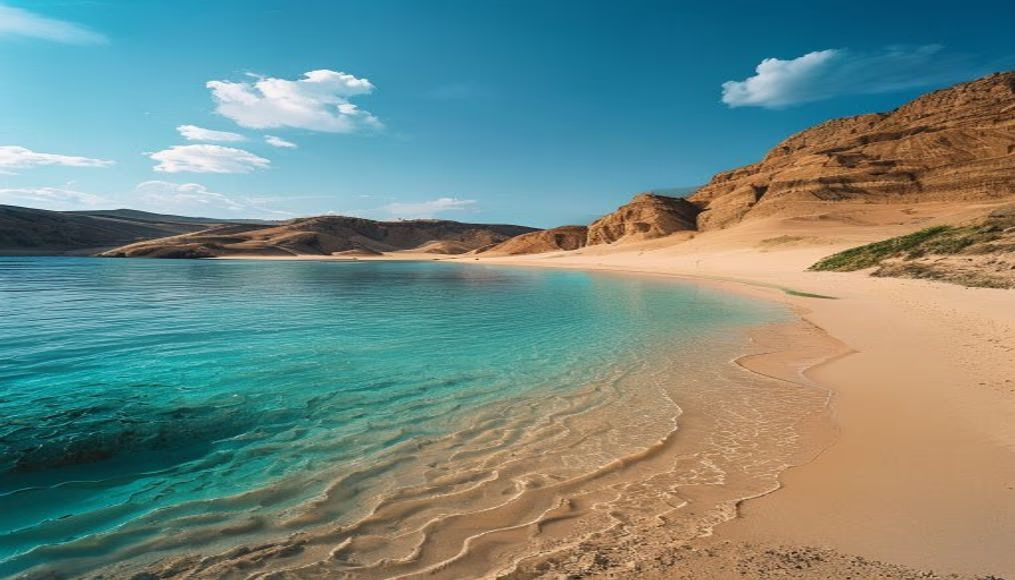
The dunes of the Sahara form one of the most iconic natural patterns on Earth, sculpted by wind over millennia.
About this subject
The Sahara Desert, covering about 9.2 million square kilometers, is the largest hot desert on Earth. Its dunes, which can reach up to 180 meters in height, are not random formations: they follow patterns determined by prevailing wind direction, available sand supply, and underlying topography. Major dune types include barchans (crescent-shaped), linear dunes (long parallel ridges), and star dunes (complex, with multiple arms). The pattern seen in the image is typical of linear dunes, common in the central Sahara, such as in the Erg Chebbi sand sea in Morocco or the Eastern Erg in Algeria.
Dune formation is a dynamic process: sand grains are transported by wind (saltation) and deposited in low-velocity areas. Over time, dunes migrate slowly, some shift up to 20 meters per year. Sand color ranges from light yellow to reddish orange, depending on mineral composition, especially iron oxides. In the Sahara, sand is predominantly quartz, but some regions have darker mineral concentrations.
Culturally, the Sahara dunes symbolize isolation and harsh beauty. Historic caravan routes, such as the one linking Timbuktu to the Maghreb, crossed these sand seas. Today, adventure tourism brings visitors to camp among the dunes, especially in Merzouga (Morocco) and the White Desert (Egypt). Dunes also serve as a natural laboratory for geomorphology and climate change studies, as they record wind and precipitation variations over centuries.
Interestingly, the Sahara was not always a desert. About 10,000 years ago, the region was a humid savanna with lakes and vegetation. The current dunes are a record of that climate transformation. Dune patterns are so distinct that scientists use satellite imagery to map their evolution and predict desertification impacts elsewhere.
Frequently Asked Questions
What is the tallest dune in the Sahara Desert?
The tallest dune in the Sahara is the Issaouane dune in Algeria, reaching about 180 meters. However, the most famous is Erg Chebbi in Morocco, which reaches up to 150 meters.
Why do Sahara dunes have different colors?
Sand color varies with mineral composition. Lighter sand is rich in quartz, while orange or reddish tones indicate iron oxides. Regions with darker minerals may have gray or brown sand.
Do Sahara dunes move?
Yes, dunes constantly migrate due to wind action. Movement speed ranges from a few meters to up to 20 meters per year, depending on dune type and prevailing wind intensity.
Direct URL
https://pub-c7d6a6ea828543ac903a74a341ccb2e1.r2.dev/imagens/sahara-desert-dunes-pattern-commercial-product-photography.avifHow to credit
Include a visible link back to UtilizAí. Copy one of the snippets below:
<a href="https://xn--utiliza-eza.com/en/midia/imagens/sahara-desert-dunes-pattern-commercial-product-photography">Sahara desert dunes pattern</a> by <a href="https://xn--utiliza-eza.com">UtilizAí</a>, licensed under <a href="https://creativecommons.org/licenses/by/4.0/">CC BY 4.0</a>.
[Sahara desert dunes pattern](https://xn--utiliza-eza.com/en/midia/imagens/sahara-desert-dunes-pattern-commercial-product-photography) by [UtilizAí](https://xn--utiliza-eza.com), CC BY 4.0
License: CC-BY-4.0