Rose petals macro red
1344×768 · AVIF · CC BY 4.0
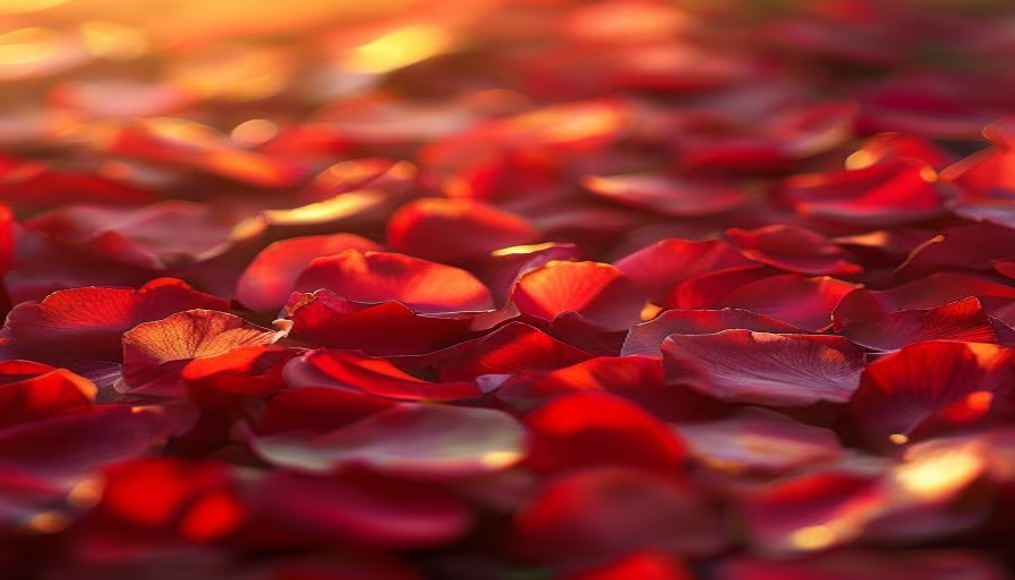
Detailed macro photograph of red rose petals, revealing velvety texture and subtle veins under soft lighting.
About this subject
Red rose petals are among the most universal symbols of love and passion. Their intense coloration comes from anthocyanins, water-soluble pigments that vary according to soil pH and rose variety. In nature, red attracts pollinators like bees and hummingbirds, but in cultivated species for gardening and floriculture, it is mainly a human-selected trait.
The structure of a rose petal consists of several epidermal cell layers that reflect light uniquely, creating a satiny sheen. The surface features tiny bumps called papillae, which help retain moisture and contribute to the velvety texture so prized in floral arrangements and the perfume industry.
In Brazil, red roses are a staple on dates such as Valentine's Day and Mother's Day, both in bouquets and room decorations. Beyond beauty, red petals are used in cooking and homemade cosmetics, like floral waters and aromatic sachets. Extracting essential oil from petals requires thousands of kilograms to produce just a few milliliters of essence, making rose oil one of the most expensive in the world.
Interestingly, the rose is one of the few flowers with edible petals, as long as grown without pesticides. In the Middle East and India, red rose water is traditionally used to flavor drinks and desserts. The diversity of red shades, from scarlet to burgundy, results from continuous hybridization that has already generated over 30,000 rose varieties, including hybrid, climbing, and shrub types.
Frequently Asked Questions
Why do red rose petals have a velvety texture?
The velvety texture of red rose petals is caused by tiny bumps on the surface called papillae. These structures trap air and moisture, and diffuse light, giving the soft, shiny appearance.
Can red rose petals be used in cooking?
Yes, as long as they are grown without pesticides. The petals are edible and used in salads, desserts, teas, and syrups. Rose water is also a common ingredient in Middle Eastern and Indian cuisine.
What makes the red color of rose petals so vibrant?
The intense red color comes from anthocyanins, pigments that react to soil pH. More acidic soils tend to intensify red. Sunlight also influences the production of these pigments.
Direct URL
https://pub-c7d6a6ea828543ac903a74a341ccb2e1.r2.dev/imagens/rose-petals-macro-red-travel-photography-v10.avifHow to credit
Include a visible link back to UtilizAí. Copy one of the snippets below:
<a href="https://xn--utiliza-eza.com/en/midia/imagens/rose-petals-macro-red-travel-photography-v10">Rose petals macro red</a> by <a href="https://xn--utiliza-eza.com">UtilizAí</a>, licensed under <a href="https://creativecommons.org/licenses/by/4.0/">CC BY 4.0</a>.
[Rose petals macro red](https://xn--utiliza-eza.com/en/midia/imagens/rose-petals-macro-red-travel-photography-v10) by [UtilizAí](https://xn--utiliza-eza.com), CC BY 4.0
License: CC-BY-4.0