Roman silver denarius coin
1344×768 · AVIF · CC BY 4.0
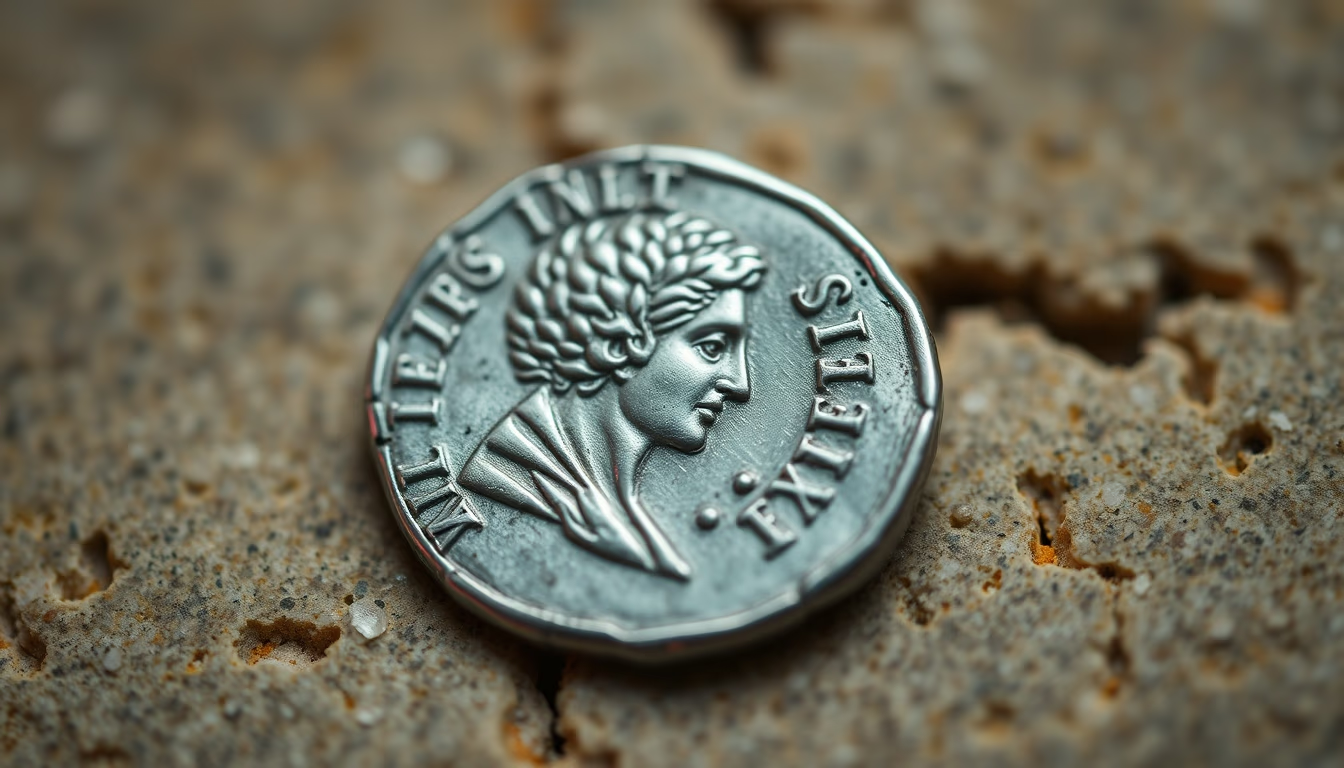
The Roman silver denarius was the standard coin of the Roman Empire for centuries, struck in high-purity silver and featuring portraits of emperors and deities.
About this subject
The Roman denarius was introduced around 211 BC during the Second Punic War as a silver coin that replaced the earlier bronze-based system. Initially weighing about 4.5 grams of nearly pure silver, it became the principal coin of the Roman world for over 400 years. Its name derives from the Latin 'deni', meaning 'ten', as it was originally worth ten bronze asses. Denarius coinage was central to the Roman economy, facilitating trade, paying soldiers, and collecting taxes. The obverse typically bore the profile of the reigning emperor wearing a laurel wreath, while the reverse featured mythological scenes, deities, or military symbols such as eagles and legionary standards. The silver purity gradually declined starting from Nero's reign (54-68 AD), when the silver content dropped to about 90%, and continued to decrease during later crises, such as the 3rd century, when the antoninianus replaced the denarius as the main coin. Nevertheless, the denarius remains one of the most common finds in archaeological excavations and is highly prized by collectors for its historical and artistic significance. Many denarii survive with crisp details, providing realistic portraits of emperors like Augustus, Trajan, and Marcus Aurelius. The production of denarii ceased by the end of the 3rd century AD, but its influence persisted in medieval and modern coinage.
Frequently Asked Questions
What was the standard weight of a Roman denarius?
The original denarius weighed about 4.5 grams of nearly pure silver. Over time, both weight and purity decreased, reaching around 3 grams with lower silver content by the 3rd century AD.
What was depicted on denarius coins?
The obverse usually featured the emperor's portrait with a laurel wreath. The reverse showed deities like Jupiter or Mars, scenes of military victories, or symbols such as eagles and legionary standards.
Why is the denarius important for numismatics?
The denarius is one of the most studied ancient coins because it provides insights into the Roman economy, imperial propaganda, and portraiture art. Its wide circulation and high survival rate allow for detailed historical analyses.
Direct URL
https://pub-c7d6a6ea828543ac903a74a341ccb2e1.r2.dev/imagens/roman-silver-denarius-coin-documentary-photography-fresh0.avifHow to credit
Include a visible link back to UtilizAí. Copy one of the snippets below:
<a href="https://xn--utiliza-eza.com/en/midia/imagens/roman-silver-denarius-coin-documentary-photography-fresh0">Roman silver denarius coin</a> by <a href="https://xn--utiliza-eza.com">UtilizAí</a>, licensed under <a href="https://creativecommons.org/licenses/by/4.0/">CC BY 4.0</a>.
[Roman silver denarius coin](https://xn--utiliza-eza.com/en/midia/imagens/roman-silver-denarius-coin-documentary-photography-fresh0) by [UtilizAí](https://xn--utiliza-eza.com), CC BY 4.0
License: CC-BY-4.0