Roman silver denarius coin
1344×768 · AVIF · CC BY 4.0
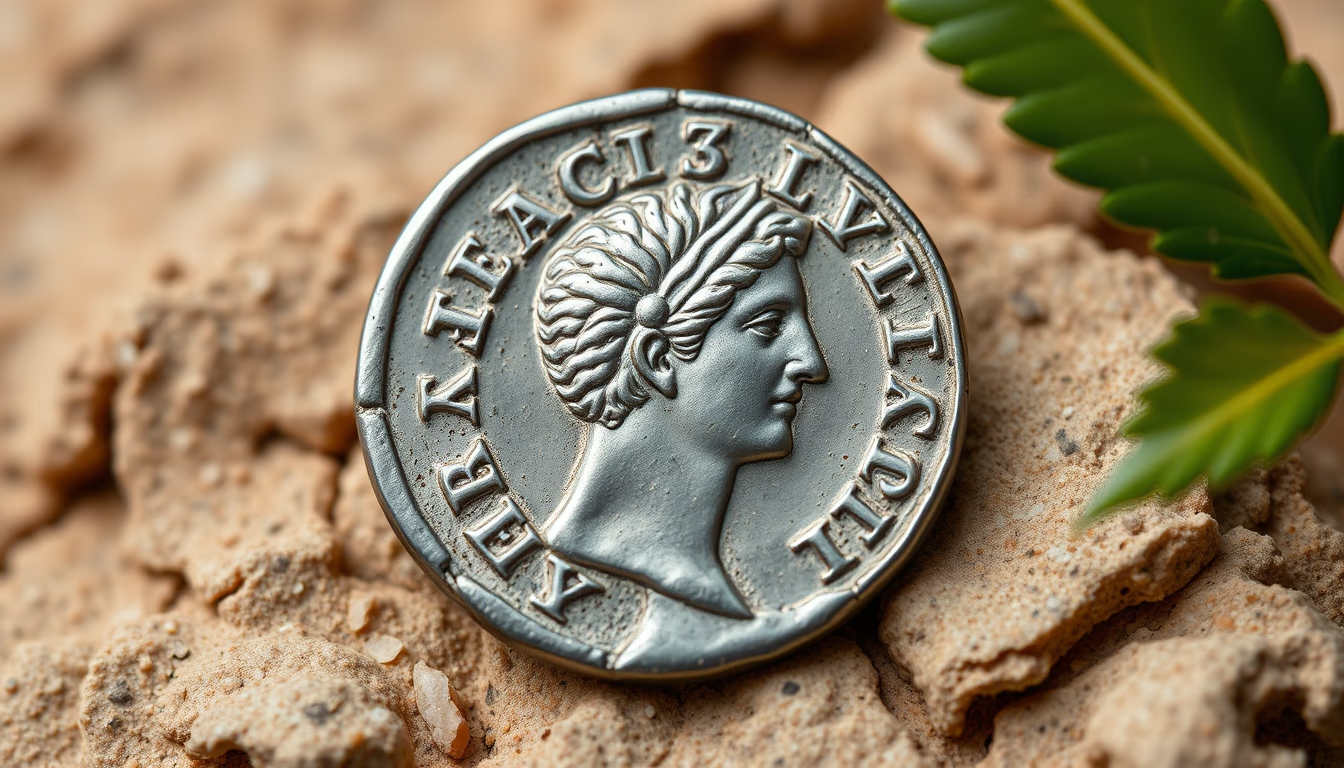
The Roman silver denarius was the standard coin of the Roman Empire for centuries, minted from the Republic era until the 3rd century AD.
About this subject
The denarius was a silver coin introduced around 211 BC during the Second Punic War, replacing the Greek drachma as the main medium of exchange. It initially weighed about 4.5 grams of nearly pure silver, giving it high purchasing power. In the Republican period, its obverse often featured the goddess Roma wearing a helmet, while the reverse showed the Dioscuri (Castor and Pollux) on horseback.
Over time, the denarius became the backbone of the Roman monetary system. Soldiers, officials, and merchants received payments in denarii, and its use spread across the Mediterranean. During the Empire, emperors like Augustus and Trajan maintained silver purity, but economic crises forced reductions in metal content. Starting with Nero's reign, the denarius began to be debased with copper, gradually losing its intrinsic value.
Debasement peaked in the 3rd century AD, when silver content dropped below 5%. Emperor Diocletian in AD 294 replaced the denarius with new coins such as the argenteus and the follis. Today, denarii are objects of numismatic and archaeological study, providing clues about Roman economy, politics, and iconography. Well-preserved coins are highly sought by collectors, sometimes fetching thousands of dollars at auction. The minting of the denarius reflects not only Rome's military might but also its ability to integrate diverse regions through a unified monetary standard.
Frequently Asked Questions
What was the value of the denarius in the Roman Empire?
The denarius was the main coin, initially worth about 10 asses (bronze coins), but its purchasing power varied. In the 1st century AD, one denarius equaled the daily wage of a common laborer.
Why was the denarius debased?
Debasement occurred due to economic crises, wars, and inflation. Emperors reduced silver content to pay expenses, starting notably with Nero, which undermined trust in the coin.
How to identify an authentic denarius?
Genuine denarii weigh between 3 and 4.5 grams, have a diameter of 19-22 mm, and display a dark or gray patina. The quality of relief and Latin inscriptions help authentication; coins with over 90% silver content are rarer and more valuable.
Direct URL
https://pub-c7d6a6ea828543ac903a74a341ccb2e1.r2.dev/imagens/roman-silver-denarius-coin-documentary-nature-style-fresh9.avifHow to credit
Include a visible link back to UtilizAí. Copy one of the snippets below:
<a href="https://xn--utiliza-eza.com/en/midia/imagens/roman-silver-denarius-coin-documentary-nature-style-fresh9">Roman silver denarius coin</a> by <a href="https://xn--utiliza-eza.com">UtilizAí</a>, licensed under <a href="https://creativecommons.org/licenses/by/4.0/">CC BY 4.0</a>.
[Roman silver denarius coin](https://xn--utiliza-eza.com/en/midia/imagens/roman-silver-denarius-coin-documentary-nature-style-fresh9) by [UtilizAí](https://xn--utiliza-eza.com), CC BY 4.0
License: CC-BY-4.0