Rolleiflex tlr vintage
1344×768 · AVIF · CC BY 4.0

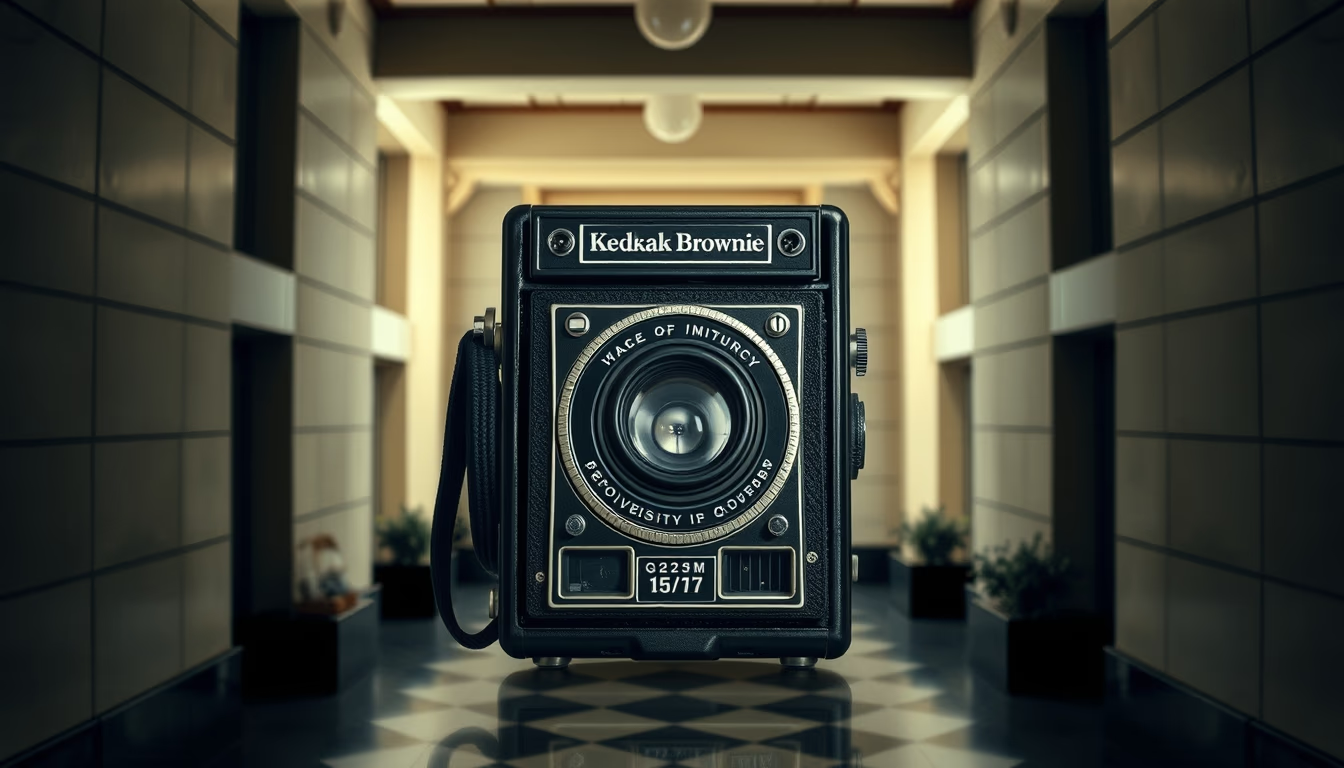
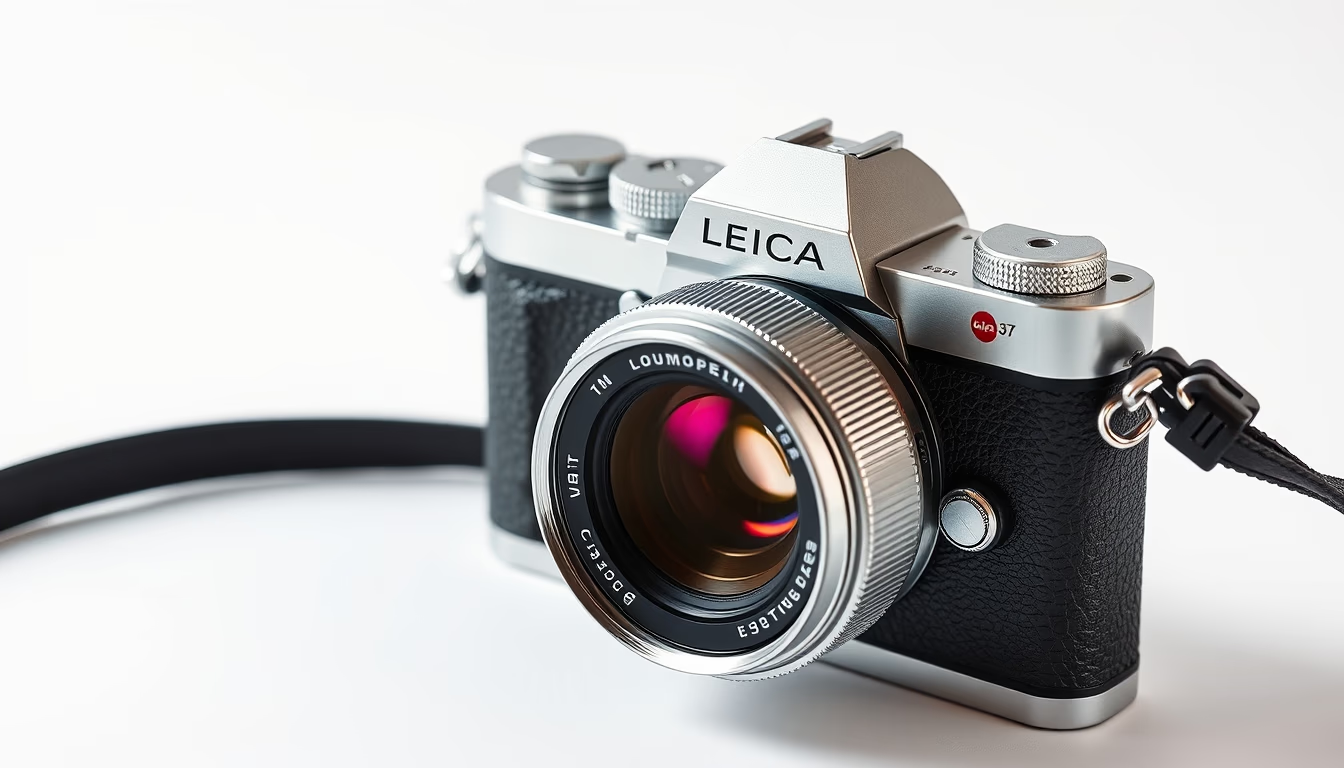
The Rolleiflex TLR, a classic twin-lens reflex camera from the 1950s, is an icon of analog photography revered for its optical quality and elegant design.
About this subject
The Rolleiflex is a twin-lens reflex (TLR) camera manufactured by the German company Franke & Heidecke, later Rollei, starting in 1929. The most famous model, the Rolleiflex 2.8F, was produced from 1960 to 1994. It uses 120 roll film, producing 6x6 cm negatives. Its twin-lens system comprises a viewing lens and a taking lens, coupled together, allowing precise focusing and a contemplative photographic experience.
The Rolleiflex left its mark on street photography and photojournalism, used by photographers such as Vivian Maier and Robert Capa. Its optical quality, especially with Carl Zeiss Planar lenses, rivals modern medium-format cameras. The robust construction, in metal and leather, ensures durability. The waist-level viewfinder, with a ground glass screen, requires a peculiar posture, either crouching or holding the camera at chest height.
Today, the Rolleiflex is highly valued in the vintage camera market, with well-preserved examples costing thousands of dollars. Collectors seek specific series, such as the 2.8GX or the 3.5F. Its aesthetics and performance continue to inspire analog photographers, often appearing in exhibitions, portraits, and artistic essays.
Frequently Asked Questions
What is the difference between a Rolleiflex and a Rolleicord?
The Rolleiflex was the professional line, with better lenses and superior finish. The Rolleicord was more affordable, aimed at amateurs, with smaller aperture lenses and simplified construction.
How do you load film in a Rolleiflex?
120 film is inserted into the lower compartment, passed through the take-up spool, and the paper backing is wound onto the empty spool. Film advance is manual via a side crank, with automatic stop at the next frame.
Are Rolleiflex lenses still competitive today?
Yes, especially those equipped with Carl Zeiss Planar or Xenotar lenses. They offer exceptional sharpness, good contrast, and micro-contrast, comparable to modern medium-format lenses. The maximum aperture of f/2.8 was fast for its time.
Direct URL
https://pub-c7d6a6ea828543ac903a74a341ccb2e1.r2.dev/imagens/rolleiflex-tlr-vintage-studio-editorial-portrait-fresh13.avifHow to credit
Include a visible link back to UtilizAí. Copy one of the snippets below:
<a href="https://xn--utiliza-eza.com/en/midia/imagens/rolleiflex-tlr-vintage-studio-editorial-portrait-fresh13">Rolleiflex tlr vintage</a> by <a href="https://xn--utiliza-eza.com">UtilizAí</a>, licensed under <a href="https://creativecommons.org/licenses/by/4.0/">CC BY 4.0</a>.
[Rolleiflex tlr vintage](https://xn--utiliza-eza.com/en/midia/imagens/rolleiflex-tlr-vintage-studio-editorial-portrait-fresh13) by [UtilizAí](https://xn--utiliza-eza.com), CC BY 4.0
License: CC-BY-4.0