Rolleiflex tlr vintage
1344×768 · AVIF · CC BY 4.0

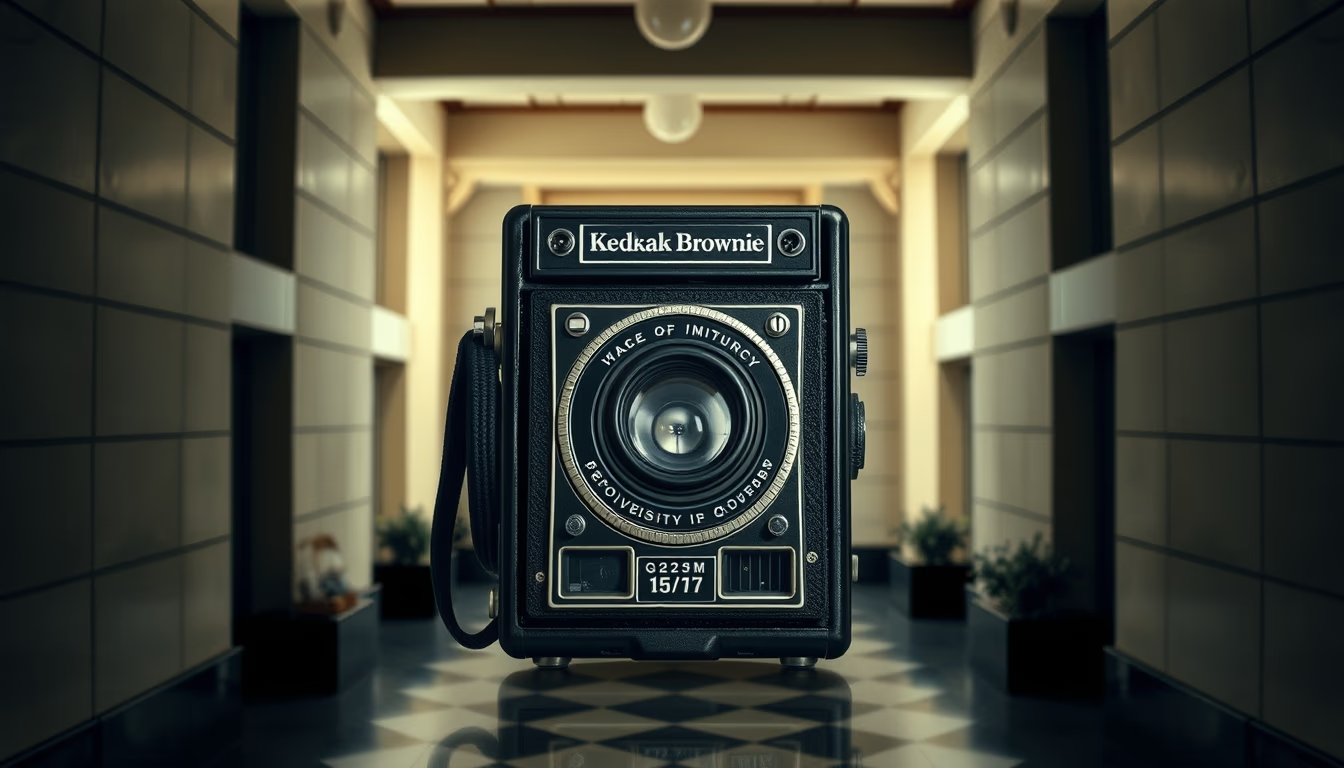
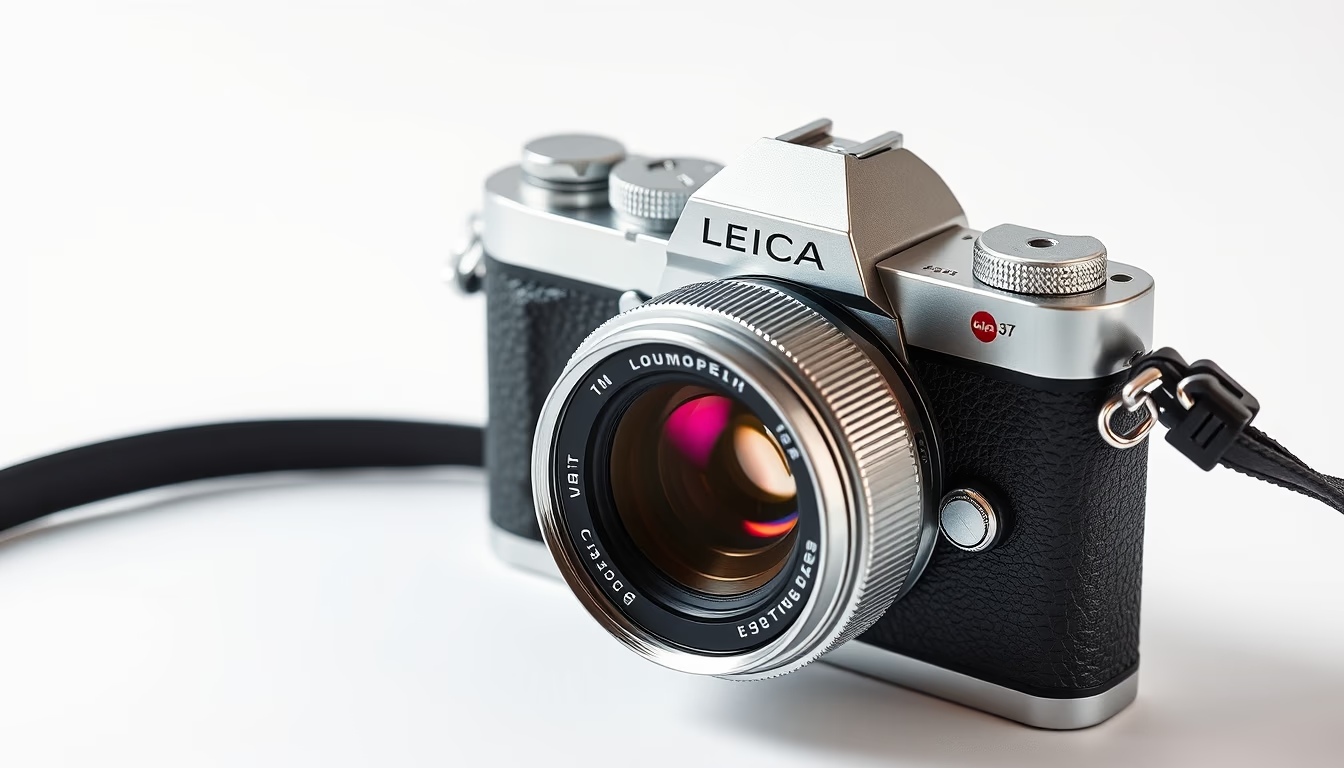
The Rolleiflex TLR is a classic medium format camera renowned for its optical quality and innovative design, which defined professional photography in the 20th century.
About this subject
The Rolleiflex is a twin-lens reflex (TLR) camera manufactured by the German company Franke & Heidecke (later Rollei). Introduced in 1929, it became an icon among professional and advanced amateur photographers. The original Rolleiflex Standard used 120 roll film (6x6 cm) and featured a waist-level finder with a viewing lens (top) and a taking lens (bottom), both synchronized.
The camera was widely adopted by photojournalists, documentary photographers, and artists. Its design allows the photographer to hold the camera at waist level and compose the image looking downward, providing a discreet perspective different from conventional SLRs. The quality of Carl Zeiss Tessar (or Schneider Xenar) lenses contributes to exceptional sharpness, contrast, and definition.
Production of the Rolleiflex continued into the 1990s, with models like the Rolleiflex 2.8GX. To this day, it remains a coveted camera for collectors and photographers who appreciate mechanical precision and image quality that rivals modern digital cameras. Rollei also produced a more affordable variant, the Rolleicord, for a broader audience.
Trivia: the name "Rolleiflex" combines "Rollei" (from the company name) and "flex" (referring to the reflex system). Many of these cameras still work perfectly, serving as living museum pieces of photographic history.
Frequently Asked Questions
What is the main advantage of a Rolleiflex TLR over a traditional SLR?
The main advantage is the waist-level viewfinder, which allows composing without raising the camera to the eye. This makes the process more discreet and enables different angles, while eliminating the moving mirror, reducing vibrations and noise.
Is the Rolleiflex still used by professional photographers today?
Yes, many street, portrait, and documentary photographers still use the Rolleiflex for its mechanical quality and image output. Although analog, it offers a tactile experience and results that some consider superior to digital sensors for certain styles.
What is the difference between Rolleiflex and Rolleicord?
Both are medium format TLRs, but the Rolleiflex was the professional model, with higher-quality lenses (Carl Zeiss Tessar or Schneider Xenar) and robust build. The Rolleicord was a more affordable model with simpler construction and lower-cost lenses, aimed at amateurs.
Direct URL
https://pub-c7d6a6ea828543ac903a74a341ccb2e1.r2.dev/imagens/rolleiflex-tlr-vintage-lo-fi-disposable-camera-fresh4.avifHow to credit
Include a visible link back to UtilizAí. Copy one of the snippets below:
<a href="https://xn--utiliza-eza.com/en/midia/imagens/rolleiflex-tlr-vintage-lo-fi-disposable-camera-fresh4">Rolleiflex tlr vintage</a> by <a href="https://xn--utiliza-eza.com">UtilizAí</a>, licensed under <a href="https://creativecommons.org/licenses/by/4.0/">CC BY 4.0</a>.
[Rolleiflex tlr vintage](https://xn--utiliza-eza.com/en/midia/imagens/rolleiflex-tlr-vintage-lo-fi-disposable-camera-fresh4) by [UtilizAí](https://xn--utiliza-eza.com), CC BY 4.0
License: CC-BY-4.0