Rolleiflex tlr vintage
1344×768 · AVIF · CC BY 4.0

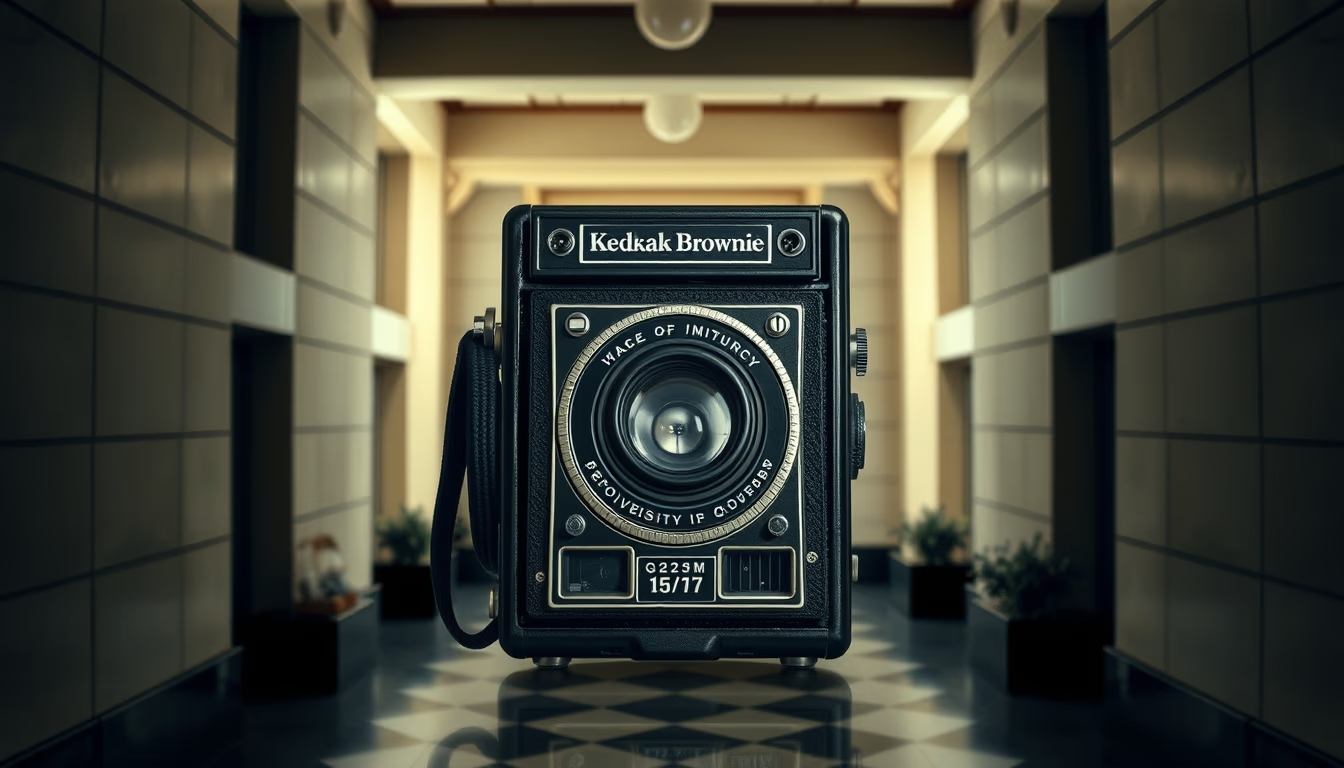
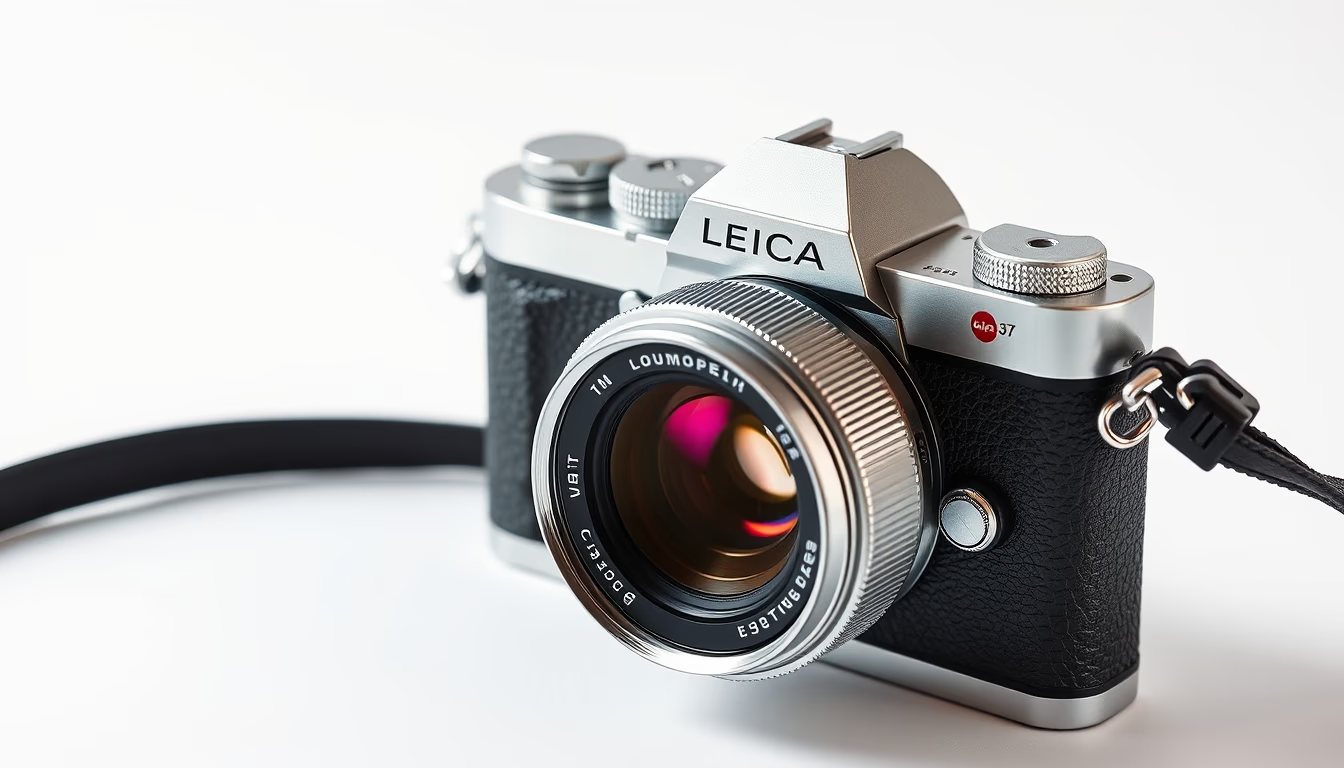
The Rolleiflex TLR is a German twin-lens reflex camera, an icon of medium-format photography from the 1920s to the 1960s.
About this subject
The Rolleiflex TLR, manufactured by Franke & Heidecke (later Rollei-Werke) in Braunschweig, Germany, is one of the most iconic cameras in photographic history. The twin-lens reflex (TLR) design features two stacked lenses: one for capturing the image and one for viewing, with a mirror angled at 45 degrees projecting the scene onto a ground glass screen on top of the camera. This system allowed photographers to compose without the mirror slap typical of SLRs, resulting in quiet and discreet operation, ideal for street photography and portraits.
The first Rolleiflex was introduced in 1929, and the series evolved over decades, with models like the Rolleiflex Automat (1937) and the Rolleiflex 2.8F (1960), considered the pinnacle of the line. The camera used 120 roll film, producing 6x6 cm square negatives. The optical quality of Carl Zeiss lenses (such as Tessar and Planar) or Schneider lenses (Xenar and Xenotar) ensured exceptional sharpness. The Rolleiflex was widely used by photojournalists, including Vivian Maier and Richard Avedon, who valued its robustness and reliability.
A notable technical feature was the Compur or Synchro-Compur leaf shutter, enabling flash synchronization at high speeds, rare at the time. The Rolleiflex also excelled in harsh environments, such as during the Vietnam War, where reporters used it for its resistance to dust and moisture. With the rise of 35mm SLRs and later digital cameras, the TLR's popularity waned, but the Rolleiflex remains a collector's item and a desire among medium-format enthusiasts. Today, well-preserved vintage models fetch high prices, especially those with special edition lenses or rare accessories like wide-angle and telephoto converters that expanded creative possibilities.
Frequently Asked Questions
What is the difference between a TLR and an SLR camera?
A TLR uses two lenses: one for viewing and one for capturing, with a waist-level viewfinder. An SLR uses a single lens and a movable mirror to switch between viewfinder and film/sensor. The TLR is quieter and more discreet, but the SLR offers more versatile lens interchangeability.
What type of film does the Rolleiflex TLR use?
The Rolleiflex uses 120 roll film, producing 6x6 cm square negatives. This film provides higher resolution and detail than 35mm film.
Why is the Rolleiflex so valuable today?
It is valued for its exceptional optical quality, robust mechanical construction, historical role in major photojournalism, and vintage aesthetic. Rare models with Carl Zeiss lenses or original accessories fetch high prices at auctions.
Direct URL
https://pub-c7d6a6ea828543ac903a74a341ccb2e1.r2.dev/imagens/rolleiflex-tlr-vintage-fish-eye-wide-angle-fresh8.avifHow to credit
Include a visible link back to UtilizAí. Copy one of the snippets below:
<a href="https://xn--utiliza-eza.com/en/midia/imagens/rolleiflex-tlr-vintage-fish-eye-wide-angle-fresh8">Rolleiflex tlr vintage</a> by <a href="https://xn--utiliza-eza.com">UtilizAí</a>, licensed under <a href="https://creativecommons.org/licenses/by/4.0/">CC BY 4.0</a>.
[Rolleiflex tlr vintage](https://xn--utiliza-eza.com/en/midia/imagens/rolleiflex-tlr-vintage-fish-eye-wide-angle-fresh8) by [UtilizAí](https://xn--utiliza-eza.com), CC BY 4.0
License: CC-BY-4.0