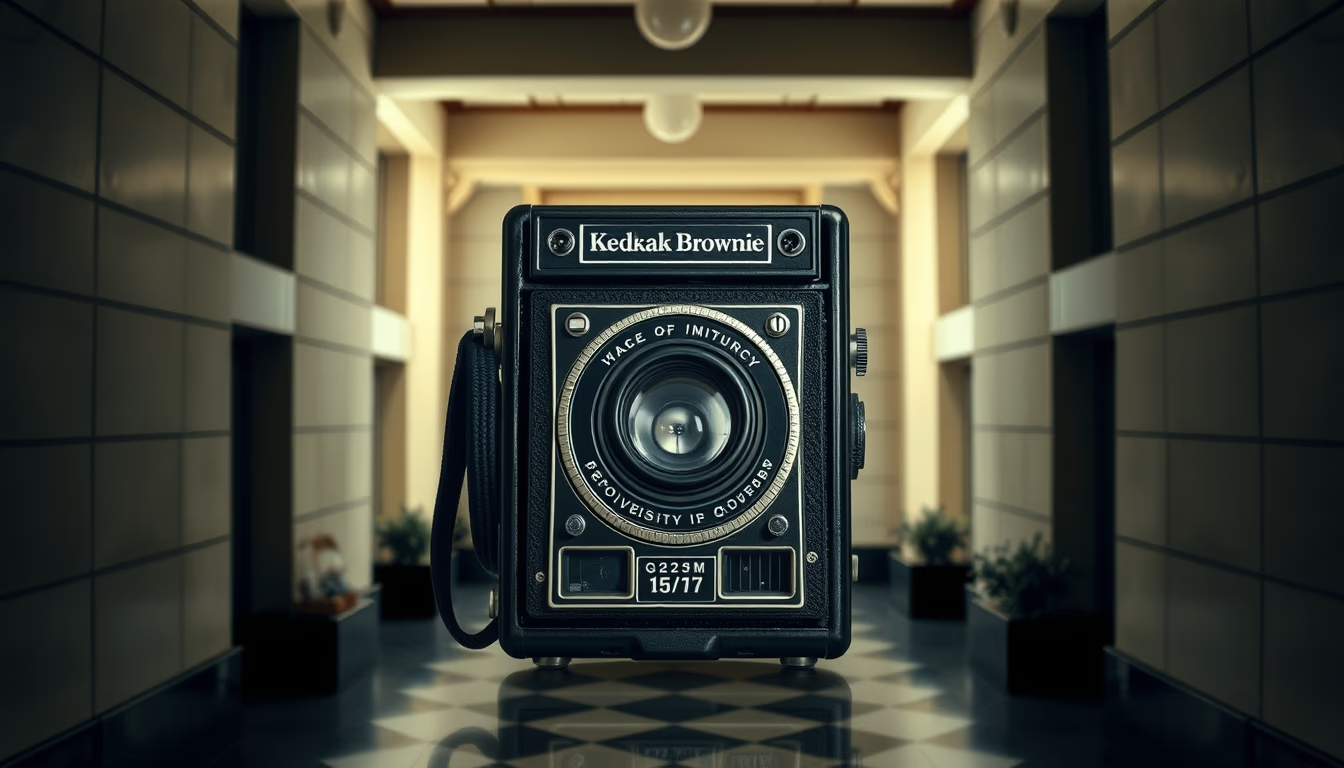
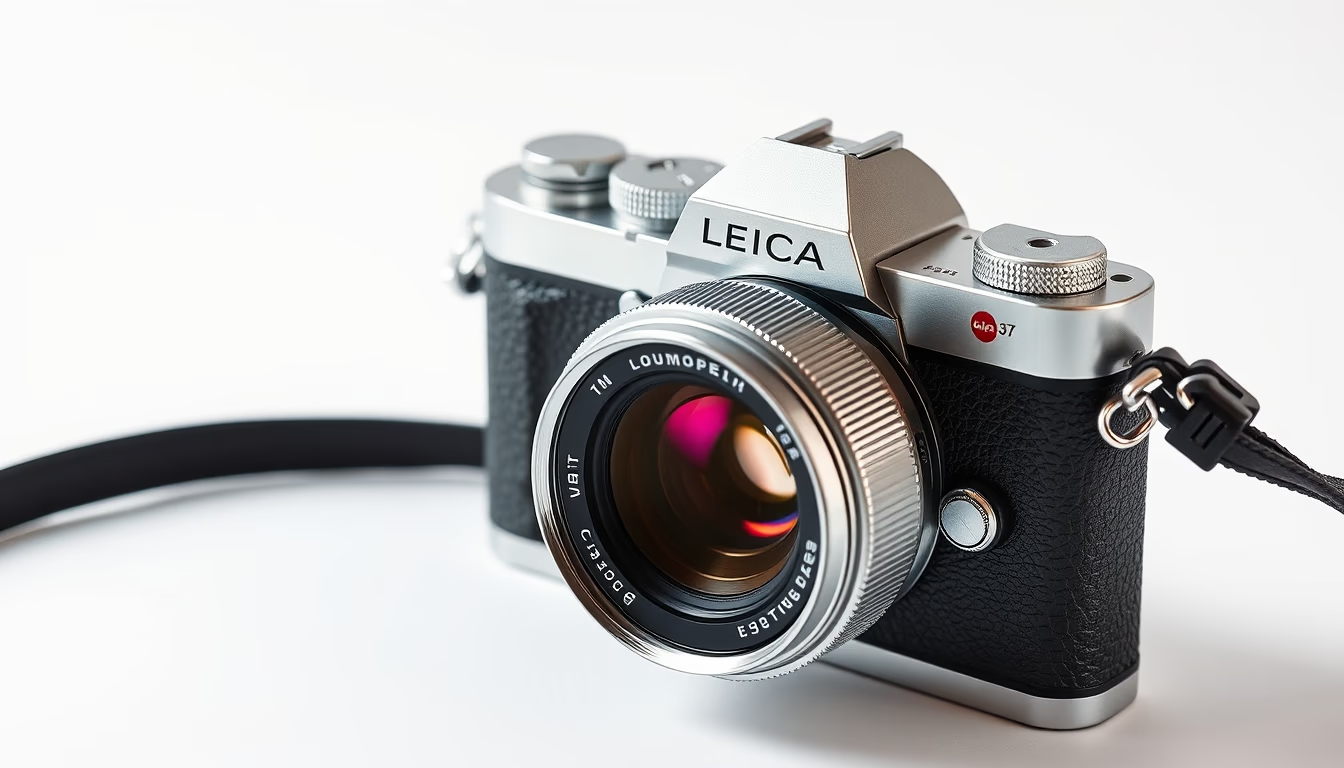
Rolleiflex tlr vintage
1344×768 · AVIF · CC BY 4.0

The Rolleiflex TLR, a classic medium format camera that defined 20th-century photography, remains a benchmark among collectors and enthusiasts.
About this subject
The Rolleiflex is a medium format Twin Lens Reflex (TLR) camera manufactured by the German company Franke & Heidecke, founded in 1920 and later renamed Rollei-Werke. Launched in 1929, the Rolleiflex popularized the dual-lens system: one lens for viewing and another for capturing the image, both mounted on a movable front plate. This design allowed the photographer to compose the scene through the upper lens while the lower lens focused and exposed the film. The camera used 120 roll film, producing square 6x6 cm negatives, an iconic aspect ratio that influenced generations of photographers.
For decades, the Rolleiflex was the preferred camera of photojournalists, documentarians, and artists such as Robert Doisneau and Vivian Maier. Its robust metal construction, precision shutter, and Carl Zeiss or Schneider Kreuznach lenses delivered exceptional optical quality. Famous versions include the Rolleiflex Standard (1932), the Rolleiflex Automat (1937), and the post-war Rolleiflex 3.5F and 2.8F series, equipped with Planar or Xenotar lenses. The TLR became synonymous with discretion: silent and offering waist-level viewing, photographers could capture spontaneous moments without intimidating subjects.
Production declined with the rise of compact and digital cameras, but the line continued until the 2000s. Today, vintage models are highly valued in the collector market, especially well-preserved units with original lenses. The Rolleiflex inspired cheaper versions like the Rolleicord and influenced the design of Japanese TLRs such as the Yashica-Mat and Minolta Autocord. Its legacy lives on in user clubs and online communities dedicated to preserving medium format techniques.
Frequently Asked Questions
What is the difference between a Rolleiflex and a Rolleicord?
The Rolleiflex was the premium model, with superior lenses (Zeiss or Schneider), more robust construction, and automatic film advance. The Rolleicord, simpler and cheaper, used Triotar or Xenar lenses and manual advance, but still offered good quality.
How does the twin-lens reflex (TLR) system work?
The upper lens projects the image onto a reflex mirror for the waist-level viewfinder, allowing the photographer to compose and focus. The lower lens, coupled to the shutter, captures the image on film. Both lenses move together to maintain focus.
Why are Rolleiflex cameras so highly valued by collectors?
Due to exceptional build quality, sharp lenses, and iconic design. Historical models with rare features (like the 2.8 Planar lens or low serial numbers) command high prices. The square format and silent operation also appeal to analog photographers.
Direct URL
https://pub-c7d6a6ea828543ac903a74a341ccb2e1.r2.dev/imagens/rolleiflex-tlr-vintage-documentary-nature-style-fresh0.avifHow to credit
Include a visible link back to UtilizAí. Copy one of the snippets below:
<a href="https://xn--utiliza-eza.com/en/midia/imagens/rolleiflex-tlr-vintage-documentary-nature-style-fresh0">Rolleiflex tlr vintage</a> by <a href="https://xn--utiliza-eza.com">UtilizAí</a>, licensed under <a href="https://creativecommons.org/licenses/by/4.0/">CC BY 4.0</a>.
[Rolleiflex tlr vintage](https://xn--utiliza-eza.com/en/midia/imagens/rolleiflex-tlr-vintage-documentary-nature-style-fresh0) by [UtilizAí](https://xn--utiliza-eza.com), CC BY 4.0
License: CC-BY-4.0