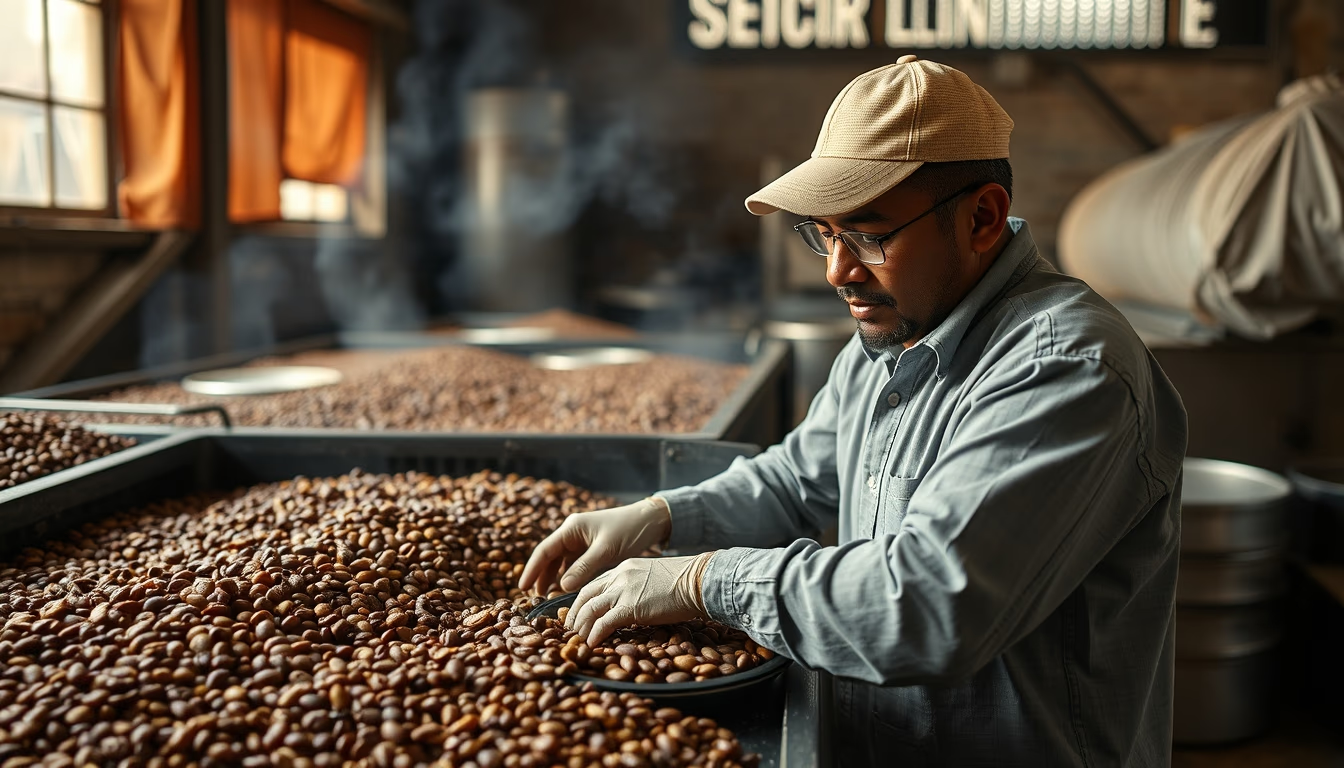
Roastery beans cooling
1344×768 · AVIF · CC BY 4.0
Understand why cooling coffee beans after roasting is a crucial step to preserve aroma and flavor.
About this subject
Cooling freshly roasted coffee beans is one of the most critical steps in the roasting process. After leaving the roasting drum at temperatures between 180°C and 240°C, the beans continue to cook internally if not cooled quickly. This residual heat can lead to the loss of volatile compounds responsible for aroma and to excessive carbonization, resulting in a bitter, burnt flavor.
There are two main cooling methods: air cooling and water cooling. Air cooling, more common in artisanal roasteries, uses ambient or chilled air flowing through the beans on a perforated tray or rotating perforated drum. Water cooling, used in industrial roasteries, sprays a fine mist onto the beans, which can also help reduce dust and static electricity. The chosen method directly influences cooling uniformity and final beverage quality.
Ideal cooling time ranges from 2 to 5 minutes, depending on batch size and equipment. Poorly cooled beans can develop defects like cardboard or smoky flavors, while over-cooled beans (below 20°C) may hinder grinding and extraction. Coffee professionals monitor temperature with infrared thermometers or built-in sensors to ensure beans reach ambient temperature evenly.
Interestingly, cooling also affects grinding: hot beans are more brittle and produce more fines, while cold beans yield more uniform particles. That is why specialty roasters often wait for complete cooling before packaging and grinding. In Brazil, the world's largest coffee producer and exporter, precise control of this step is essential to maintain the reputation of Brazilian coffees in the international market, where sensory quality is increasingly valued.
Frequently Asked Questions
How long does it take to cool coffee beans?
Ideal cooling lasts between 2 and 5 minutes, depending on batch size and method. The goal is to bring beans from roasting temperature (180-240°C) to ambient temperature quickly and evenly.
What is the difference between air cooling and water cooling in coffee?
Air cooling uses airflow to remove heat, common in artisanal roasteries. Water cooling sprays a mist onto the beans, used industrially to speed up the process and reduce dust. Each method affects uniformity and sensory quality.
What happens if coffee beans are not cooled properly?
Poorly cooled beans can develop off-flavors such as bitterness, burnt taste, cardboard, or smokiness. Continuous residual heat also degrades aromatic compounds, compromising the final cup quality.
Direct URL
https://pub-c7d6a6ea828543ac903a74a341ccb2e1.r2.dev/imagens/roastery-beans-cooling-national-geographic-style-p5.avifHow to credit
Include a visible link back to UtilizAí. Copy one of the snippets below:
<a href="https://xn--utiliza-eza.com/en/midia/imagens/roastery-beans-cooling-national-geographic-style-p5">Roastery beans cooling</a> by <a href="https://xn--utiliza-eza.com">UtilizAí</a>, licensed under <a href="https://creativecommons.org/licenses/by/4.0/">CC BY 4.0</a>.
[Roastery beans cooling](https://xn--utiliza-eza.com/en/midia/imagens/roastery-beans-cooling-national-geographic-style-p5) by [UtilizAí](https://xn--utiliza-eza.com), CC BY 4.0
License: CC-BY-4.0