Roastery beans cooling
1344×768 · AVIF · CC BY 4.0
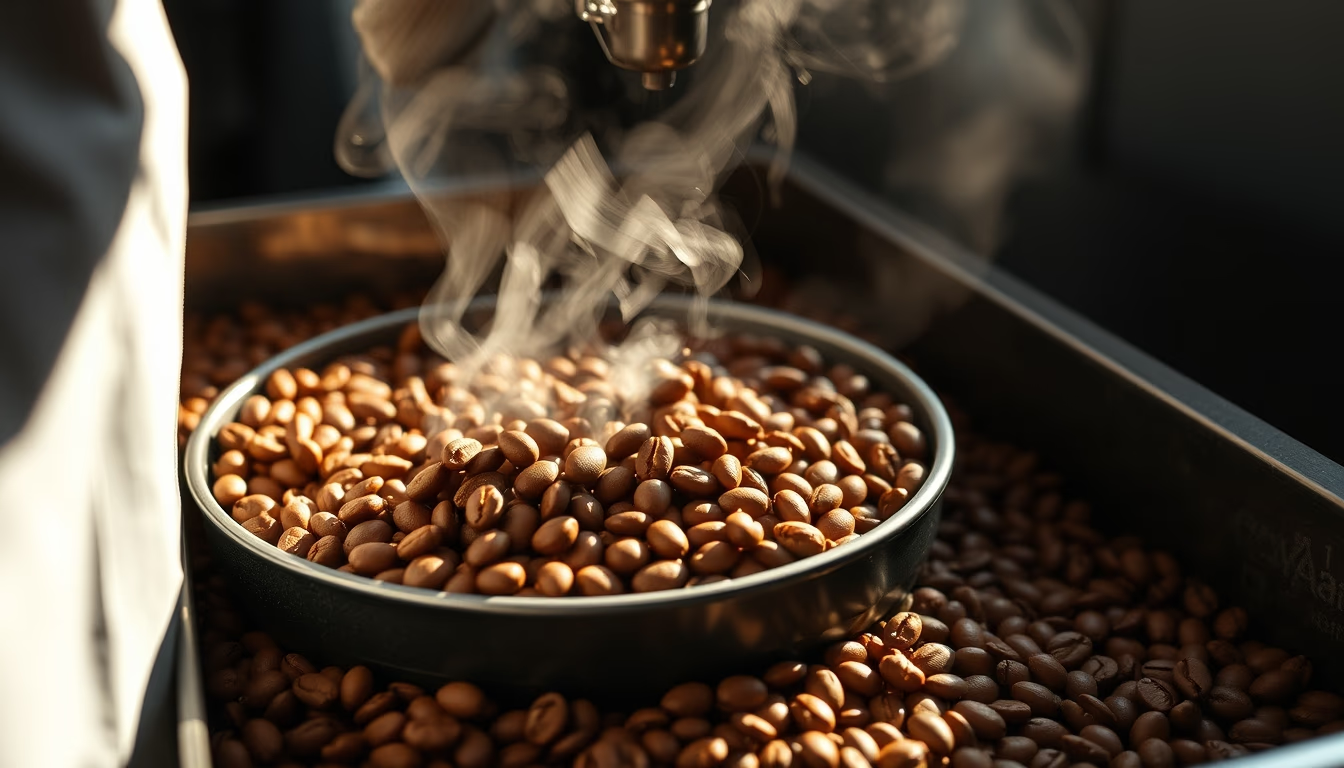
Cooling coffee beans after roasting is a critical step to lock in flavor and preserve aromas. Learn how this essential process works in the coffee industry.
About this subject
After roasting, coffee beans reach temperatures between 180°C and 240°C. If not cooled rapidly, they continue roasting internally due to residual heat, resulting in loss of acidity and development of undesirable flavors such as burnt or bitter notes. Cooling is therefore an abrupt stop of the thermal process, essential to lock in the desired flavor profile set by the roaster.
There are two main cooling methods: air cooling and water cooling. Air cooling is the most common in medium to large roasteries. It uses a stream of ambient or refrigerated air passing through a vibrating bed or perforated drum, removing heat from the beans in a few minutes. Water cooling, though rarer, is used for some specialty coffees to reduce cooling time even further, but must be precisely controlled to avoid adding excess moisture that could harm grinding and storage.
The cooling rate also influences the evolution of volatile compounds. Studies show that very slow cooling allows degradation of essential oils and formation of unwanted acidity. Conversely, excessively fast cooling can cause thermal shock and crack the beans. Therefore, roasters adjust airflow and drum rotation to achieve an ideal curve, typically reducing the temperature to below 40°C in less than four minutes.
Beyond sensory quality, proper cooling affects the shelf life of coffee. Beans that are not cooled correctly release carbon dioxide at an accelerated rate, hastening aging and loss of freshness. In artisanal roasteries, the cooling tray is equipped with rotating paddles and exhaust to ensure uniformity. In industrial plants, fluidized bed systems or screw conveyors with air injection are common. Regardless of scale, the goal remains the same: halt the roast at the exact point and prepare the bean for packaging and consumption.
Frequently Asked Questions
Why is cooling coffee beans important?
Cooling stops the roast at the exact point, preventing residual heat from continuing to cook the beans. This preserves the desired flavor profile, such as acidity and fruity notes, and avoids bitter or burnt flavors.
What is the difference between air cooling and water cooling?
Air cooling is more common and uses a stream of air to remove heat. Water cooling is faster but requires strict control to avoid adding excess moisture, which can affect grinding and storage.
How long does it take to cool coffee beans after roasting?
In well-equipped roasteries, cooling takes 2 to 4 minutes to reduce bean temperature to about 40°C or lower. This time is critical to prevent aroma degradation.
Direct URL
https://pub-c7d6a6ea828543ac903a74a341ccb2e1.r2.dev/imagens/roastery-beans-cooling-magazine-editorial-p2.avifHow to credit
Include a visible link back to UtilizAí. Copy one of the snippets below:
<a href="https://xn--utiliza-eza.com/en/midia/imagens/roastery-beans-cooling-magazine-editorial-p2">Roastery beans cooling</a> by <a href="https://xn--utiliza-eza.com">UtilizAí</a>, licensed under <a href="https://creativecommons.org/licenses/by/4.0/">CC BY 4.0</a>.
[Roastery beans cooling](https://xn--utiliza-eza.com/en/midia/imagens/roastery-beans-cooling-magazine-editorial-p2) by [UtilizAí](https://xn--utiliza-eza.com), CC BY 4.0
License: CC-BY-4.0