Ribosome detail render
1344×768 · AVIF · CC BY 4.0
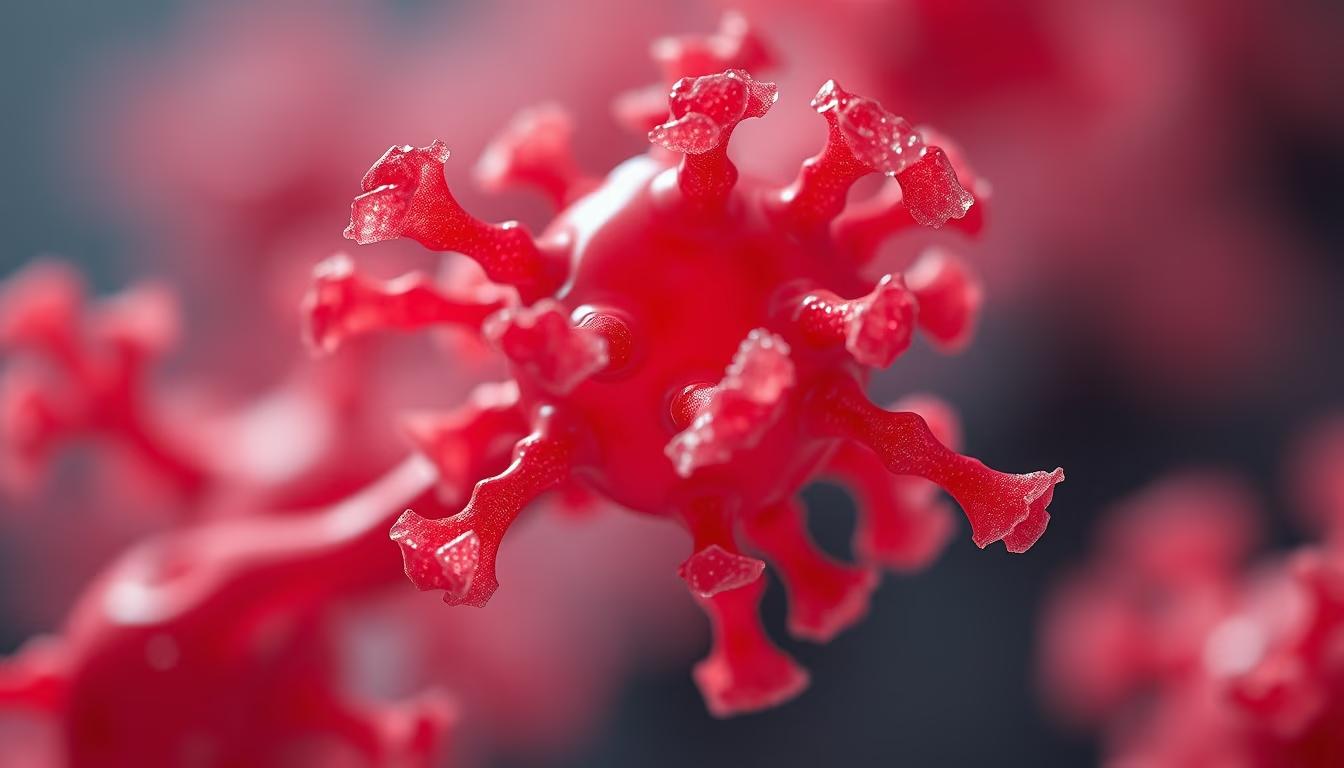
The ribosome is the cellular machinery responsible for protein synthesis, composed of ribosomal RNA and proteins.
About this subject
The ribosome is an essential molecular complex in all living cells, responsible for translating messenger RNA (mRNA) into polypeptide chains. Discovered in the early 1950s by George Palade, this nanomachine measures between 20 and 30 nanometers in diameter and is composed of two subunits: the large (60S in eukaryotes) and the small (40S). Each subunit is formed by ribosomal RNA (rRNA) and ribosomal proteins, organized in a highly evolutionarily conserved three-dimensional structure.
During translation, the ribosome moves along the mRNA, reading codons and recruiting amino acids carried by transfer RNAs (tRNA). The large subunit catalyzes the formation of peptide bonds at the peptidyl transferase center, while the small subunit ensures accurate decoding. In prokaryotes, ribosomes are slightly smaller (70S), with 50S and 30S subunits, a difference exploited by antibiotics such as streptomycin and tetracycline.
The importance of ribosomes extends beyond basic biology: malfunctions in their machinery are associated with diseases like cancer and developmental disorders. The detailed study of their structure earned the 2009 Nobel Prize in Chemistry for Venkatraman Ramakrishnan, Thomas Steitz, and Ada Yonath, who used X-ray crystallography to map atoms of the bacterial ribosome. Today, techniques like cryoelectron microscopy allow visualization of ribosomes in action, revealing conformational movements during protein synthesis.
Interestingly, ribosomes can be free in the cytoplasm or bound to the rough endoplasmic reticulum, where they produce secreted or membrane proteins. In mitochondria and chloroplasts, their own ribosomes (70S) suggest an endosymbiotic origin. The high density of ribosomes in metabolically active cells, such as neurons, highlights their central role in cellular life.
Frequently Asked Questions
What is the main function of the ribosome?
The ribosome is responsible for protein synthesis, translating the genetic code from mRNA into amino acid chains that form proteins.
How do antibiotics affect bacterial ribosomes?
Antibiotics like streptomycin and tetracycline selectively bind to bacterial ribosomes (70S), blocking protein synthesis and killing bacteria without affecting human ribosomes (80S).
What is the difference between free ribosomes and those bound to the endoplasmic reticulum?
Free ribosomes in the cytoplasm synthesize proteins that function inside the cell, while ribosomes bound to the rough endoplasmic reticulum produce proteins destined for secretion or membranes.
Direct URL
https://pub-c7d6a6ea828543ac903a74a341ccb2e1.r2.dev/imagens/ribosome-detail-render-high-fashion-editorial-p9.avifHow to credit
Include a visible link back to UtilizAí. Copy one of the snippets below:
<a href="https://xn--utiliza-eza.com/en/midia/imagens/ribosome-detail-render-high-fashion-editorial-p9">Ribosome detail render</a> by <a href="https://xn--utiliza-eza.com">UtilizAí</a>, licensed under <a href="https://creativecommons.org/licenses/by/4.0/">CC BY 4.0</a>.
[Ribosome detail render](https://xn--utiliza-eza.com/en/midia/imagens/ribosome-detail-render-high-fashion-editorial-p9) by [UtilizAí](https://xn--utiliza-eza.com), CC BY 4.0
License: CC-BY-4.0