Ribosome detail render
1344×768 · AVIF · CC BY 4.0
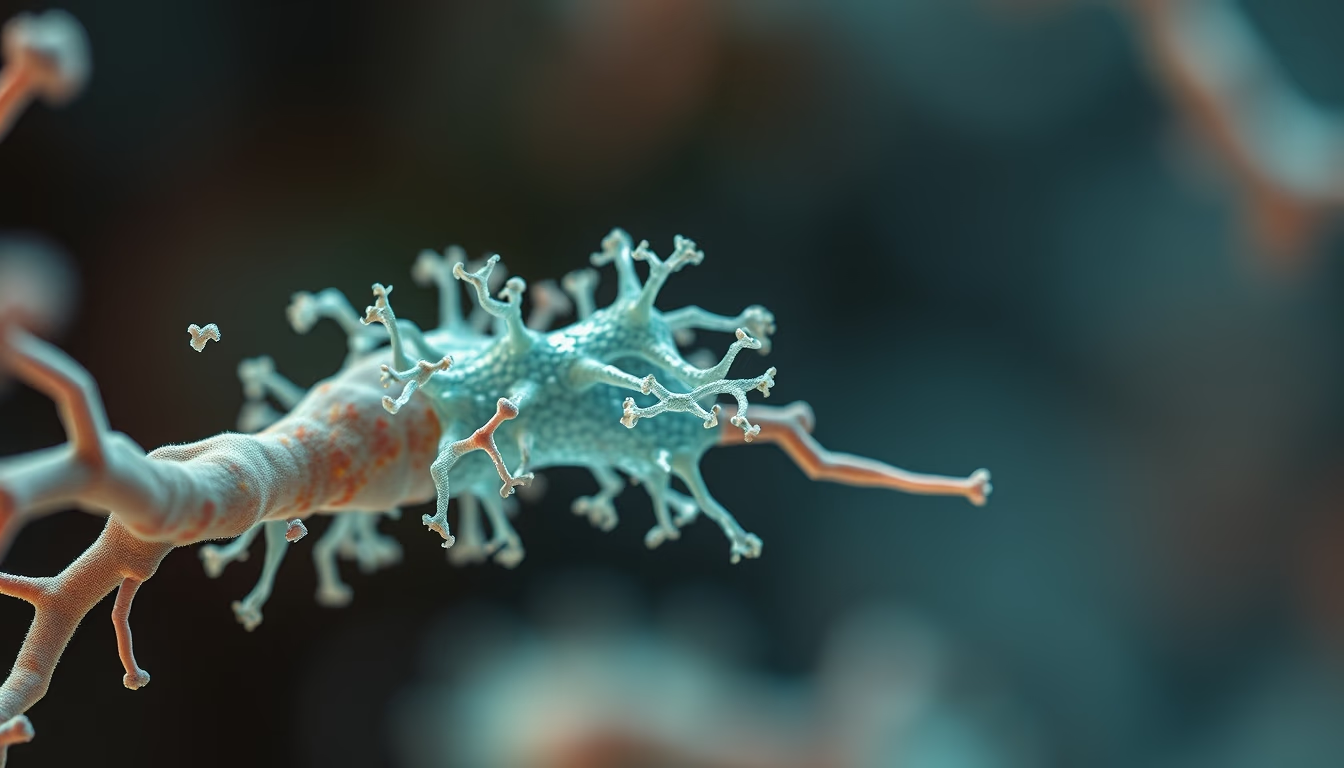
The ribosome is the cellular machinery responsible for protein synthesis, translating the genetic code from messenger RNA into polypeptide chains.
About this subject
The ribosome is a ribonucleoprotein complex found in all living cells, essential for translating messenger RNA (mRNA) into proteins. It consists of two subunits, large and small, that assemble during protein synthesis. In prokaryotes, the ribosome has a sedimentation coefficient of 70S (subunits 50S and 30S), while in eukaryotes it is 80S (subunits 60S and 40S). This difference is exploited by antibiotics that selectively inhibit bacterial ribosomes without affecting human ones.
The discovery of ribosomes dates back to the 1950s, when George Palade observed them under an electron microscope, work that earned him the Nobel Prize in 1974. Each ribosome has three active sites: A (aminoacyl), P (peptidyl), and E (exit), which coordinate the entry of transfer RNA (tRNA) and the formation of peptide bonds. The three-dimensional structure of the ribosome was elucidated by X-ray crystallography, revealing that ribosomal RNA (rRNA) is the main catalyst for peptide bond formation, making it a ribozyme.
Ribosomes can be free in the cytoplasm or bound to the rough endoplasmic reticulum, directing proteins to different cellular destinations. A typical human cell contains millions of ribosomes, consuming a large portion of cellular energy for protein synthesis. Regulation of ribosomal translation is complex and involves initiation, elongation, and termination factors. Mutations in ribosomal genes are linked to diseases such as Diamond-Blackfan anemia and skeletal dysplasias.
Frequently Asked Questions
What is the main function of the ribosome?
The ribosome is responsible for protein synthesis, translating the nucleotide sequence of messenger RNA into an amino acid sequence that forms a protein.
How many subunits make up a ribosome?
The ribosome consists of two subunits: a large and a small one. In bacteria, they are called 50S and 30S; in human cells, 60S and 40S.
Are ribosomes found only in eukaryotic cells?
No, ribosomes are present in all domains of life: bacteria, archaea, and eukaryotes. In mitochondria and chloroplasts, they have prokaryotic characteristics.
Direct URL
https://pub-c7d6a6ea828543ac903a74a341ccb2e1.r2.dev/imagens/ribosome-detail-render-film-grain-authentic-p11.avifHow to credit
Include a visible link back to UtilizAí. Copy one of the snippets below:
<a href="https://xn--utiliza-eza.com/en/midia/imagens/ribosome-detail-render-film-grain-authentic-p11">Ribosome detail render</a> by <a href="https://xn--utiliza-eza.com">UtilizAí</a>, licensed under <a href="https://creativecommons.org/licenses/by/4.0/">CC BY 4.0</a>.
[Ribosome detail render](https://xn--utiliza-eza.com/en/midia/imagens/ribosome-detail-render-film-grain-authentic-p11) by [UtilizAí](https://xn--utiliza-eza.com), CC BY 4.0
License: CC-BY-4.0