Ribosome detail render
1344×768 · AVIF · CC BY 4.0
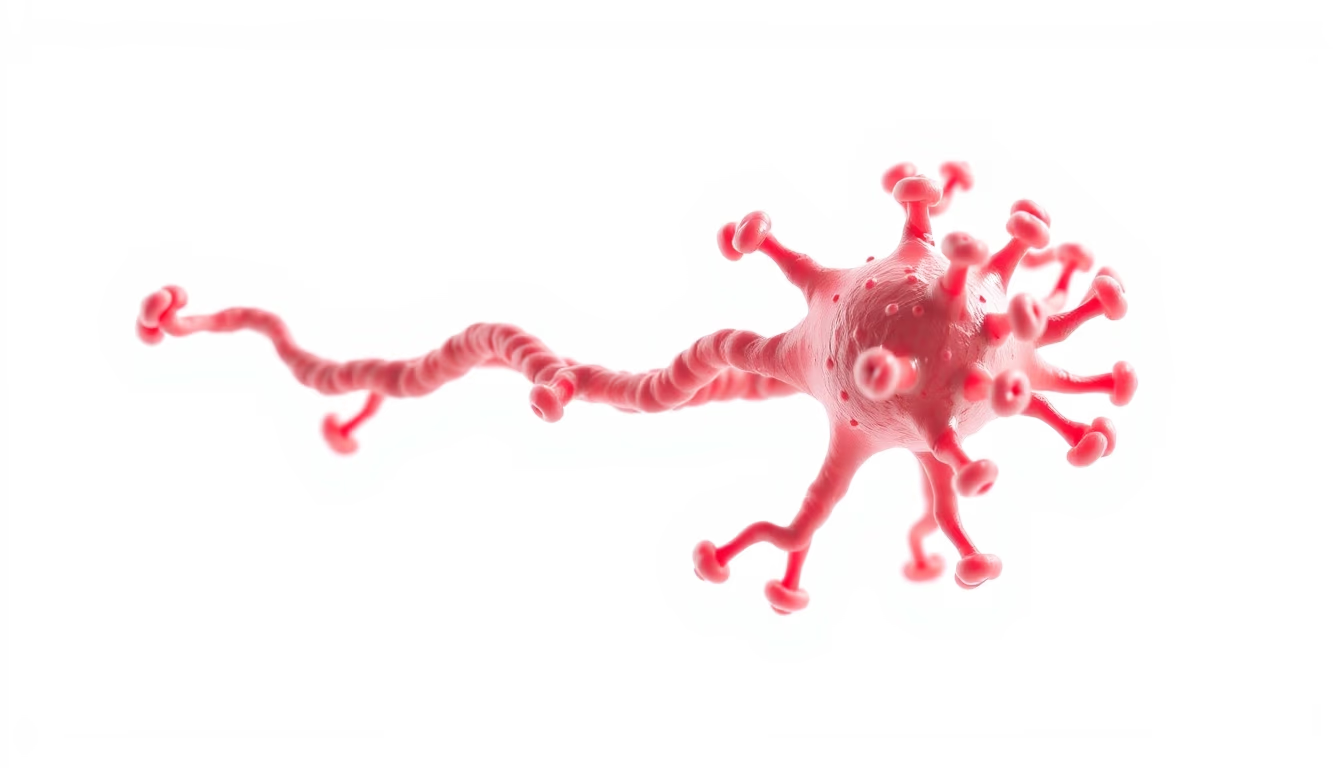
Ribosome, the molecular machinery that translates mRNA into proteins, shown in a detailed render of its subunits and functional sites.
About this subject
The ribosome is a ribonucleoprotein complex essential for protein synthesis in all living cells. Composed of two subunits (large and small), it binds to messenger RNA (mRNA) and catalyzes peptide bond formation between amino acids according to the genetic code. In prokaryotes, the ribosome has a sedimentation coefficient of 70S (subunits 50S and 30S); in eukaryotes, it is 80S (60S and 40S). This difference is exploited by many antibiotics, such as tetracycline, which blocks the bacterial small subunit without affecting human ribosomes.
The three-dimensional structure of the ribosome was elucidated by cryo-electron microscopy and X-ray crystallography, work that earned the 2009 Nobel Prize in Chemistry for Venkatraman Ramakrishnan, Thomas Steitz, and Ada Yonath. Each subunit contains ribosomal RNA (rRNA) and proteins. The rRNA plays a catalytic role in peptidyl transferase, making it a ribozyme. The A (aminoacyl), P (peptidyl), and E (exit) sites coordinate tRNA entry, peptide bond formation, and release of empty tRNA.
Ribosomes can be free in the cytoplasm or bound to the rough endoplasmic reticulum (RER), directing proteins for secretion or membrane insertion. In cells with high protein demand, such as pancreatic exocrine cells, thousands of ribosomes act simultaneously. Polysomes (multiple ribosomes on the same mRNA) increase translation efficiency. Mutations in rRNA or ribosomal protein genes are linked to diseases like Diamond-Blackfan anemia and myelodysplastic syndromes.
Recent studies reveal that ribosomes are not uniform machines; specialized ribosomes regulate translation of specific mRNA groups, influencing development and stress responses. This ribosomal heterogeneity opens new avenues for targeted therapies. Detailed rendering allows atomic-level visualization of this machinery, fundamental for life.
Frequently Asked Questions
What is the main function of the ribosome?
The ribosome is responsible for protein synthesis, translating the nucleotide sequence of mRNA into an amino acid sequence to form polypeptides.
What is the difference between prokaryotic and eukaryotic ribosomes?
Prokaryotic ribosomes are 70S (subunits 50S and 30S), while eukaryotic ribosomes are 80S (60S and 40S). This difference allows antibiotics to selectively target bacteria.
What are polysomes?
Polysomes (or polyribosomes) are clusters of multiple ribosomes translating the same mRNA simultaneously, increasing the efficiency of protein production.
Direct URL
https://pub-c7d6a6ea828543ac903a74a341ccb2e1.r2.dev/imagens/ribosome-detail-render-commercial-product-photography-p6.avifHow to credit
Include a visible link back to UtilizAí. Copy one of the snippets below:
<a href="https://xn--utiliza-eza.com/en/midia/imagens/ribosome-detail-render-commercial-product-photography-p6">Ribosome detail render</a> by <a href="https://xn--utiliza-eza.com">UtilizAí</a>, licensed under <a href="https://creativecommons.org/licenses/by/4.0/">CC BY 4.0</a>.
[Ribosome detail render](https://xn--utiliza-eza.com/en/midia/imagens/ribosome-detail-render-commercial-product-photography-p6) by [UtilizAí](https://xn--utiliza-eza.com), CC BY 4.0
License: CC-BY-4.0