Reichsmark germany 1920
1344×768 · AVIF · CC BY 4.0

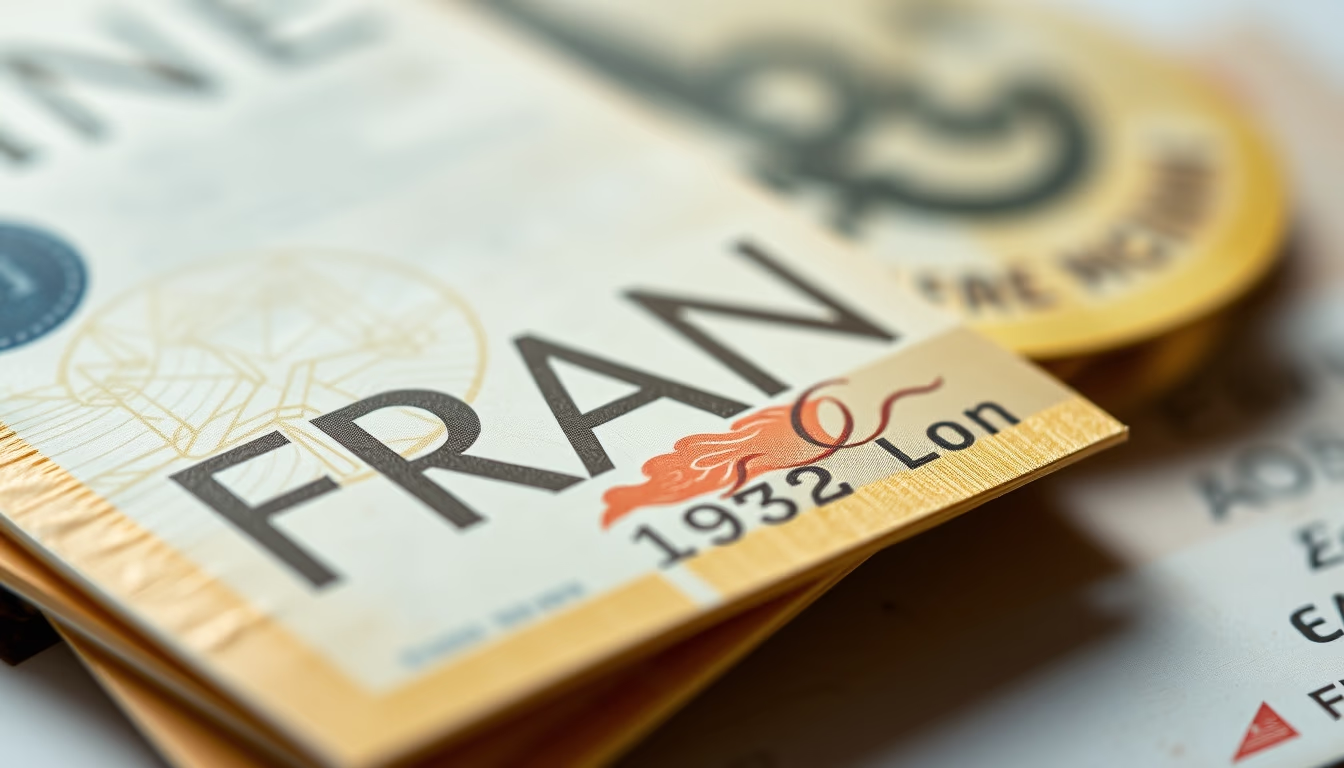
A 1920 German banknote from the hyperinflation period of the Weimar Republic, displaying face value amid rapid currency devaluation.
About this subject
Although often called Reichsmark, the 1920 German banknote belongs to the Papiermark period, the currency that circulated in Germany until 1923. After World War I, Germany was forced to pay heavy reparations to the victorious powers, which, combined with loss of productive territories and political instability, led the government to print money on a large scale to cover expenses. This uncontrolled issuance caused historic hyperinflation: the value of the Papiermark plummeted, and notes like this 1000 Mark (or other denominations) lost value daily.
The typical design of 1920 banknotes reflected the art of the time, with ornate arabesques, portraits of historical figures, or Germanic allegories. The note also featured watermarks and serial numbers for authentication, although print quality varied according to the urgency of issuance. Hyperinflation peaked in 1923, when 100 billion Mark notes were used to buy bread. To curb the crisis, the government introduced the Rentenmark in November 1923, followed by the Reichsmark in 1924, which finally stabilized the economy.
Today, these banknotes are valuable collector's items, especially those from 1920, as they testify to one of the most dramatic periods in world economic history. German numismatics from this period is rich in varieties, with subtle differences in printing, seals, and colors. Collectors seek notes in good condition, with sharp corners and vivid colors, and rarity is linked to print runs and survival over time. Authenticity is verified by experts, as contemporary counterfeits exist.
Frequently Asked Questions
What is a Reichsmark?
The Reichsmark was Germany's official currency from 1924 to 1948, introduced to replace the Papiermark after the 1923 hyperinflation. The 1920 banknote, despite the title, is technically a Papiermark.
Why are 1920 German banknotes valuable to collectors?
They represent the peak of hyperinflation in the Weimar Republic, a significant historical period. Value depends on condition, rarity, and demand in the numismatic market.
How can I identify an authentic 1920 German banknote?
Check for watermarks, serial numbers, and printing details. Authentic notes usually have high-quality paper and specific inks. Consult a numismatic expert for certification.
Direct URL
https://pub-c7d6a6ea828543ac903a74a341ccb2e1.r2.dev/imagens/reichsmark-germany-1920-documentary-photography-fresh16.avifHow to credit
Include a visible link back to UtilizAí. Copy one of the snippets below:
<a href="https://xn--utiliza-eza.com/en/midia/imagens/reichsmark-germany-1920-documentary-photography-fresh16">Reichsmark germany 1920</a> by <a href="https://xn--utiliza-eza.com">UtilizAí</a>, licensed under <a href="https://creativecommons.org/licenses/by/4.0/">CC BY 4.0</a>.
[Reichsmark germany 1920](https://xn--utiliza-eza.com/en/midia/imagens/reichsmark-germany-1920-documentary-photography-fresh16) by [UtilizAí](https://xn--utiliza-eza.com), CC BY 4.0
License: CC-BY-4.0