Red panda in tree
1344×768 · AVIF · CC BY 4.0
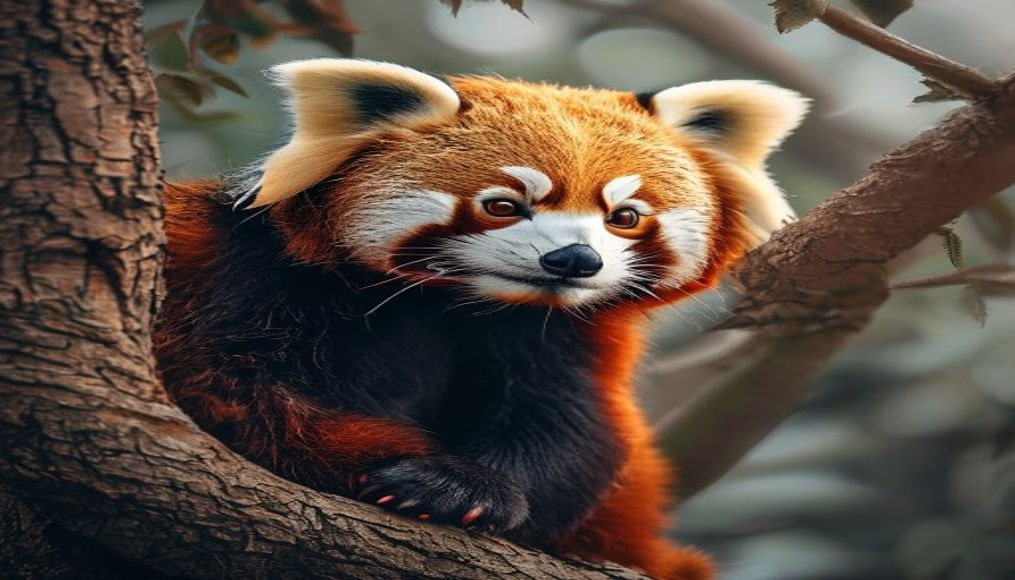
The red panda (Ailurus fulgens) is an arboreal mammal native to the temperate forests of the Himalayas, known for its reddish fur and tree-dwelling lifestyle.
About this subject
The red panda, also known as the fire fox, is a small mammal inhabiting the mountain forests of Nepal, Bhutan, northern India, Myanmar, and southern China. With reddish-brown fur and a thick ringed tail, it is perfectly adapted for life in trees. Its semi-retractable claws and a false thumb (an elongated carpal bone) allow it to grip branches and bamboo securely. Although it is the only living member of the family Ailuridae, genetic studies indicate that it diverged from bears and raccoons about 40 million years ago.
The red panda's diet consists mainly of bamboo, which accounts for more than 90% of its food intake. However, unlike the giant panda, it also feeds on fruits, acorns, roots, and occasionally eggs or insects. Because it has a slow metabolism and an inefficient digestive system for cellulose, it spends much of the day resting in trees and feeds only during the early morning and late afternoon. This strategy conserves energy and protects it from predators such as snow leopards and birds of prey.
Classified as Endangered by the IUCN, the red panda suffers from deforestation for agriculture and pasture, illegal hunting for its fur, and habitat fragmentation. It is estimated that fewer than 10,000 individuals remain in the wild. Conservation initiatives include protected areas, ecological corridors, and captive breeding programs, such as those at the São Paulo Zoo and the Red Panda Conservation Center in Nepal. The animal is also a symbol of the International Red Panda Festival held annually in Darjeeling, India.
For centuries, the red panda has been revered by local communities and inspired legends. In Bhutan, it is considered a sacred animal and appears in traditional dances. The scientific name Ailurus fulgens means 'shining cat' or 'fire cat,' referring to its vibrant coloration. Despite its distant relation to giant pandas, the red panda remains a unique icon of Himalayan biodiversity and an important indicator of the health of temperate Asian forests.
Frequently Asked Questions
Are red pandas related to giant pandas?
No, despite the similar name, red pandas belong to the family Ailuridae, while giant pandas are in the family Ursidae. Their shared bamboo diet is an example of convergent evolution.
Why are red pandas endangered?
The main threats are habitat loss due to deforestation for agriculture and pasture, illegal hunting for their fur, and forest fragmentation, which isolates populations and reduces genetic diversity.
Where can I see red pandas in captivity?
Many zoos worldwide participate in breeding programs, including the San Diego Zoo, the Rotterdam Zoo, and the Padmaja Naidu Himalayan Zoological Park in India. In Brazil, the São Paulo Zoo and others exhibit red pandas.
Direct URL
https://pub-c7d6a6ea828543ac903a74a341ccb2e1.r2.dev/imagens/red-panda-in-tree-commercial-product-photography-v9.avifHow to credit
Include a visible link back to UtilizAí. Copy one of the snippets below:
<a href="https://xn--utiliza-eza.com/en/midia/imagens/red-panda-in-tree-commercial-product-photography-v9">Red panda in tree</a> by <a href="https://xn--utiliza-eza.com">UtilizAí</a>, licensed under <a href="https://creativecommons.org/licenses/by/4.0/">CC BY 4.0</a>.
[Red panda in tree](https://xn--utiliza-eza.com/en/midia/imagens/red-panda-in-tree-commercial-product-photography-v9) by [UtilizAí](https://xn--utiliza-eza.com), CC BY 4.0
License: CC-BY-4.0