Red fort delhi
1344×768 · AVIF · CC BY 4.0
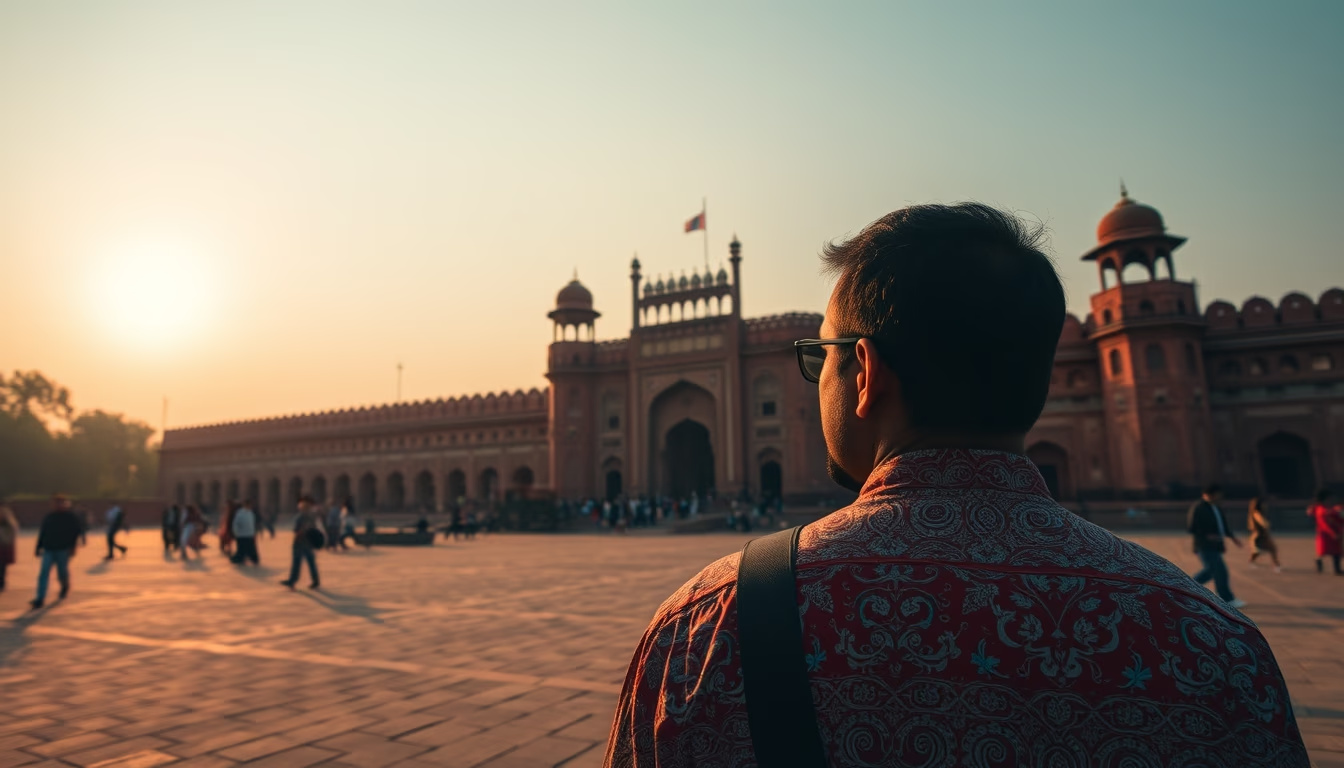
The Red Fort of Delhi, built in the 17th century by Mughal emperor Shah Jahan, is a UNESCO World Heritage Site and a symbol of Indian independence.
About this subject
The Red Fort, locally known as Lal Qila, is one of the most iconic structures in India. Its construction began in 1638 and was completed in 1648 under the reign of Mughal emperor Shah Jahan, the same ruler behind the Taj Mahal. Located on the banks of the Yamuna River, the fort served as the main residence of Mughal emperors for about 200 years, until the British invasion.
The architecture blends Islamic, Persian, and Hindu elements, characteristic of the Mughal style. Its red sandstone walls stretch over 2 kilometers. Inside, notable structures include the Diwan-i-Aam (Hall of Public Audiences) and Diwan-i-Khas (Hall of Private Audiences), along with luxurious royal baths and the famous Peacock Throne, which was looted by Persians in the 18th century.
Historically, the Red Fort is a landmark of India's independence struggle. From its ramparts, Prime Minister Jawaharlal Nehru hoisted the Indian national flag for the first time in 1947. Since then, every year on Independence Day (August 15), the prime minister addresses the nation from the fort. In 2007, the site was declared a UNESCO World Heritage Site.
Interestingly, the fort houses a museum with Mughal artifacts, including paintings, manuscripts, and weapons. Its stunning nighttime illumination attracts thousands of visitors annually. The complex also features Chatta Chowk, a covered market that once sold luxury items for the imperial court and is now a tourist attraction.
Frequently Asked Questions
When was the Red Fort built?
The Red Fort was built between 1638 and 1648 by Mughal emperor Shah Jahan.
Why is the fort called Red?
The name comes from the massive red sandstone walls that enclose the complex. In Hindi, it is called Lal Qila.
What is the significance of the Red Fort for Indian independence?
On August 15, 1947, Prime Minister Jawaharlal Nehru hoisted the Indian flag from the fort's ramparts, making it a national symbol. Since then, Independence Day is celebrated there.
Direct URL
https://pub-c7d6a6ea828543ac903a74a341ccb2e1.r2.dev/imagens/red-fort-delhi-cinematic-wide-shot-p0.avifHow to credit
Include a visible link back to UtilizAí. Copy one of the snippets below:
<a href="https://xn--utiliza-eza.com/en/midia/imagens/red-fort-delhi-cinematic-wide-shot-p0">Red fort delhi</a> by <a href="https://xn--utiliza-eza.com">UtilizAí</a>, licensed under <a href="https://creativecommons.org/licenses/by/4.0/">CC BY 4.0</a>.
[Red fort delhi](https://xn--utiliza-eza.com/en/midia/imagens/red-fort-delhi-cinematic-wide-shot-p0) by [UtilizAí](https://xn--utiliza-eza.com), CC BY 4.0
License: CC-BY-4.0