Red blood cells flowing
1344×768 · AVIF · CC BY 4.0
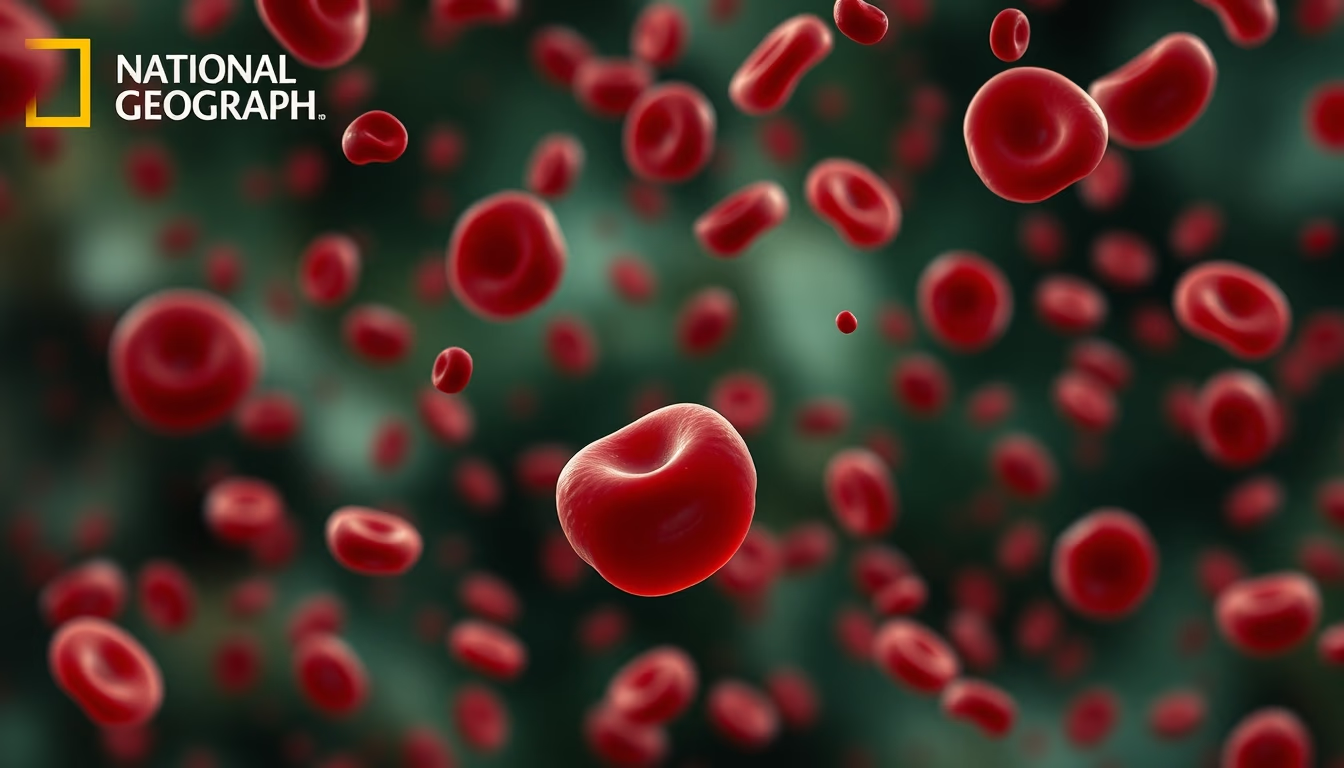
Red blood cells, or erythrocytes, are the blood cells responsible for transporting oxygen from the lungs to all tissues in the human body.
About this subject
Red blood cells, or erythrocytes, are the most abundant cells in human blood. Each microliter of blood contains between 4.5 and 5.5 million of these cells in men and between 4.0 and 5.0 million in women. Their primary function is to transport oxygen from the lungs to the tissues and to remove carbon dioxide, a metabolic waste, back to the lungs for exhalation. This gas exchange is made possible by hemoglobin, an iron-rich protein that gives blood its characteristic red color. Each red blood cell contains about 270 million hemoglobin molecules, each capable of binding four oxygen molecules.
Erythrocytes have a unique biconcave shape, resembling a flattened disk with a central depression. This morphology increases the surface area for gas diffusion and allows the cells to deform as they pass through narrow capillaries, some of which are smaller in diameter than the cell itself. They are produced in the red bone marrow through a process called erythropoiesis, which takes about seven days. The average lifespan of a red blood cell is approximately 120 days, after which they are removed from circulation by the spleen and liver.
Alterations in the number or shape of red blood cells can indicate diseases such as anemia, polycythemia, or thalassemia. In anemia, the count or oxygen-carrying capacity is reduced, causing fatigue and pallor. In polycythemia, there is an excess of red blood cells, which can increase the risk of clots. Factors such as altitude, physical exercise, and certain nutritional deficiencies also influence the production of these cells.
Frequently Asked Questions
How many red blood cells are in the human body?
An adult is estimated to have about 20 to 30 trillion red blood cells circulating in the blood.
What causes iron-deficiency anemia?
Iron-deficiency anemia is caused by a lack of iron, which is essential for hemoglobin production. Without enough iron, the bone marrow produces fewer red blood cells, and they become smaller and paler.
Why do red blood cells lack a nucleus?
As red blood cells mature, they lose their nucleus and other organelles to maximize internal space for hemoglobin and increase flexibility, making it easier to pass through capillaries.
Direct URL
https://pub-c7d6a6ea828543ac903a74a341ccb2e1.r2.dev/imagens/red-blood-cells-flowing-national-geographic-style-p6.avifHow to credit
Include a visible link back to UtilizAí. Copy one of the snippets below:
<a href="https://xn--utiliza-eza.com/en/midia/imagens/red-blood-cells-flowing-national-geographic-style-p6">Red blood cells flowing</a> by <a href="https://xn--utiliza-eza.com">UtilizAí</a>, licensed under <a href="https://creativecommons.org/licenses/by/4.0/">CC BY 4.0</a>.
[Red blood cells flowing](https://xn--utiliza-eza.com/en/midia/imagens/red-blood-cells-flowing-national-geographic-style-p6) by [UtilizAí](https://xn--utiliza-eza.com), CC BY 4.0
License: CC-BY-4.0