Red blood cells flowing
1344×768 · AVIF · CC BY 4.0
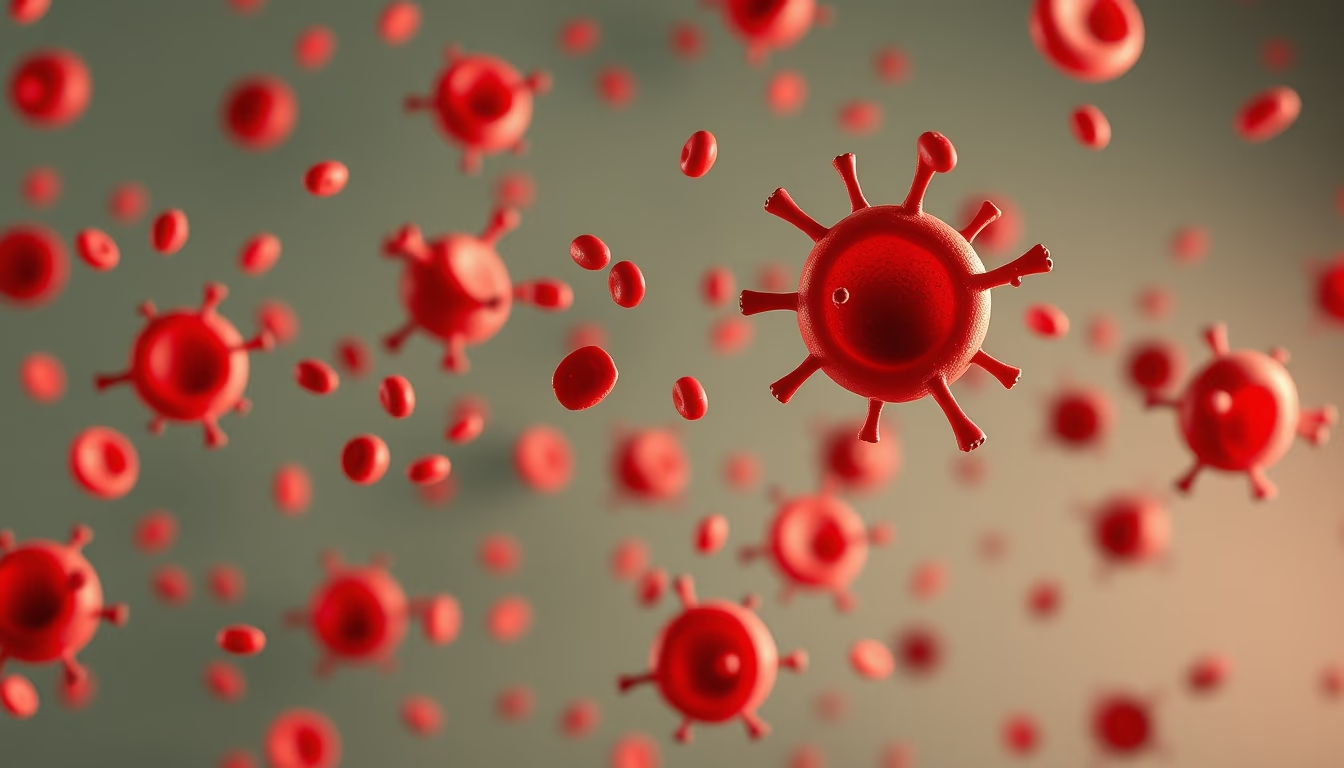
Red blood cells, or erythrocytes, are blood cells responsible for carrying oxygen from the lungs to all tissues in the human body.
About this subject
Red blood cells, also known as erythrocytes, are the most abundant cells in human blood. Their characteristic biconcave disc shape (flattened in the center and thicker at the edges) increases surface area for gas exchange and allows them to deform to pass through narrow capillaries. Each red blood cell contains about 270 million hemoglobin molecules, an iron-rich protein that binds to oxygen in the lungs and releases it into tissues.
Erythrocyte production occurs in the red bone marrow, mainly in bones such as the sternum, ribs, and vertebrae. The process, called erythropoiesis, is stimulated by the hormone erythropoietin, secreted by the kidneys in response to low oxygen levels. A mature red blood cell lacks a nucleus and organelles, maximizing space for hemoglobin but limiting its lifespan to about 120 days. After this period, they are broken down in the spleen and liver.
Disorders related to red blood cells include anemias (deficiency in quantity or function) and polycythemia (excess). Sickle cell disease, for example, results from a hemoglobin mutation that deforms erythrocytes into a sickle shape, hindering blood flow and causing painful crises. Thalassemia involves insufficient hemoglobin production. Normal red blood cell counts vary: about 4.5 to 6 million per microliter in men and 4 to 5.5 million in women.
In the circulatory system, erythrocytes travel approximately 100 thousand kilometers of blood vessels, moving from the heart to the lungs and then throughout the body. Their deformability is crucial: to cross capillaries with a diameter smaller than their own, they elongate and narrow, returning to their original shape afterwards. This property is ensured by the spectrin and actin cytoskeleton lining the cell membrane, conferring elasticity and resilience.
Frequently Asked Questions
What is the main function of red blood cells?
To transport oxygen from the lungs to tissues and carry carbon dioxide from tissues back to the lungs, thanks to hemoglobin.
How long does a red blood cell live?
About 120 days. After that, they are broken down in the spleen and liver, and their components are recycled.
What causes sickle cell disease?
A mutation in the hemoglobin gene that produces hemoglobin S, causing red blood cells to become sickle-shaped, blocking vessels and causing pain.
Direct URL
https://pub-c7d6a6ea828543ac903a74a341ccb2e1.r2.dev/imagens/red-blood-cells-flowing-magazine-editorial-p3.avifHow to credit
Include a visible link back to UtilizAí. Copy one of the snippets below:
<a href="https://xn--utiliza-eza.com/en/midia/imagens/red-blood-cells-flowing-magazine-editorial-p3">Red blood cells flowing</a> by <a href="https://xn--utiliza-eza.com">UtilizAí</a>, licensed under <a href="https://creativecommons.org/licenses/by/4.0/">CC BY 4.0</a>.
[Red blood cells flowing](https://xn--utiliza-eza.com/en/midia/imagens/red-blood-cells-flowing-magazine-editorial-p3) by [UtilizAí](https://xn--utiliza-eza.com), CC BY 4.0
License: CC-BY-4.0