Rare steak medium plate
1344×768 · AVIF · CC BY 4.0
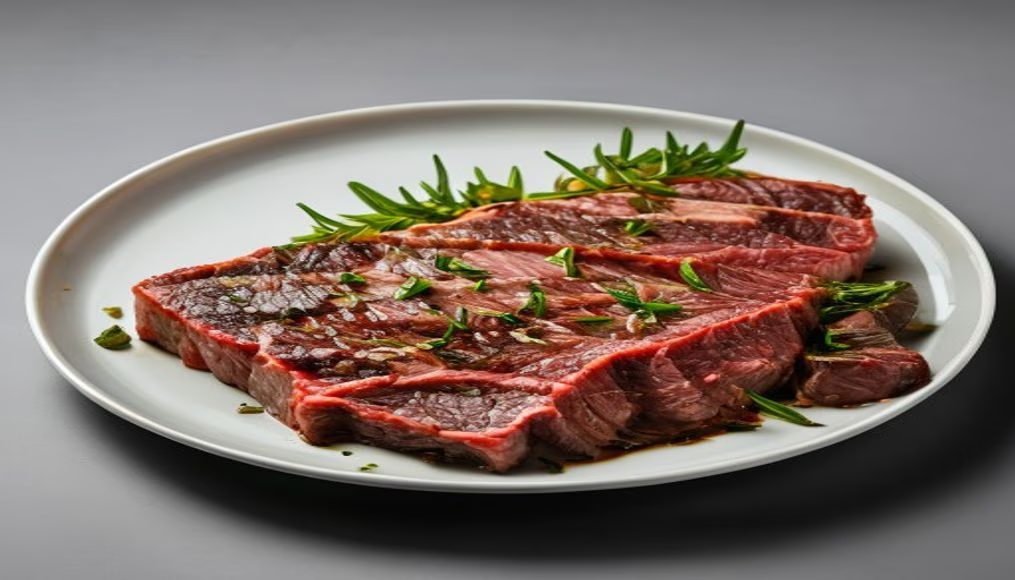
Steak doneness is a personal choice affecting texture and flavor; a rare to medium steak served on a plate exemplifies the balance between juiciness and crust.
About this subject
Steak doneness is one of the most important decisions when preparing a beef cut. In Brazil, terms like "mal passado" (rare), "ao ponto" (medium), and "bem passado" (well done) define internal temperature and center color. A rare steak has a red center at 49°C to 52°C, while a medium rare steak reaches 54°C to 57°C with a pink, juicy interior. The choice of doneness depends on the cut: tender cuts like tenderloin, sirloin, and picanha are ideal for quick searing at high heat, creating a flavorful crust (Maillard reaction) without overcooking the inside.
The searing technique, whether in a skillet or on a grill, is key to retaining juices. Chefs recommend resting the steak for 5 minutes after cooking, allowing fibers to relax and moisture to redistribute. In Brazil, churrasco is a tradition featuring skewers of slow-grilled meat, but individual steaks are also popular in restaurants and homes. Presentation on a white or ceramic plate highlights the steak's color and texture, often accompanied by coarse salt, herb butter, or sauces like chimichurri.
Interesting fact: steak doneness scales vary globally. In the US, terms are rare, medium rare, medium, medium well, and well done. In France, they use "bleu", "saignant", "à point", and "bien cuit". For a medium rare steak, a cooking thermometer ensures accuracy. Cuts with more marbling, like ribeye, withstand heat better without drying out. The choice of fat for searing (butter, oil) also impacts final flavor.
Frequently Asked Questions
What is the ideal temperature for a medium rare steak?
The internal temperature should be between 54°C and 57°C (129°F to 134°F), resulting in a pink, juicy center.
Which cut of beef is best for cooking rare or medium rare?
Tender cuts like tenderloin, sirloin, and picanha are ideal because they have less connective tissue and cook quickly.
Is it necessary to rest the steak after cooking?
Yes, resting for 5 minutes allows juices to redistribute, ensuring more tenderness and flavor.
Direct URL
https://pub-c7d6a6ea828543ac903a74a341ccb2e1.r2.dev/imagens/rare-steak-medium-plate-commercial-product-photography-v9.avifHow to credit
Include a visible link back to UtilizAí. Copy one of the snippets below:
<a href="https://xn--utiliza-eza.com/en/midia/imagens/rare-steak-medium-plate-commercial-product-photography-v9">Rare steak medium plate</a> by <a href="https://xn--utiliza-eza.com">UtilizAí</a>, licensed under <a href="https://creativecommons.org/licenses/by/4.0/">CC BY 4.0</a>.
[Rare steak medium plate](https://xn--utiliza-eza.com/en/midia/imagens/rare-steak-medium-plate-commercial-product-photography-v9) by [UtilizAí](https://xn--utiliza-eza.com), CC BY 4.0
License: CC-BY-4.0