Rapier renaissance fencing
1344×768 · AVIF · CC BY 4.0
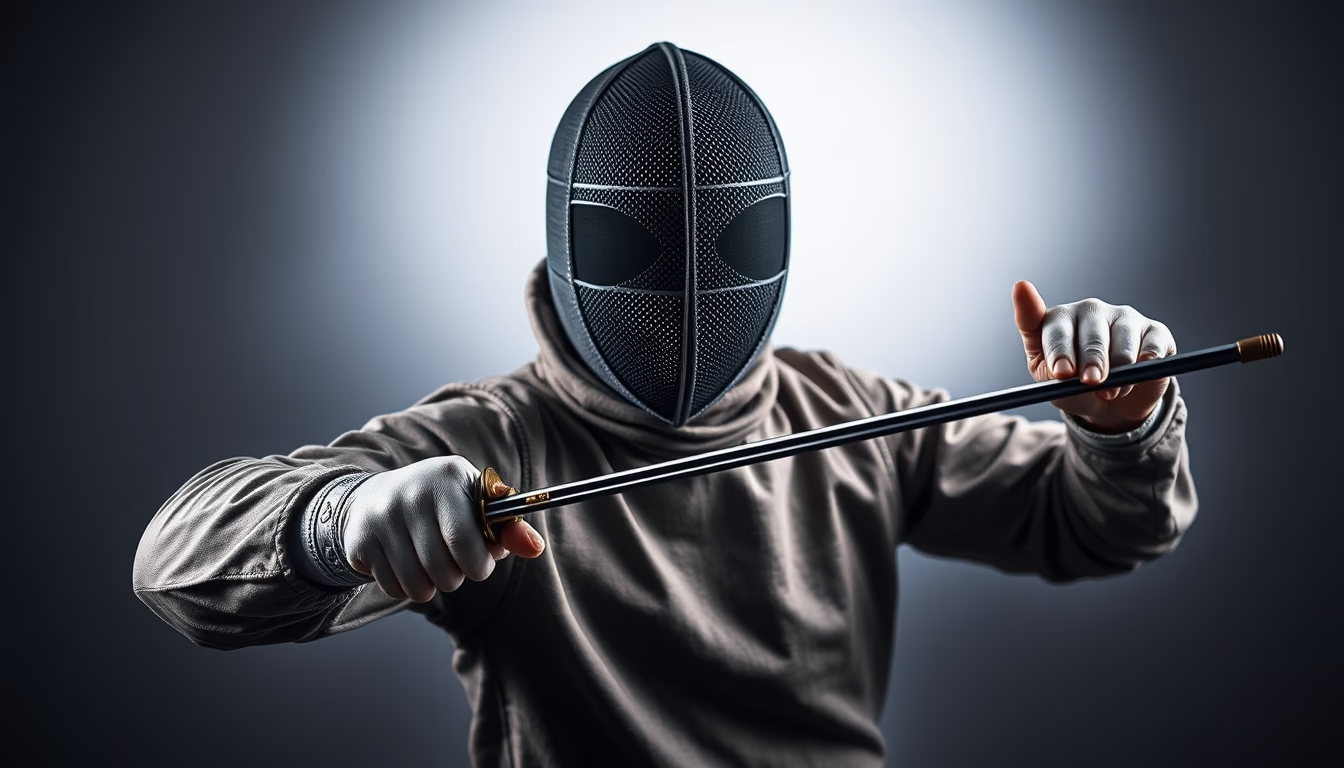
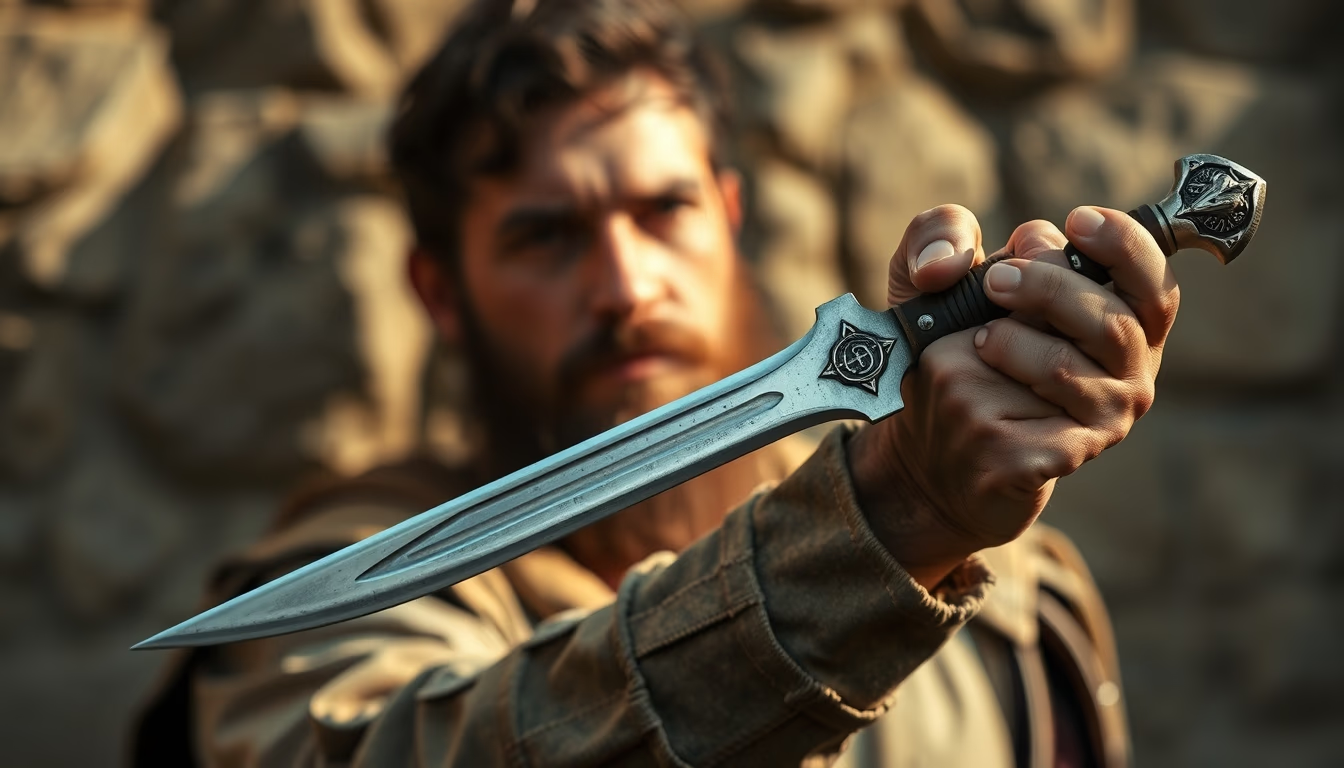
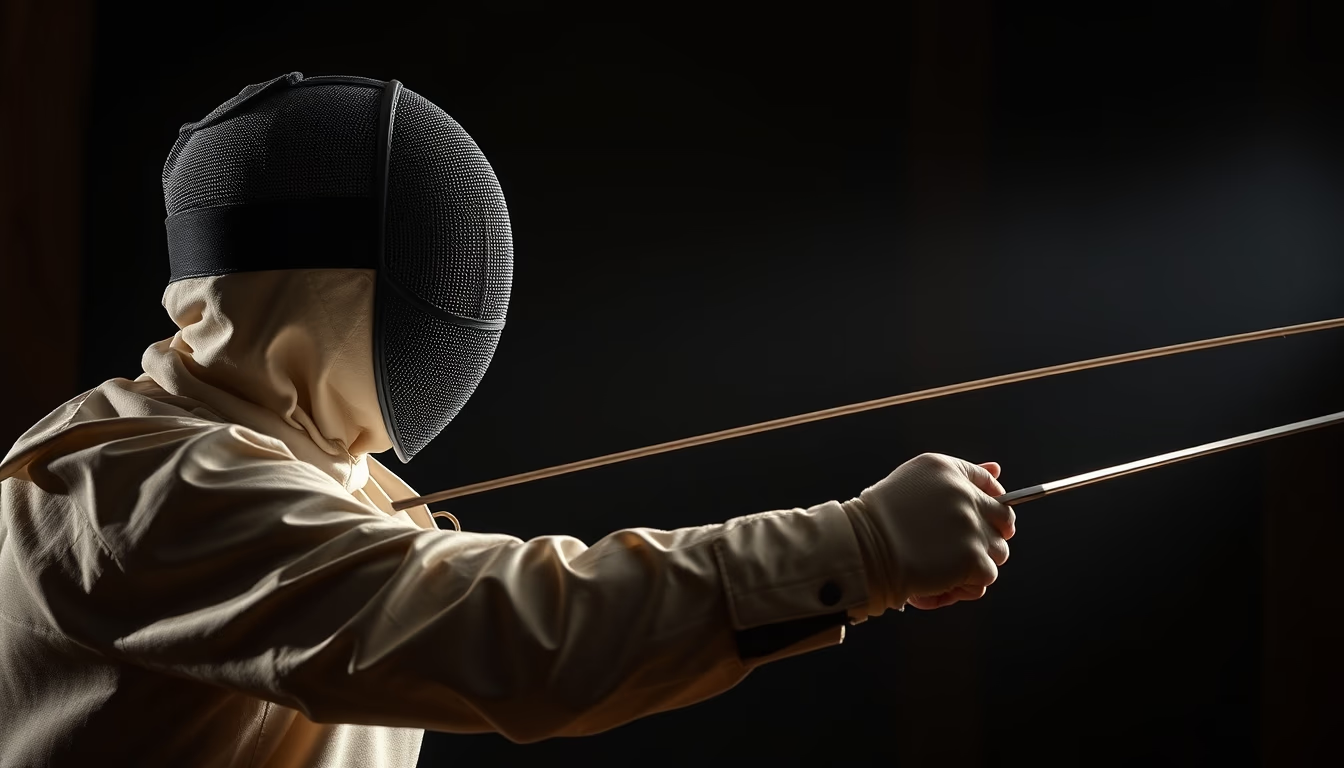
Rapier fencing, a Renaissance martial art, combined precise technique and elegance in duels and training across 16th-century Europe.
About this subject
The rapier is a slender, sharply pointed sword that became popular in Renaissance Europe, particularly in Italy and Spain. Unlike heavier medieval swords, the rapier was designed for civilian use, serving as a status symbol and a tool for self-defense among the nobility. Its design emphasized thrusting attacks over slashing, allowing for quick and precise movements in duels.
Fencing masters such as Camillo Agrippa and Salvator Fabris wrote detailed treatises on rapier combat, establishing schools of thought that influenced the art for centuries. Techniques involved complex footwork, specific guards, and a fluid combination of attack and defense. The rapier was often used in conjunction with a dagger in the left hand or a cloak, strategies that expanded defensive and offensive options.
Culturally, rapier fencing transcended mere combat: it was regarded as a science and an art, part of a gentleman's education. Duels were common for settling matters of honor, and skill with the rapier was an admired attribute. This tradition directly influenced modern sport fencing, which still retains movements such as the lunge and the advance.
Today, Historical European Martial Arts (HEMA) groups study and recreate Renaissance fencing using reproductions and original manuals. Events like tournaments and workshops keep the practice alive, connecting enthusiasts with a past of elegance and lethal precision.
Frequently Asked Questions
What distinguishes the rapier from other swords?
The rapier has a long, thin, and pointed blade designed primarily for thrusting, unlike medieval swords that also cut. It was used for civilian purposes, as a status symbol and in duels, requiring refined fencing technique.
Who are the main Renaissance fencing masters?
Notable masters include Camillo Agrippa, Salvator Fabris, and Ridolfo Capo Ferro, who wrote influential treatises on rapier use, establishing principles of distance, timing, and motion.
How does rapier fencing influence modern fencing?
Many techniques, such as the lunge and advance, were inherited by sport fencing. The focus on precision and control is also a Renaissance legacy. HEMA groups recreate these historical practices.
Direct URL
https://pub-c7d6a6ea828543ac903a74a341ccb2e1.r2.dev/imagens/rapier-renaissance-fencing-studio-editorial-portrait-fresh0.avifHow to credit
Include a visible link back to UtilizAí. Copy one of the snippets below:
<a href="https://xn--utiliza-eza.com/en/midia/imagens/rapier-renaissance-fencing-studio-editorial-portrait-fresh0">Rapier renaissance fencing</a> by <a href="https://xn--utiliza-eza.com">UtilizAí</a>, licensed under <a href="https://creativecommons.org/licenses/by/4.0/">CC BY 4.0</a>.
[Rapier renaissance fencing](https://xn--utiliza-eza.com/en/midia/imagens/rapier-renaissance-fencing-studio-editorial-portrait-fresh0) by [UtilizAí](https://xn--utiliza-eza.com), CC BY 4.0
License: CC-BY-4.0