Rapier renaissance fencing
1344×768 · AVIF · CC BY 4.0

Renaissance rapier fencing encompasses combat techniques that marked the transition from medieval weapons to the modern era, combining precision and agility.
About this subject
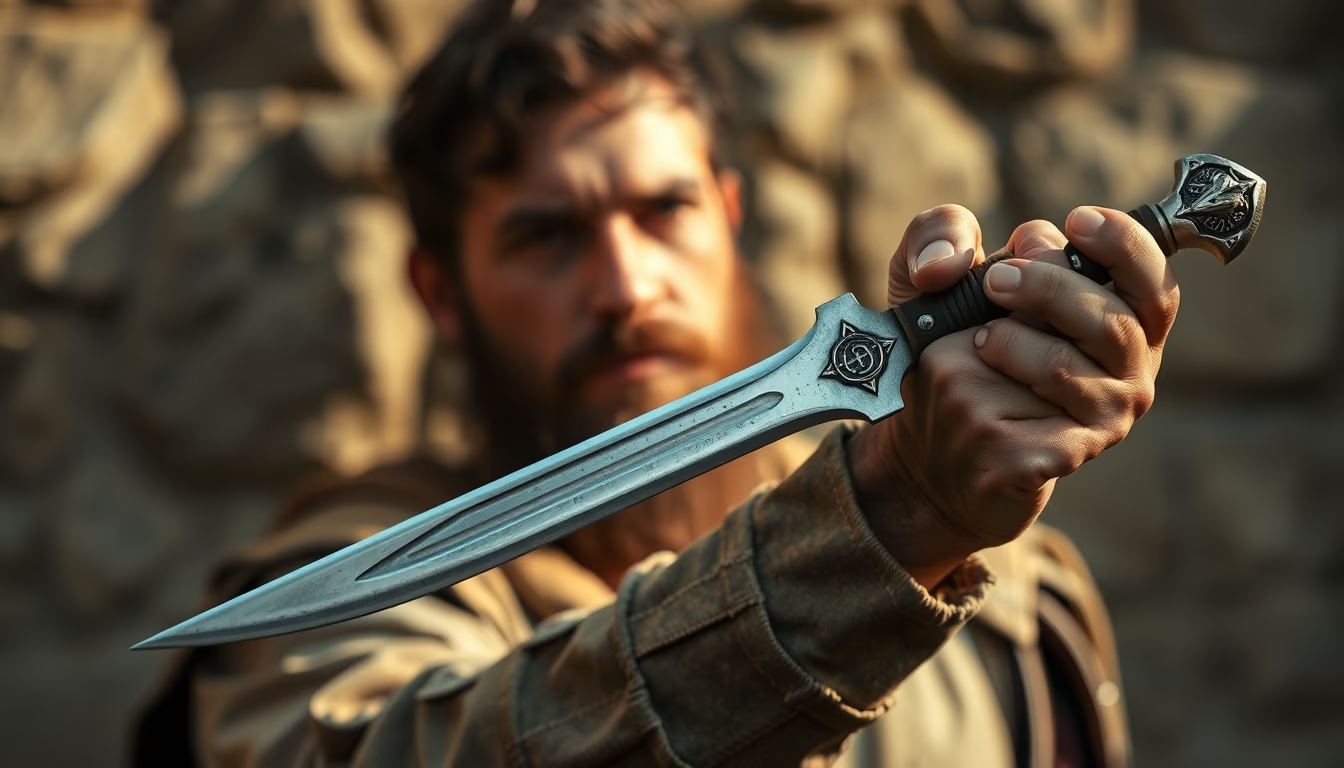
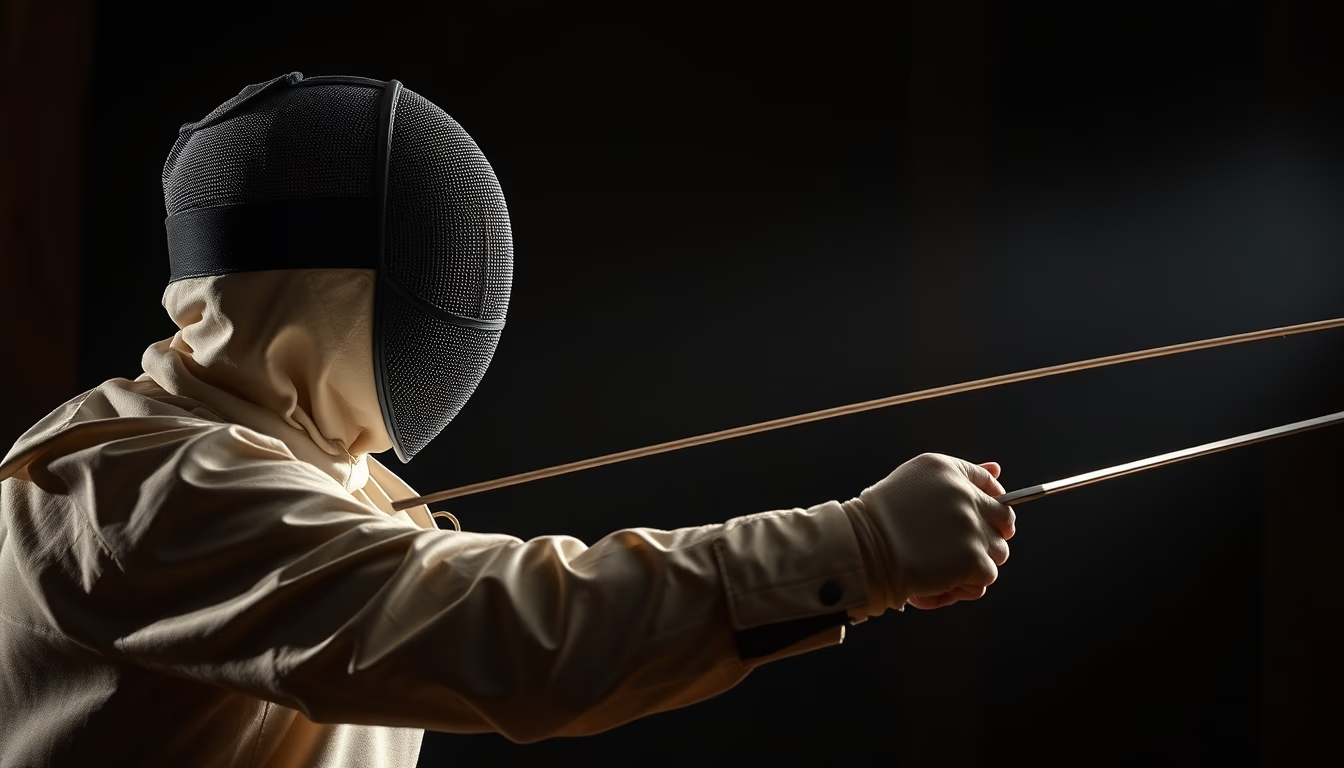
The rapier, a long and slender sword with a sharp blade, became predominant in Europe between the 16th and 17th centuries, especially in Italy and Spain. Unlike heavier medieval swords, the rapier was designed for quick, precise thrusts, ideal for civilian duels and self-defense. Rapier fencing developed combat treatises, such as Ridolfo Capo Ferro's 1610 work, which systematized movements, guards, and counterattacks. The technique emphasized distance control and using the point rather than the edge, making the fencer more agile and lethal.
Culturally, the rapier symbolized status and honor among nobles and knights, used in disputes of honor and as a fashion accessory. Fencing schools, such as the Spanish Verdadera Destreza, taught geometric and logical principles of combat, influencing Western martial arts. The transition to the smallsword in the 18th century, with more standardized rules, did not erase the rapier's legacy, which remains alive in historical reenactments and Historical European Martial Arts (HEMA) practice.
Interestingly, the term 'rapier' comes from the French 'rapière', but the weapon was refined in Italy. It inspired literary movements, such as Alexandre Dumas's 'The Three Musketeers', although the sword used by musketeers was more of a smallsword. The complexity of movements and the need for quick reflexes make Renaissance fencing a rich martial art in strategy and technique, still studied by modern enthusiasts.
Frequently Asked Questions
What is the difference between a rapier and a medieval sword?
The rapier has a longer and thinner blade, focused on thrusts, while the medieval sword was heavier, used for both cuts and thrusts, often in armored combat.
What are the main rapier fencing treatises?
Ridolfo Capo Ferro's 1610 treatise is one of the most famous, but works by Camillo Agrippa (1553) and Spanish master Jerónimo de Carranza, founder of Verdadera Destreza, are also key.
Is Renaissance fencing practiced today?
Yes, through HEMA (Historical European Martial Arts), groups worldwide reconstruct and practice techniques based on historical manuals, including rapier duels.
Direct URL
https://pub-c7d6a6ea828543ac903a74a341ccb2e1.r2.dev/imagens/rapier-renaissance-fencing-long-exposure-fresh13.avifHow to credit
Include a visible link back to UtilizAí. Copy one of the snippets below:
<a href="https://xn--utiliza-eza.com/en/midia/imagens/rapier-renaissance-fencing-long-exposure-fresh13">Rapier renaissance fencing</a> by <a href="https://xn--utiliza-eza.com">UtilizAí</a>, licensed under <a href="https://creativecommons.org/licenses/by/4.0/">CC BY 4.0</a>.
[Rapier renaissance fencing](https://xn--utiliza-eza.com/en/midia/imagens/rapier-renaissance-fencing-long-exposure-fresh13) by [UtilizAí](https://xn--utiliza-eza.com), CC BY 4.0
License: CC-BY-4.0