Rapier renaissance fencing
1344×768 · AVIF · CC BY 4.0
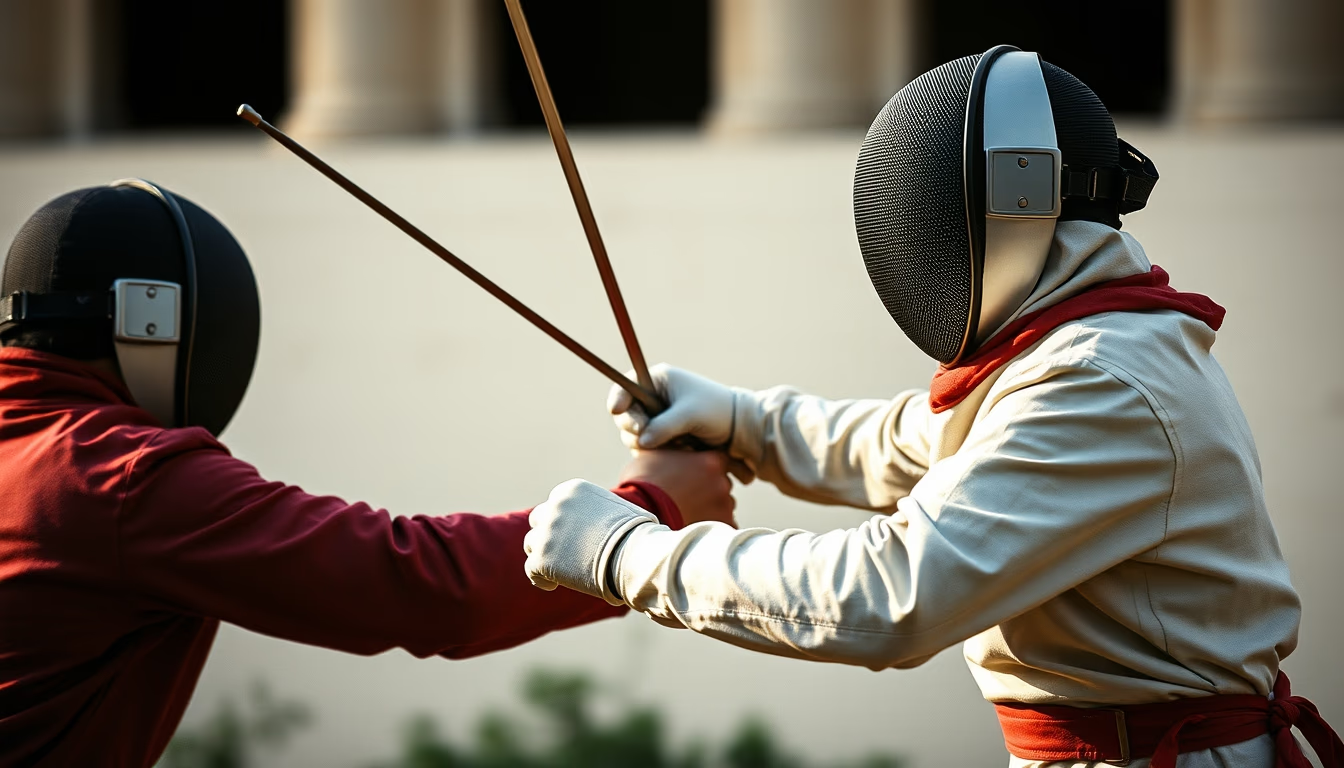
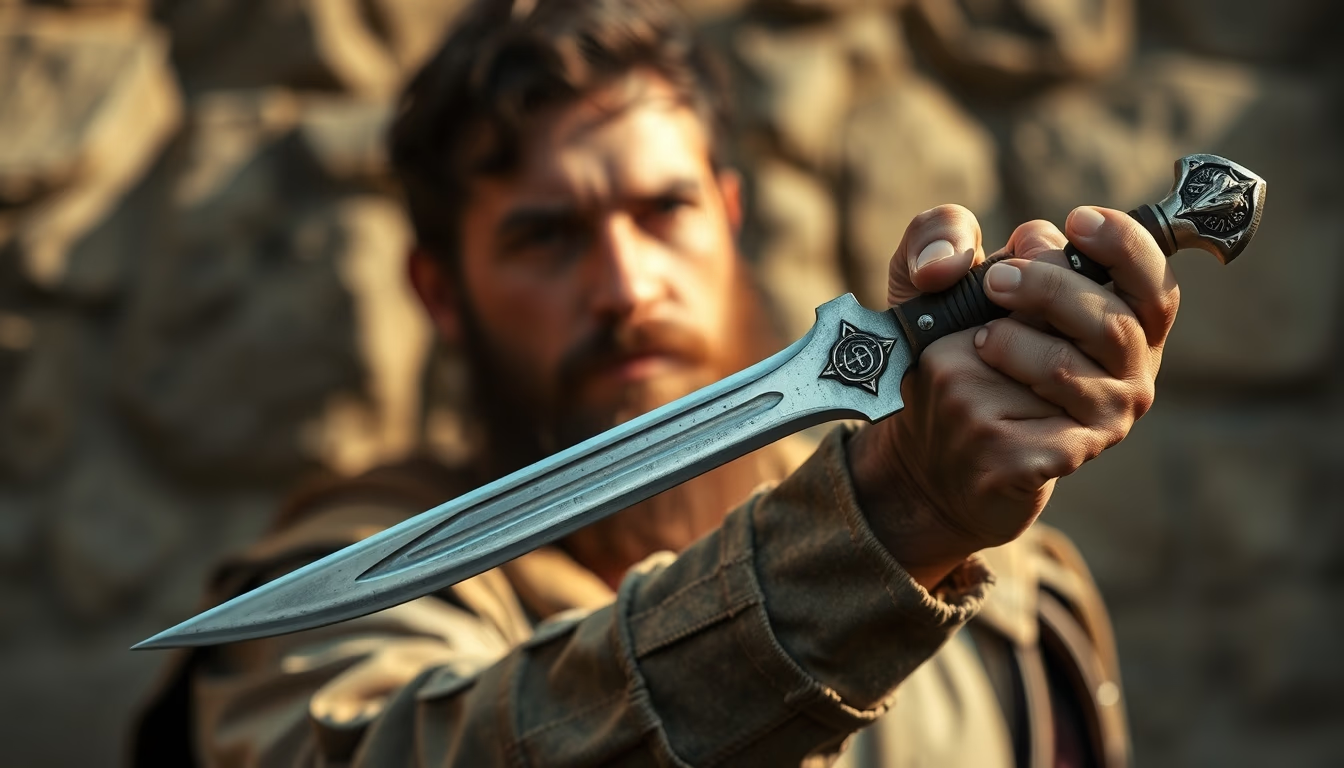
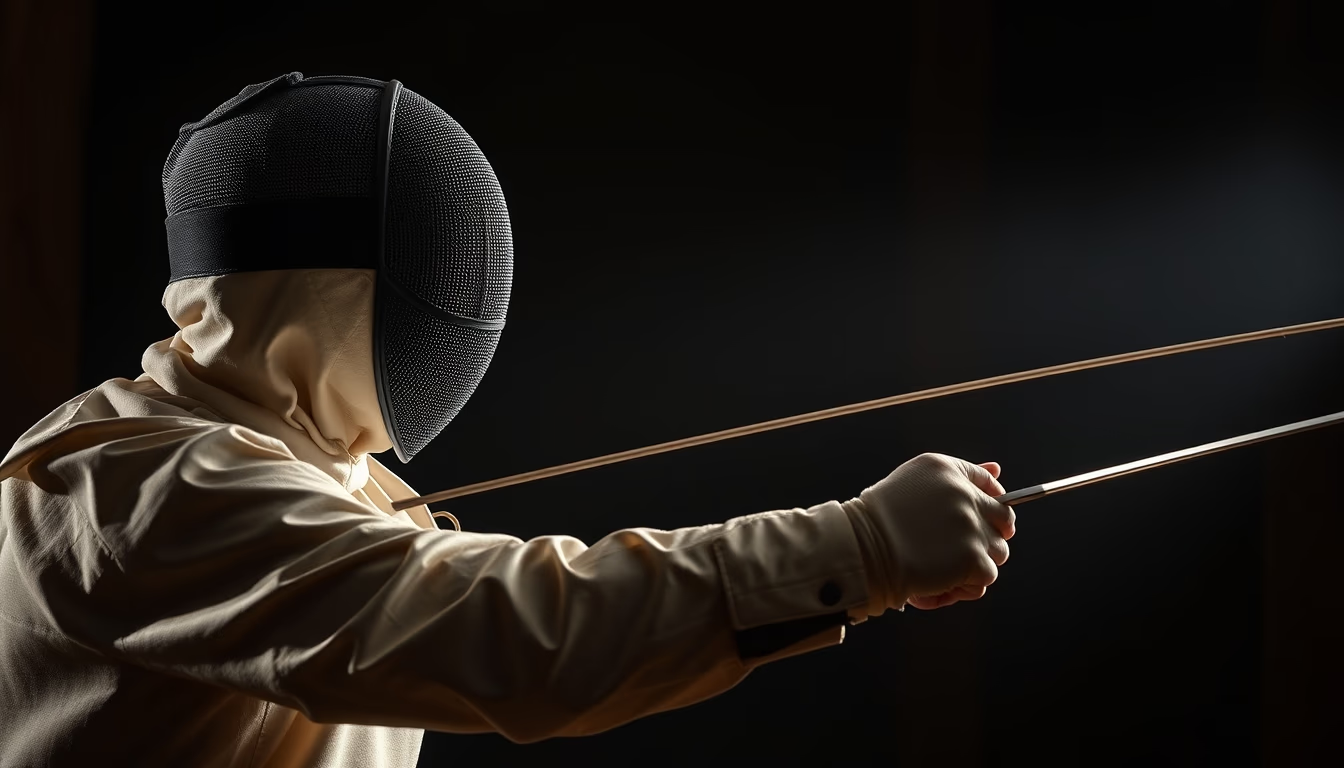
The rapier was the quintessential dueling sword of the Renaissance, blending elegance and technique into a refined martial art.
About this subject
The rapier originated in 16th century Spain and quickly spread across Europe as the preferred weapon for duels and civilian self-defense. Unlike heavier medieval swords, the rapier featured a long, narrow blade ideal for precise thrusts and an elaborate hilt that protected the hand. Its design reflected a shift from the battlefield to urban settings, where individual skill and technique outweighed brute strength.
Renaissance fencing, documented in treatises by masters such as Achille Marozzo and Ridolfo Capo Ferro, developed intricate systems of attack and defense. Italian masters, in particular, systematized the use of the rapier, emphasizing straight line, timing, and measure. Duels with the rapier were not just combat but displays of honor and social status, often settling disputes among nobles. Fencing schools flourished in cities like Bologna, Venice, and Paris.
Culturally, the rapier became a symbol of the Renaissance gentleman, appearing in portraits and literature. English playwright William Shakespeare referenced the weapon in several plays, reflecting its popularity. Rapier fencing techniques also influenced the development of the smallsword and, later, modern sport fencing. Today, the rapier is revived by historical European martial arts (HEMA) practitioners who study original manuals to reconstruct its techniques.
Interestingly, the rapier was rarely used alone; fencers often wielded a dagger (main-gauche) in the left hand to parry or deflect attacks. This dual-wield style, called sword and dagger play, was common among experienced fencers. The legacy of the rapier endures as one of the most elegant and lethal chapters in the history of edged weapons.
Frequently Asked Questions
What is the difference between a rapier and a medieval sword?
The rapier has a long, narrow blade designed for thrusts, whereas medieval swords were broader and heavier, used for cuts. The rapier also features an elaborate hilt, while medieval swords had a simple crossguard and pommel.
Why was the rapier popular in duels?
It was a light and precise weapon, ideal for individual combat where skill outweighed strength. Additionally, its use was tied to honor codes and social status among Renaissance nobility.
What is HEMA and how does it relate to the rapier?
HEMA (Historical European Martial Arts) is the study and reconstruction of ancient European martial arts. HEMA practitioners use original manuals to revive rapier fencing techniques, including sword and dagger combat.
Direct URL
https://pub-c7d6a6ea828543ac903a74a341ccb2e1.r2.dev/imagens/rapier-renaissance-fencing-film-grain-authentic-fresh10.avifHow to credit
Include a visible link back to UtilizAí. Copy one of the snippets below:
<a href="https://xn--utiliza-eza.com/en/midia/imagens/rapier-renaissance-fencing-film-grain-authentic-fresh10">Rapier renaissance fencing</a> by <a href="https://xn--utiliza-eza.com">UtilizAí</a>, licensed under <a href="https://creativecommons.org/licenses/by/4.0/">CC BY 4.0</a>.
[Rapier renaissance fencing](https://xn--utiliza-eza.com/en/midia/imagens/rapier-renaissance-fencing-film-grain-authentic-fresh10) by [UtilizAí](https://xn--utiliza-eza.com), CC BY 4.0
License: CC-BY-4.0