Rapier renaissance fencing
1344×768 · AVIF · CC BY 4.0
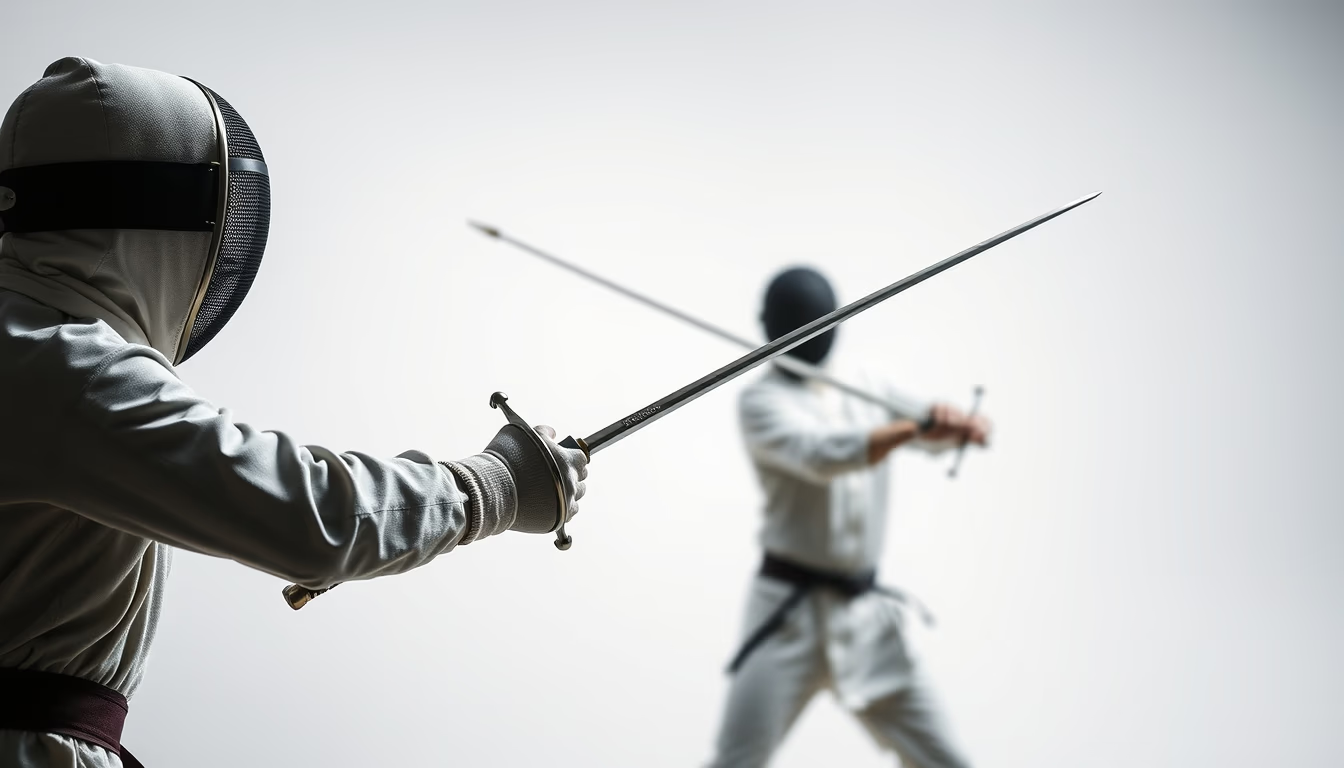
The rapier is a long, slender-bladed sword, emblematic of Renaissance fencing, used in duels and as a fashion accessory between the 16th and 17th centuries.
About this subject
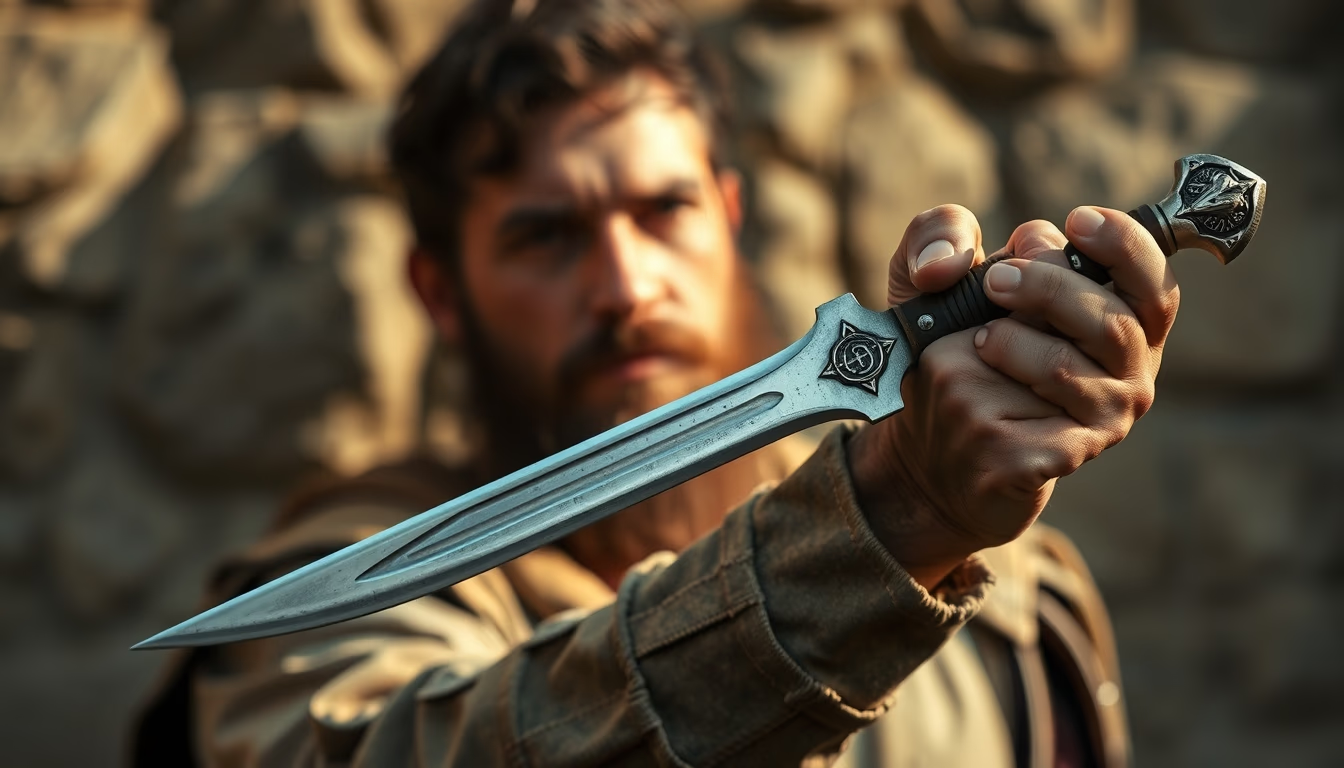
The rapier, a slender-bladed sword, emerged in Europe during the Renaissance around the 16th century. Unlike heavier medieval swords, the rapier featured a long, thin blade typically 90 to 110 centimeters in length, weighing between 1 and 1.5 kilograms. Its design prioritized thrusting attacks, emphasizing speed and precision over broad cuts. The intricate hilt, often ornate, protected the hand and allowed for refined defensive maneuvers.
Rapier fencing developed as a sophisticated martial art with schools in Italy and Spain. Masters like Ridolfo Capoferro and Vincentio Saviolo wrote treatises detailing attack and defense techniques, often combining the rapier with a left-hand dagger (main-gauche) or a cloak for parrying. The Spanish school, known as "La Verdadera Destreza" (The True Skill), emphasized circular movements and geometry, while the Italian school focused on linearity and timing.
Historically, the rapier was not a battlefield weapon but a civilian tool for self-defense and dueling. It became popular among nobility and the bourgeoisie, worn as a status symbol. The word "rapier" derives from the Spanish "espada ropera," meaning a sword worn with civilian clothes. Over time, the rapier evolved into the lighter foil used in modern sport fencing.
In Renaissance culture, the rapier appears frequently in literature and art. Shakespeare references it in plays like Romeo and Juliet and Hamlet, where rapier duels are central to the plot. Paintings of the era depict gentlemen wielding rapiers gracefully, reflecting its dual role as a combat tool and fashion accessory. Today, the rapier is studied by historical fencers (HEMA practitioners) and admired for its elegant design and rich history.
Frequently Asked Questions
What is the difference between a rapier and a longsword?
The rapier has a longer, thinner blade designed for thrusting, while the medieval longsword is broader and heavier, used for cutting and slashing. The rapier also features a more elaborate hilt for hand protection.
Was the rapier used in battlefield combat?
No. The rapier was a civilian weapon used for self-defense and dueling in urban settings. On the battlefield, soldiers preferred sturdier swords or polearms.
How is Renaissance fencing practiced today?
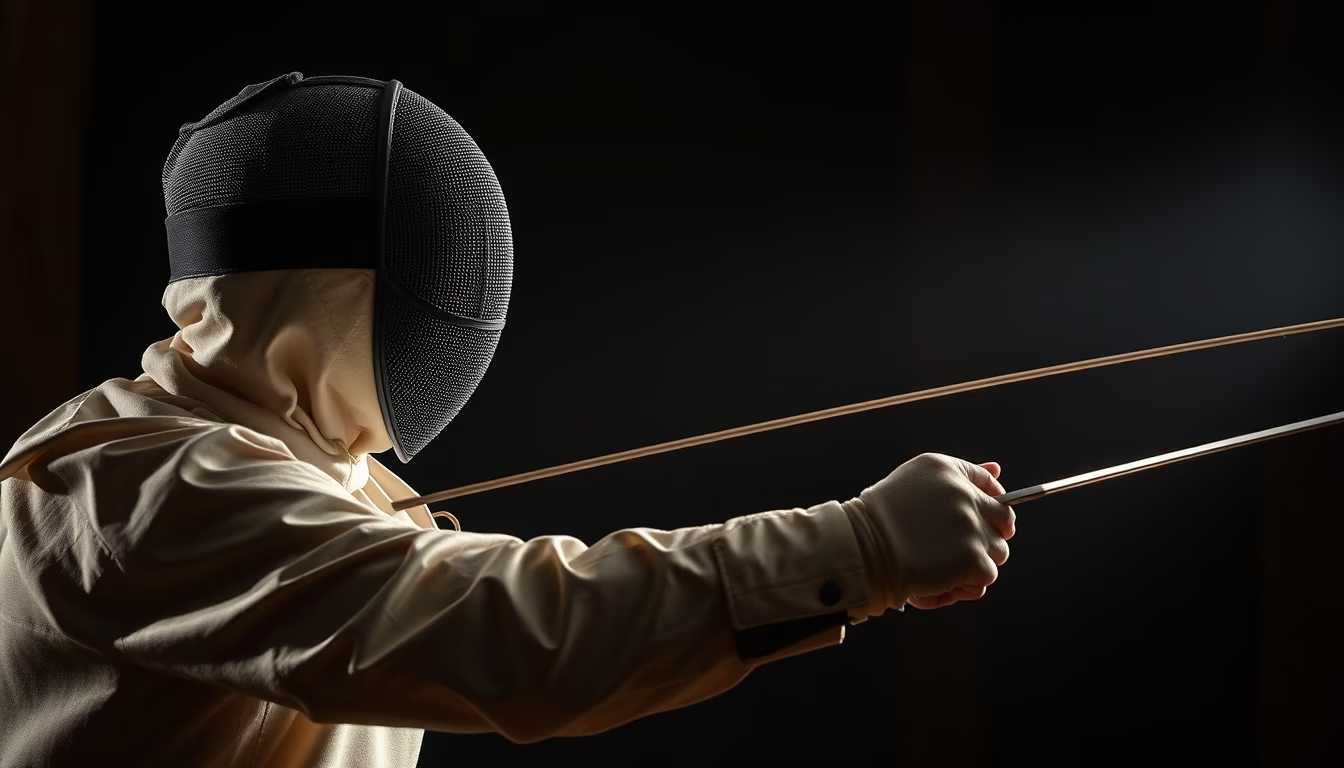
Today, Renaissance fencing is practiced by Historical European Martial Arts (HEMA) groups, who study period treatises and recreate techniques. They use rapier replicas and modern protective gear.
Direct URL
https://pub-c7d6a6ea828543ac903a74a341ccb2e1.r2.dev/imagens/rapier-renaissance-fencing-commercial-product-photography-fresh6.avifHow to credit
Include a visible link back to UtilizAí. Copy one of the snippets below:
<a href="https://xn--utiliza-eza.com/en/midia/imagens/rapier-renaissance-fencing-commercial-product-photography-fresh6">Rapier renaissance fencing</a> by <a href="https://xn--utiliza-eza.com">UtilizAí</a>, licensed under <a href="https://creativecommons.org/licenses/by/4.0/">CC BY 4.0</a>.
[Rapier renaissance fencing](https://xn--utiliza-eza.com/en/midia/imagens/rapier-renaissance-fencing-commercial-product-photography-fresh6) by [UtilizAí](https://xn--utiliza-eza.com), CC BY 4.0
License: CC-BY-4.0