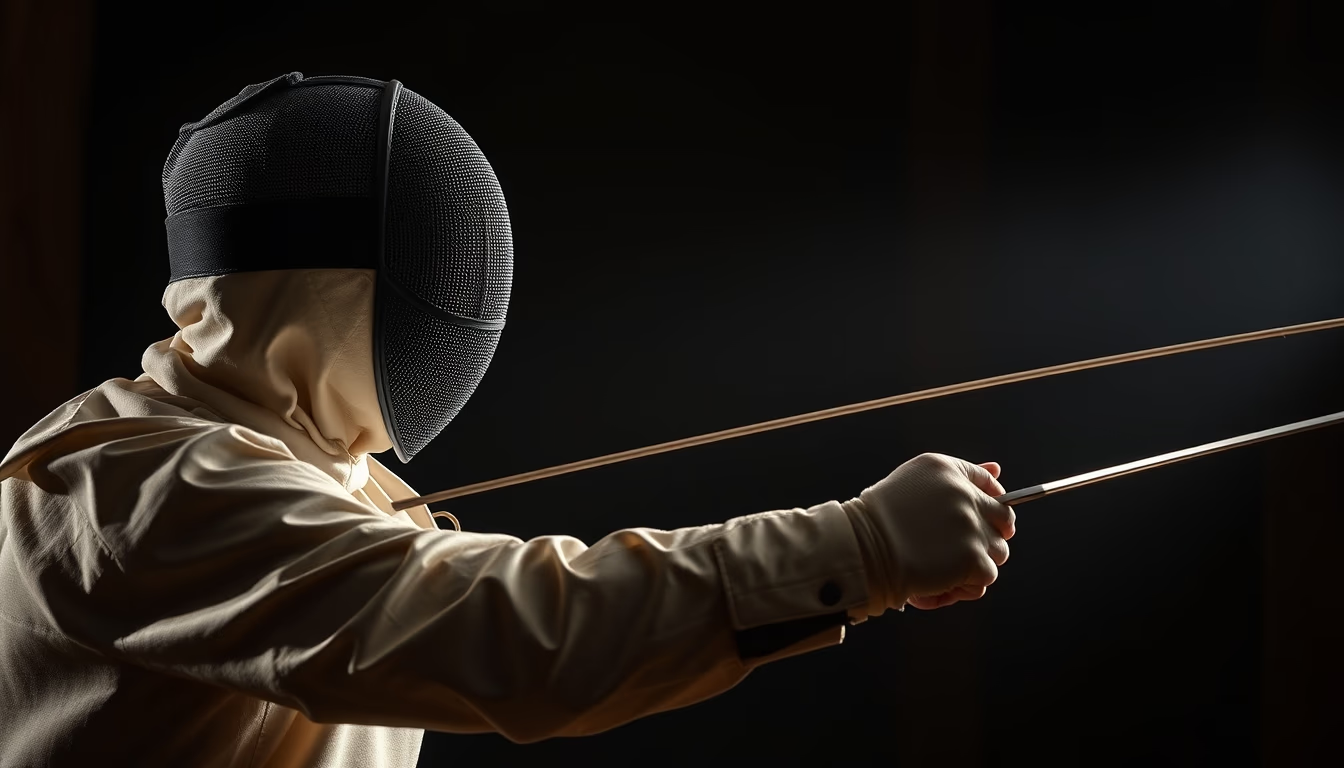
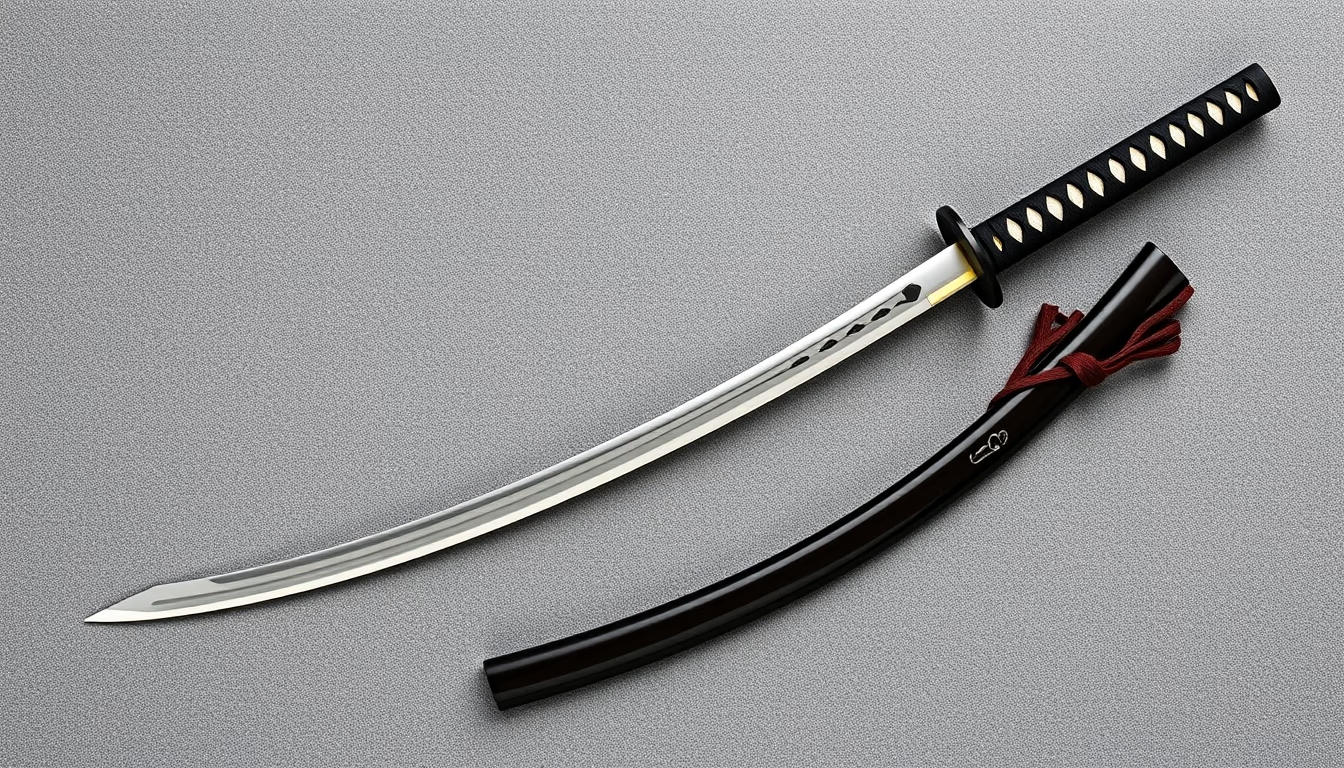
Rapier renaissance fencing
1344×768 · AVIF · CC BY 4.0

Renaissance rapier fencing, with its long and narrow blade, marked the transition from medieval swords to civilized dueling in the 16th and 17th centuries.
About this subject
The rapier emerged in Italy and Spain during the 16th century as an evolution of broad-bladed swords. Unlike medieval swords, which relied on powerful cuts, the rapier was a thrusting weapon designed to pierce light armor or civilian clothing. Its long, narrow blade allowed for quick and precise attacks, favoring technique over brute strength.
Rapier fencing became popular among the nobility and urban bourgeoisie, essential for resolving honor conflicts in duels. Fencing masters like Ridolfo Capo Ferro, Camillo Agrippa, and Vincentio Saviolo wrote treatises detailing guards, footwork, and countermeasures. The Italian system, for example, emphasized straight lines and economy of motion, while the Spanish adopted a geometric approach known as 'verdadera destreza'.
Interestingly, the rapier was not used exclusively for dueling; it also served as a self-defense weapon on the streets of Renaissance cities. However, its combat effectiveness led to gradual replacement by the smallsword and foil, which gave rise to modern sport fencing. The rapier's legacy remains visible in today's fencing terminology, such as 'thrust' and 'guard'.
Frequently Asked Questions
What is the difference between a rapier and a medieval longsword?
The rapier is longer, thinner, and lighter, designed for thrusting, while the medieval longsword is heavier and used for both cutting and thrusting, adapted for use against armor.
How was rapier fencing training conducted in the Renaissance?
Training involved learning guards, footwork, and combinations of attacks and defenses, often using training swords or foils. Masters used illustrated treatises to teach techniques.
What is the importance of the 'guard' in Renaissance fencing?
The guard is the initial stance that protects the body while preparing an attack. Each master developed their own guards, such as 'high guard' or 'low guard', which influenced duel strategy.
Direct URL
https://pub-c7d6a6ea828543ac903a74a341ccb2e1.r2.dev/imagens/rapier-renaissance-fencing-aerial-drone-shot-fresh1.avifHow to credit
Include a visible link back to UtilizAí. Copy one of the snippets below:
<a href="https://xn--utiliza-eza.com/en/midia/imagens/rapier-renaissance-fencing-aerial-drone-shot-fresh1">Rapier renaissance fencing</a> by <a href="https://xn--utiliza-eza.com">UtilizAí</a>, licensed under <a href="https://creativecommons.org/licenses/by/4.0/">CC BY 4.0</a>.
[Rapier renaissance fencing](https://xn--utiliza-eza.com/en/midia/imagens/rapier-renaissance-fencing-aerial-drone-shot-fresh1) by [UtilizAí](https://xn--utiliza-eza.com), CC BY 4.0
License: CC-BY-4.0