Rainwater collection barrel
1344×768 · AVIF · CC BY 4.0
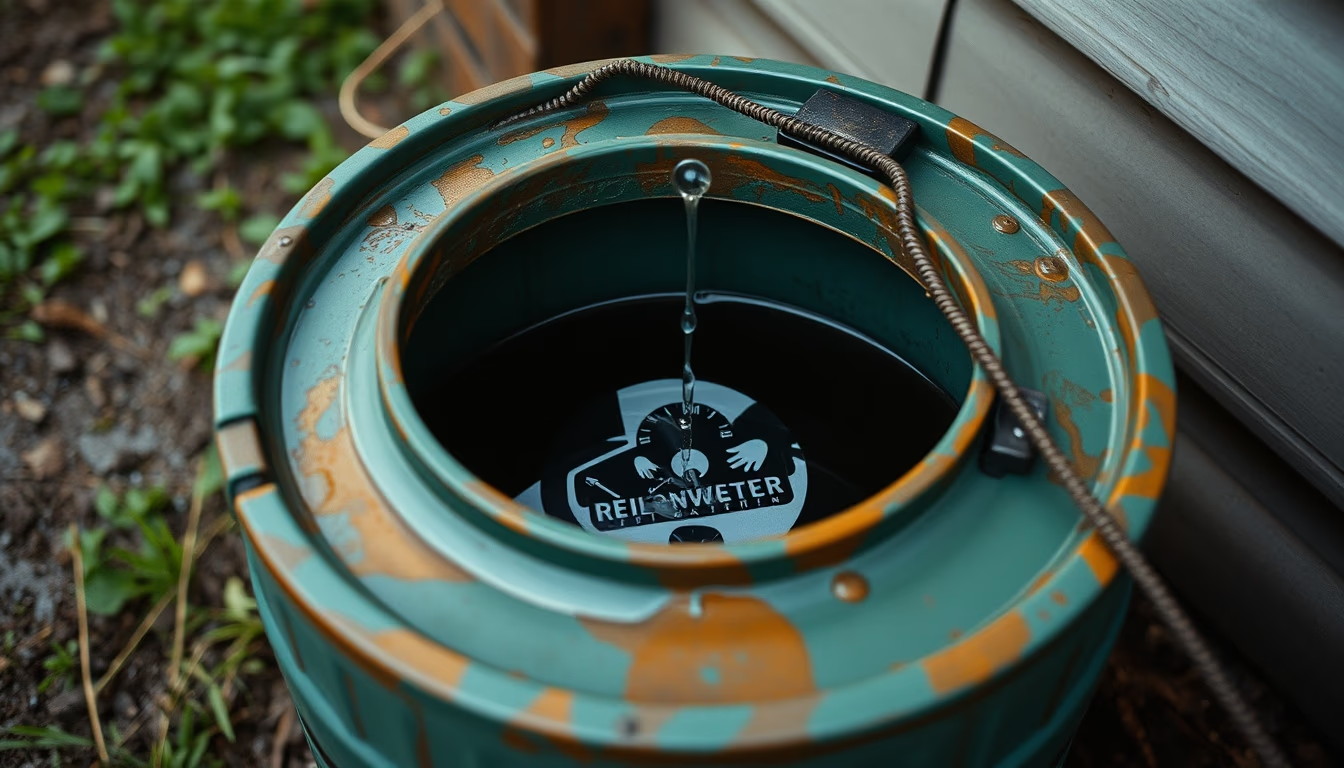
Rainwater collection barrel: sustainable and economical solution for residential and agricultural rainwater harvesting, trending since 2026.
About this subject
The rainwater collection barrel is a simple and efficient device that captures water flowing from roofs via gutters, storing it for non-potable uses such as garden irrigation, car washing, and toilet flushing. With growing concerns about water scarcity and rising water tariffs, these barrels gained global popularity, especially from 2026 onwards when sustainability incentive policies were expanded.
In countries like the United States and Australia, rainwater harvesting is encouraged through rebates and tax credits. A typical barrel holds between 100 and 300 liters, though larger models up to 1000 liters are common on farms. The collected water reduces reliance on municipal supply by up to 50% during rainy seasons, easing pressure on drainage systems and reducing flood risks.
Culturally, rainwater capture dates back to ancient civilizations such as the Romans and Maya, who built cisterns. Modern barrels are made of polyethylene or metal, with lids that prevent mosquito breeding, including Aedes aegypti. Some models feature integrated filters and bottom spigots for easy access. This device reflects a shift toward water self-sufficiency and circular economy principles.
Beyond residential use, rain barrels are employed in urban agriculture, community gardens, and corporate buildings as part of LEED certification. In arid regions of Brazil's Northeast, government programs distribute cisterns for rainwater storage, benefiting thousands of families. The rain barrel is thus not just a utilitarian object but a symbol of resilience and adaptation to climate change.
Frequently Asked Questions
What is the average capacity of a rainwater collection barrel?
Common residential barrels hold between 100 and 300 liters. Larger models, up to 1000 liters, are used on farms or in more extensive systems.
Can collected rainwater be used for drinking?
No, water from simple barrels is not potable. It should only be used for non-potable purposes such as irrigation, car washing, and toilet flushing. For drinking, proper treatment is required.
How to prevent mosquito breeding in the barrel?
Use barrels with tight-fitting lids and install fine screens at inlet pipes. Regular cleaning and emptying also help prevent Aedes aegypti reproduction.
Direct URL
https://pub-c7d6a6ea828543ac903a74a341ccb2e1.r2.dev/imagens/rainwater-collection-barrel-film-grain-authentic-p1.avifHow to credit
Include a visible link back to UtilizAí. Copy one of the snippets below:
<a href="https://xn--utiliza-eza.com/en/midia/imagens/rainwater-collection-barrel-film-grain-authentic-p1">Rainwater collection barrel</a> by <a href="https://xn--utiliza-eza.com">UtilizAí</a>, licensed under <a href="https://creativecommons.org/licenses/by/4.0/">CC BY 4.0</a>.
[Rainwater collection barrel](https://xn--utiliza-eza.com/en/midia/imagens/rainwater-collection-barrel-film-grain-authentic-p1) by [UtilizAí](https://xn--utiliza-eza.com), CC BY 4.0
License: CC-BY-4.0