Rainwater collection barrel
1344×768 · AVIF · CC BY 4.0
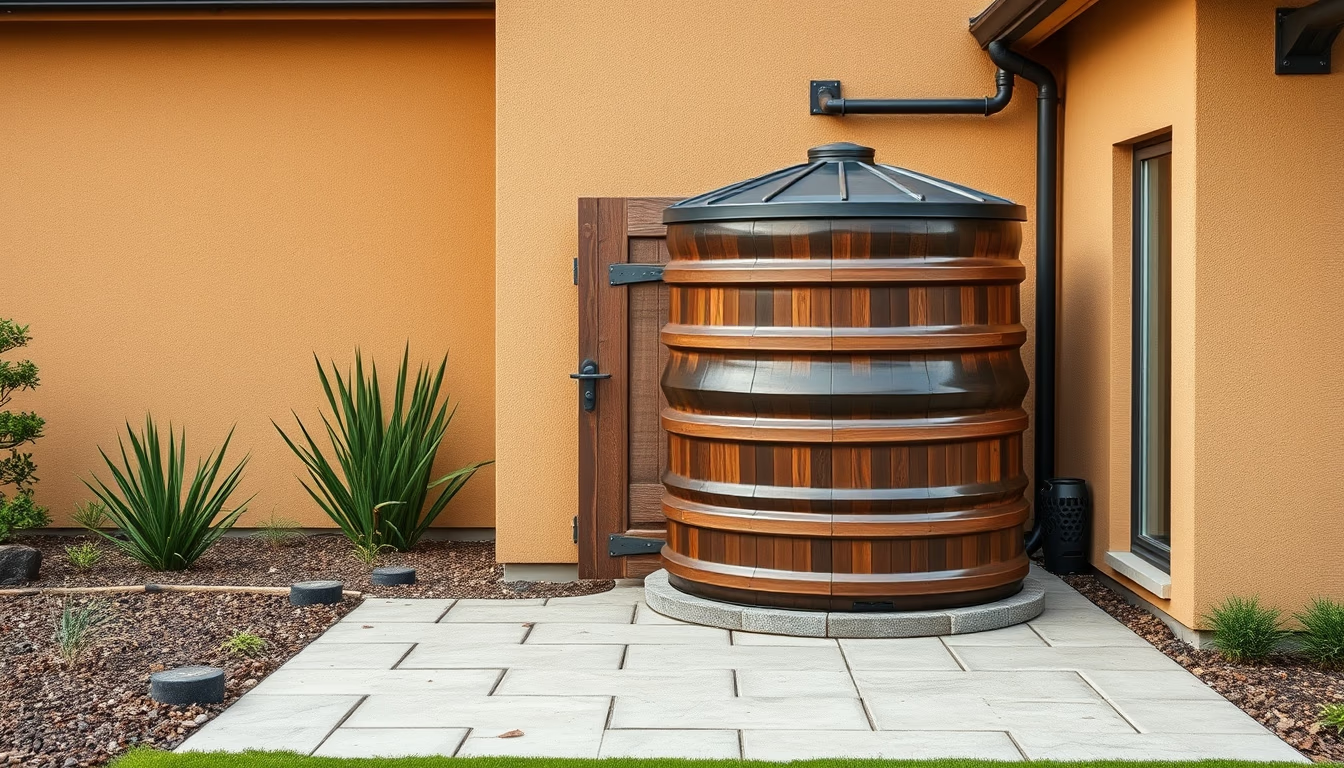
Rainwater collection barrels are simple and efficient systems for capturing and storing rainwater, reducing potable water consumption in homes and businesses.
About this subject
Rainwater collection barrels, also known as domestic cisterns or rainwater harvesting tanks, are devices designed to intercept, filter, and store rainwater that runs off rooftops during rainfall. The principle is straightforward: gutters and pipes direct the water into a sealed container, where it is protected from contaminants and evaporation. Globally, this practice has ancient roots, being used by the Romans and in traditional Indian stepwells. Today, it is a key component of sustainable urban drainage systems. In Australia, rainwater tanks are mandatory in many new homes, and in Germany, over 100,000 systems are installed annually. In the United States, barrels typically hold 50 to 80 gallons (190-300 liters) and are popular in states like Texas and California for gardening and outdoor use. The water collected is non-potable without proper filtration, but it is excellent for irrigation, toilet flushing, and laundry, potentially reducing household water consumption by 30-50%. Environmentally, rainwater harvesting reduces stormwater runoff, which carries pollutants into waterways and contributes to erosion and flooding. Modern barrels often include screens to filter debris, and some have UV protection to prevent algae growth. The average cost of a barrel ranges from $80 to $200, with payback periods of two to four years depending on local water rates and rainfall. Many municipal water authorities offer rebates to encourage installation, recognizing that decentralized rainwater collection can alleviate pressure on centralized water systems during droughts.
Frequently Asked Questions
How does a rainwater collection barrel work?
It connects to a downspout from the roof gutter. Rainwater flows through a filter that removes leaves and debris, then enters the barrel. A spigot at the bottom allows access to the water, and an overflow pipe directs excess water away.
Can rainwater from a barrel be used for drinking?
No, not without proper treatment. Roof-collected rainwater may contain bird droppings, dust, and chemicals. For potable use, it must be filtered and disinfected (e.g., boiling, chlorination, or reverse osmosis).
What size barrel is ideal for a typical home garden?
A 55-gallon (approx. 200-liter) barrel is common for small gardens. In drier climates, multiple barrels connected together can store more water. The ideal size depends on roof area and local rainfall patterns.
Direct URL
https://pub-c7d6a6ea828543ac903a74a341ccb2e1.r2.dev/imagens/rainwater-collection-barrel-architectural-photography-p0.avifHow to credit
Include a visible link back to UtilizAí. Copy one of the snippets below:
<a href="https://xn--utiliza-eza.com/en/midia/imagens/rainwater-collection-barrel-architectural-photography-p0">Rainwater collection barrel</a> by <a href="https://xn--utiliza-eza.com">UtilizAí</a>, licensed under <a href="https://creativecommons.org/licenses/by/4.0/">CC BY 4.0</a>.
[Rainwater collection barrel](https://xn--utiliza-eza.com/en/midia/imagens/rainwater-collection-barrel-architectural-photography-p0) by [UtilizAí](https://xn--utiliza-eza.com), CC BY 4.0
License: CC-BY-4.0