Pyramid of giza sunset silhouette
1344×768 · AVIF · CC BY 4.0
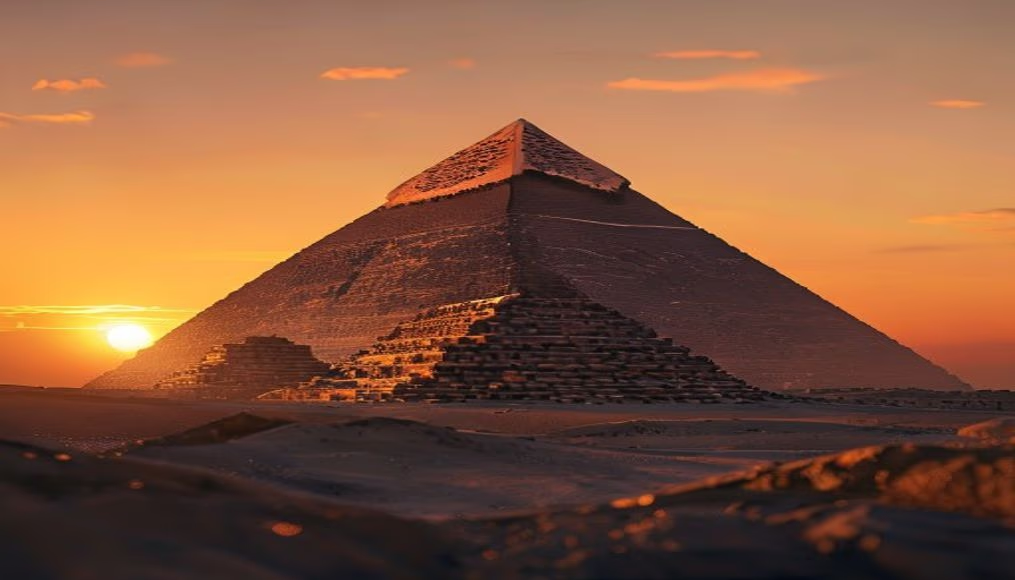
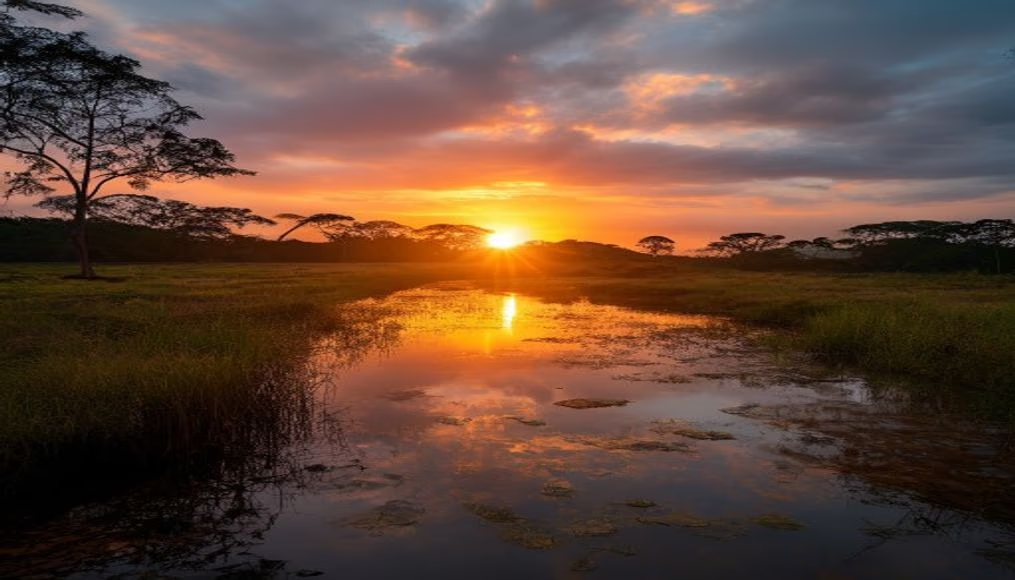
Silhouette of the Pyramids of Giza at sunset, one of the most iconic scenes of Ancient Egypt, reveals the grandeur of pharaonic architecture.
About this subject
The Pyramids of Giza, located on the west bank of the Nile River near Cairo, are the only surviving wonders of the ancient world. Built approximately 4,500 years ago during the Fourth Dynasty of Ancient Egypt, they served as monumental tombs for the pharaohs Khufu, Khafre, and Menkaure. The Great Pyramid of Khufu, the largest, originally stood 146.6 meters tall and was covered in polished white limestone, which reflected sunlight like a mirror. Over millennia, the casing stones were removed for construction in medieval Cairo, exposing the inner granite and limestone blocks.
At sunset, the pyramids form a dramatic silhouette against the orange sky, a spectacle that draws photographers and tourists from around the globe. This visual phenomenon occurs because grazing light accentuates the edges and shadows of the monuments, highlighting their precise geometry. The pyramids are aligned with remarkable accuracy to the cardinal points, with slight deviations attributed to their alignment with specific stars, such as those in Orion's Belt.
For ancient Egyptians, sunset symbolized the daily death and rebirth of the sun god Ra, associated with the pharaoh's journey to the afterlife. The silhouette of the pyramids at twilight thus evokes not only a tourist icon but a deep connection to Egyptian cosmology. Today, the Giza Plateau is a UNESCO World Heritage site and protected as an archaeological zone, though it faces challenges from pollution and the growing urbanization of Cairo.
Frequently Asked Questions
Why are the Pyramids of Giza aligned so precisely?
The near-perfect alignment with the cardinal points was achieved using ancient astronomical techniques, possibly based on the stars of Orion's Belt, which held religious significance linked to the god Osiris.
Which pyramid can be visited inside today?
The Great Pyramid of Khufu is open to visitors, allowing exploration of the King's Chamber and the Grand Gallery, though access is limited to a restricted number of tickets per day.
Is the sunset at Giza famous for any special reason?
Yes, the golden light of late afternoon highlights the geometric form of the pyramids and the Sphinx, creating a contrast that emphasizes their monumentality and is highly sought after by photographers.
Direct URL
https://pub-c7d6a6ea828543ac903a74a341ccb2e1.r2.dev/imagens/pyramid-of-giza-sunset-silhouette-travel-photography-v10.avifHow to credit
Include a visible link back to UtilizAí. Copy one of the snippets below:
<a href="https://xn--utiliza-eza.com/en/midia/imagens/pyramid-of-giza-sunset-silhouette-travel-photography-v10">Pyramid of giza sunset silhouette</a> by <a href="https://xn--utiliza-eza.com">UtilizAí</a>, licensed under <a href="https://creativecommons.org/licenses/by/4.0/">CC BY 4.0</a>.
[Pyramid of giza sunset silhouette](https://xn--utiliza-eza.com/en/midia/imagens/pyramid-of-giza-sunset-silhouette-travel-photography-v10) by [UtilizAí](https://xn--utiliza-eza.com), CC BY 4.0
License: CC-BY-4.0