Protein structure 3d
1344×768 · AVIF · CC BY 4.0
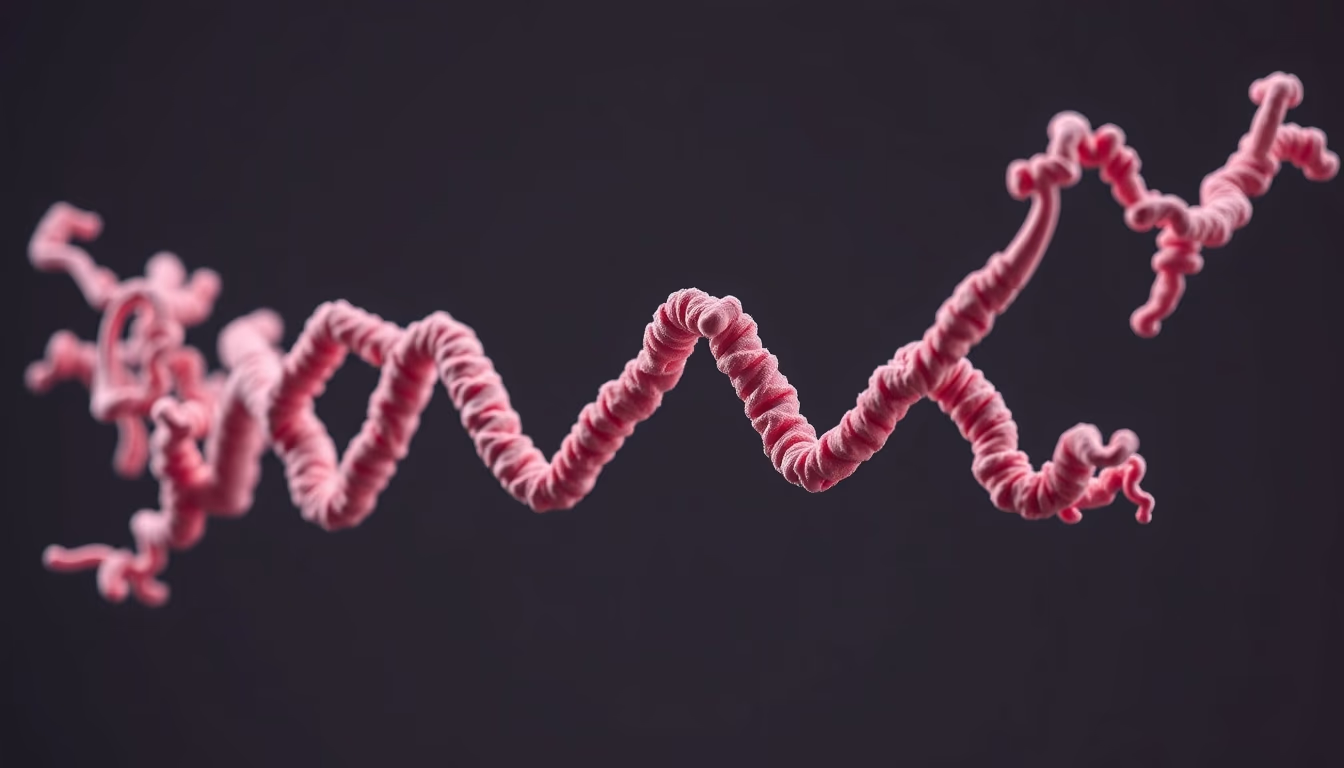
Proteins are essential molecules whose function depends on their three-dimensional structure, determined by techniques such as X-ray crystallography and cryo-electron microscopy.
About this subject
Proteins are macromolecules composed of amino acid chains that fold into specific three-dimensional structures, essential for their biological function. The primary structure is the linear sequence of amino acids, while the secondary structure involves local patterns such as alpha helices and beta sheets. The tertiary structure is the overall folding of the polypeptide chain, and the quaternary structure describes the assembly of multiple subunits.
Determining the three-dimensional structure of proteins revolutionized biology. The first structure solved was myoglobin in 1958 by John Kendrew using X-ray crystallography. Since then, the Protein Data Bank (PDB) has accumulated over 200,000 structures, accessible to researchers worldwide. Modern techniques like cryo-electron microscopy (cryo-EM) allow visualization of proteins at near-atomic resolution without the need for crystallization.
Structural knowledge is crucial for rational drug design. Many drugs work by binding to specific sites on proteins, such as enzymes or receptors. For example, protease inhibitors used in HIV treatment were developed based on the three-dimensional structure of the viral protease. Additionally, mutations that alter protein structure can cause diseases like Alzheimer's and cystic fibrosis, where misfolded proteins aggregate or lose function.
Interestingly, not all proteins have a unique, stable structure. Intrinsically disordered proteins (IDPs) do not fold into a fixed conformation but play important regulatory roles. The study of conformational dynamics using molecular dynamics simulations complements static structures and reveals how proteins move to perform their functions.
Frequently Asked Questions
What are the primary, secondary, tertiary, and quaternary structures of a protein?
The primary structure is the linear sequence of amino acids. The secondary structure forms local patterns like alpha helices and beta sheets. The tertiary structure is the complete three-dimensional folding of the chain. The quaternary structure is the association of multiple polypeptide chains into a functional complex.
What was the first protein to have its three-dimensional structure determined and by which method?
Myoglobin was the first protein with a resolved structure in 1958 by John Kendrew using X-ray crystallography.
How does the three-dimensional structure of proteins aid in drug development?
Knowing the structure of a target protein allows researchers to design drugs that bind to specific sites, blocking or modulating its activity. Examples include protease inhibitors for HIV and cancer drugs targeting kinases.
Direct URL
https://pub-c7d6a6ea828543ac903a74a341ccb2e1.r2.dev/imagens/protein-structure-3d-studio-editorial-portrait-p1.avifHow to credit
Include a visible link back to UtilizAí. Copy one of the snippets below:
<a href="https://xn--utiliza-eza.com/en/midia/imagens/protein-structure-3d-studio-editorial-portrait-p1">Protein structure 3d</a> by <a href="https://xn--utiliza-eza.com">UtilizAí</a>, licensed under <a href="https://creativecommons.org/licenses/by/4.0/">CC BY 4.0</a>.
[Protein structure 3d](https://xn--utiliza-eza.com/en/midia/imagens/protein-structure-3d-studio-editorial-portrait-p1) by [UtilizAí](https://xn--utiliza-eza.com), CC BY 4.0
License: CC-BY-4.0