Protein structure 3d
1344×768 · AVIF · CC BY 4.0
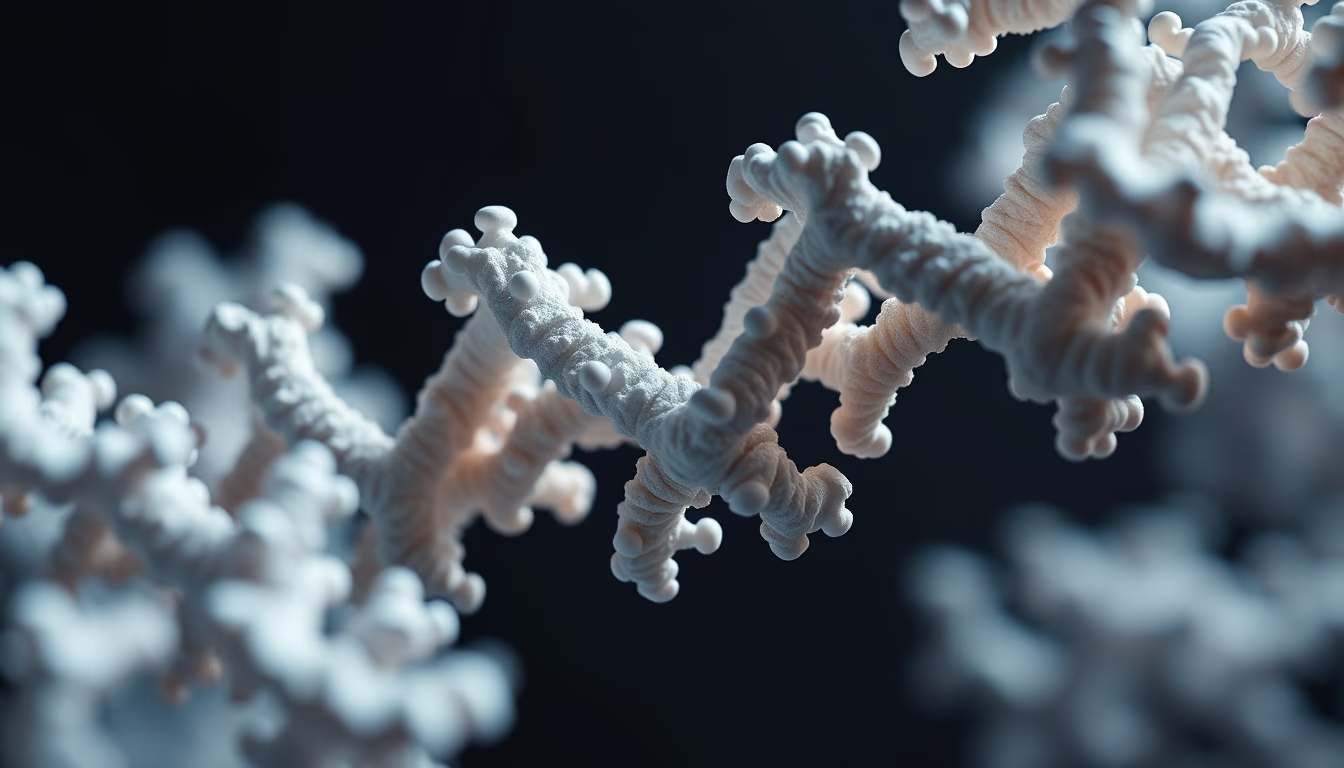
Proteins are essential molecules for life, and their three-dimensional structure determines biological function. 3D models help scientists understand diseases and develop drugs.
About this subject
Proteins are macromolecules composed of amino acids, responsible for virtually all cellular functions, from enzymatic catalysis to signaling and immune defense. Their three-dimensional structure, or native conformation, is crucial for biological activity. The amino acid sequence (primary structure) determines how the protein folds into secondary structures, such as alpha helices and beta sheets, which then arrange into a compact tertiary structure. In many cases, multiple polypeptide chains associate to form a quaternary structure, like in hemoglobin.
The determination of 3D protein structures revolutionized biology. Techniques such as X-ray crystallography, nuclear magnetic resonance (NMR), and cryo-electron microscopy allow visualization of atoms and interactions. Projects like the Protein Data Bank (PDB) compile thousands of structures, available for research. Understanding the structure of disease-related proteins, such as beta-amyloid in Alzheimer's or p53 in cancer, aids in drug development by targeting specific binding sites.
Computational models, like those generated by artificial intelligence (AlphaFold), accelerate structure prediction from genetic sequences. This enables studying proteins not yet crystallized and exploring molecular evolution. 3D visual representations, often colorful and artistic, make abstract concepts accessible to students and the general public, bridging science and art.
Frequently Asked Questions
Why is the three-dimensional structure of proteins important?
A protein's shape determines its function. Structural changes can lead to diseases such as Alzheimer's or sickle cell anemia. Understanding the structure allows the development of drugs that target specific sites.
How do scientists determine the 3D structure of a protein?
Main methods include X-ray crystallography, nuclear magnetic resonance (NMR), and cryo-electron microscopy. Recently, artificial intelligence (like AlphaFold) also predicts structures with high accuracy from the amino acid sequence.
What is the Protein Data Bank (PDB)?
It is an international database storing thousands of three-dimensional structures of proteins and nucleic acids. Researchers worldwide can freely access it for studies and discoveries.
Direct URL
https://pub-c7d6a6ea828543ac903a74a341ccb2e1.r2.dev/imagens/protein-structure-3d-high-fashion-editorial-p10.avifHow to credit
Include a visible link back to UtilizAí. Copy one of the snippets below:
<a href="https://xn--utiliza-eza.com/en/midia/imagens/protein-structure-3d-high-fashion-editorial-p10">Protein structure 3d</a> by <a href="https://xn--utiliza-eza.com">UtilizAí</a>, licensed under <a href="https://creativecommons.org/licenses/by/4.0/">CC BY 4.0</a>.
[Protein structure 3d](https://xn--utiliza-eza.com/en/midia/imagens/protein-structure-3d-high-fashion-editorial-p10) by [UtilizAí](https://xn--utiliza-eza.com), CC BY 4.0
License: CC-BY-4.0